Q: Can you help differentiate between Antistatic and ESD?
How do you know which type of floor you need?
I know you can measure resistance, but is resistance different from anti-static?
A: Good question!
Let’s start with the term ESD.
ESD and ESD Flooring
The term ESD is an acronym that stands for Electrostatic Discharge. ESD flooring is a generic term used to describe any floor that controls static electricity. When engineers refer to “ESD floors,” they typically mean a floor that gets rid of static.
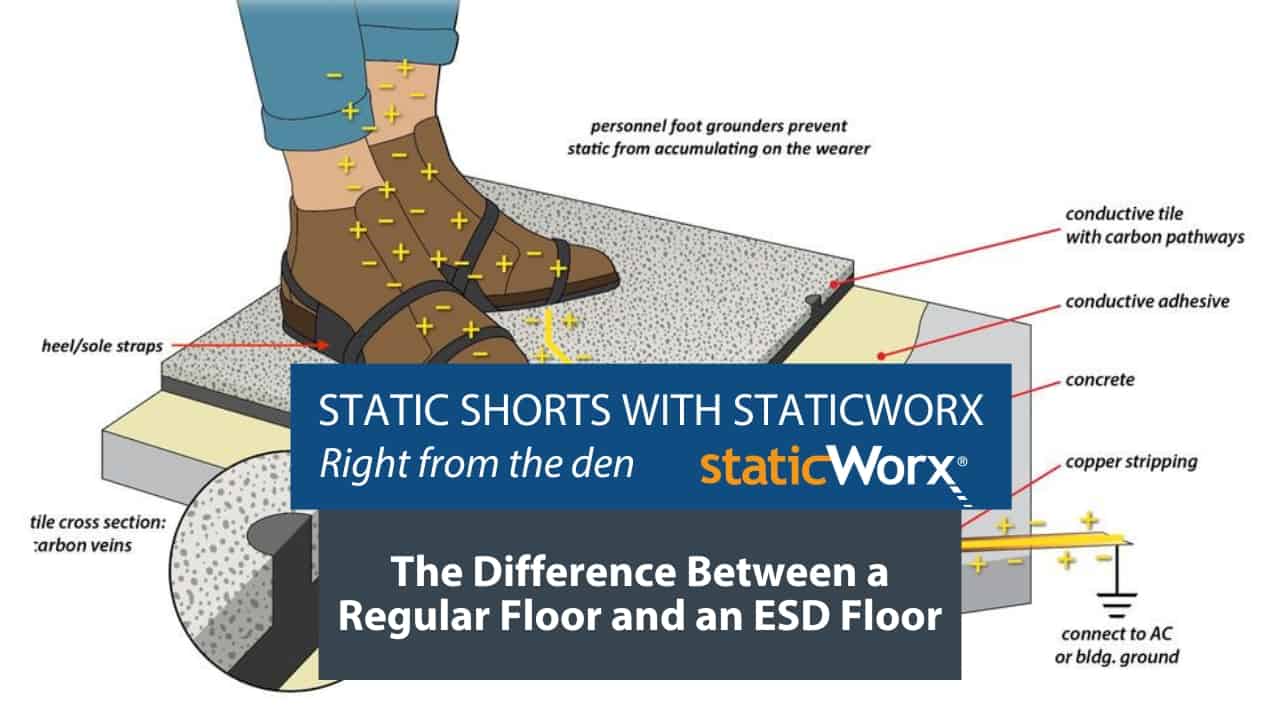
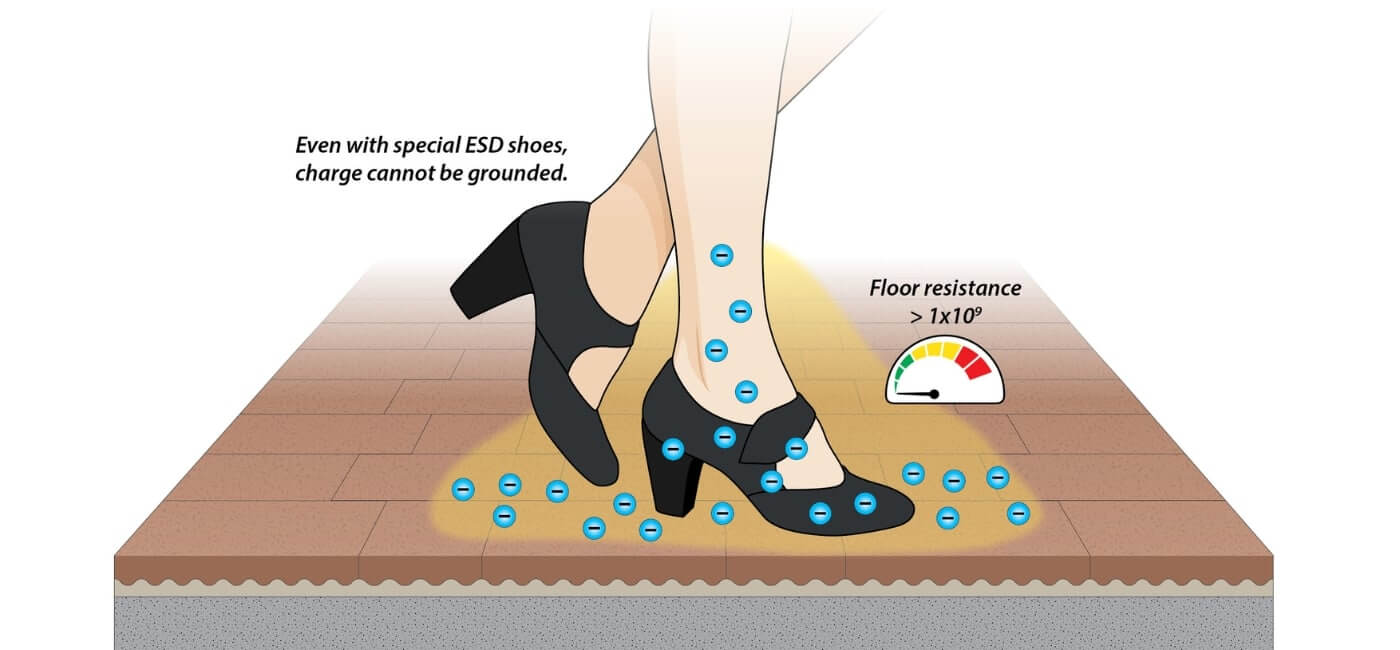
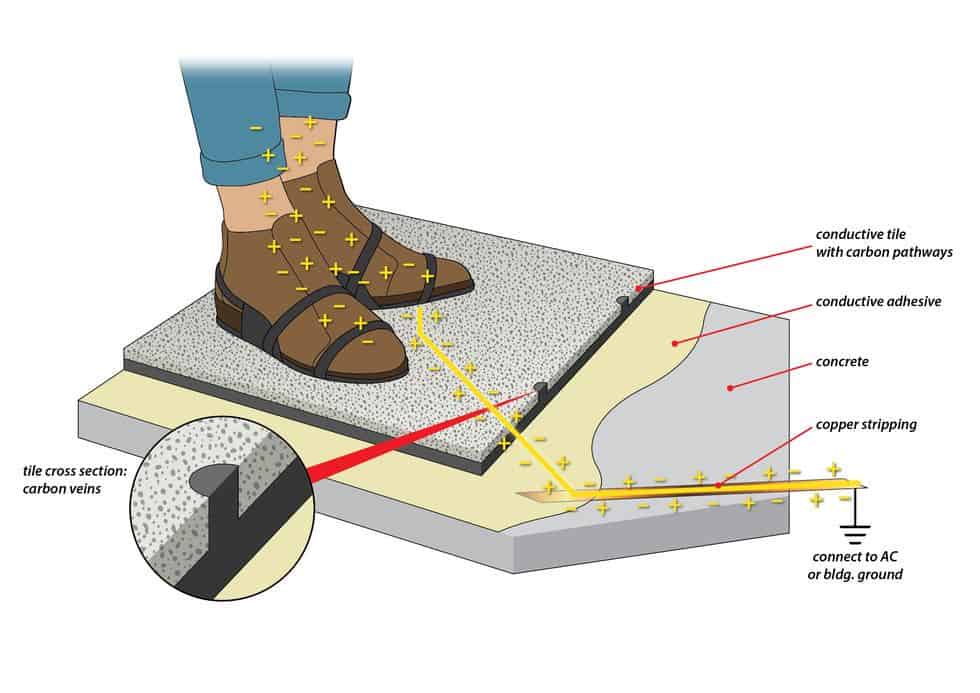
All ESD floors have some degree of conductivity. Conductivity allows the floor to be grounded. When a static charge is deposited on a conductive (or static dissipative) floor, the floor transports the charge though its thickness to an earth ground. Floors with no conductivity cannot be grounded and cannot dissipate static charges.
Measuring Conductivity
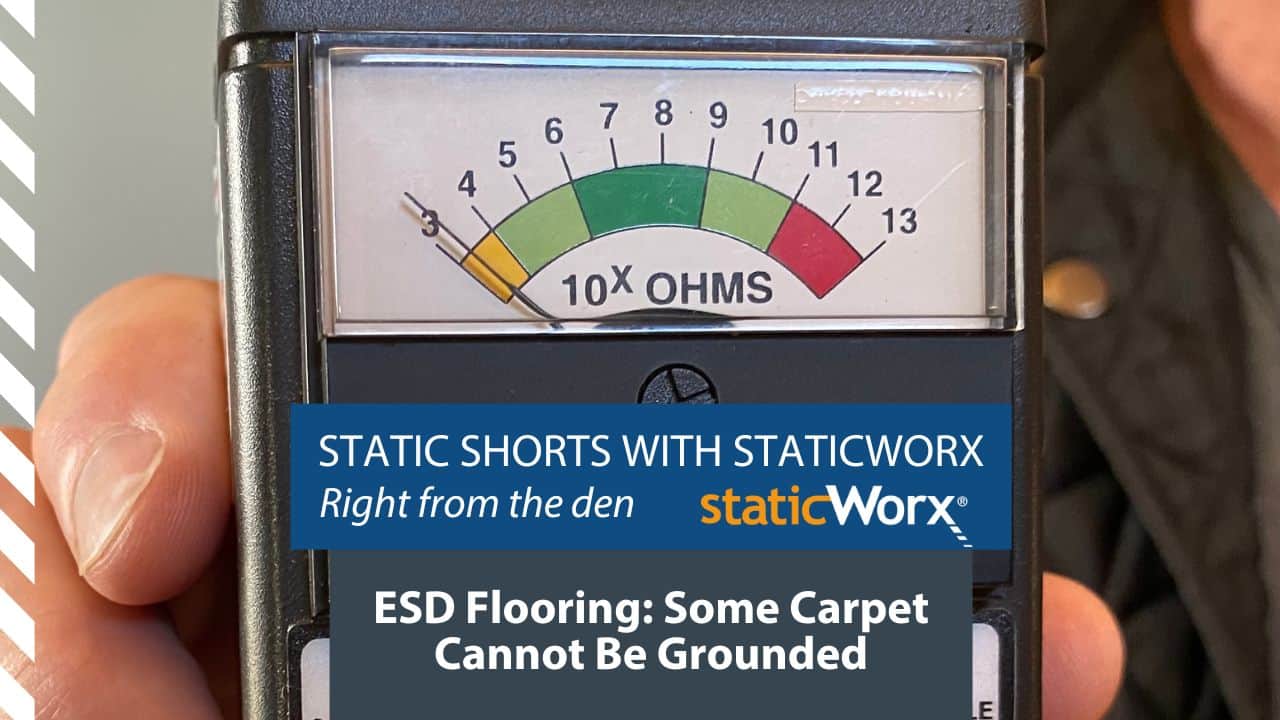
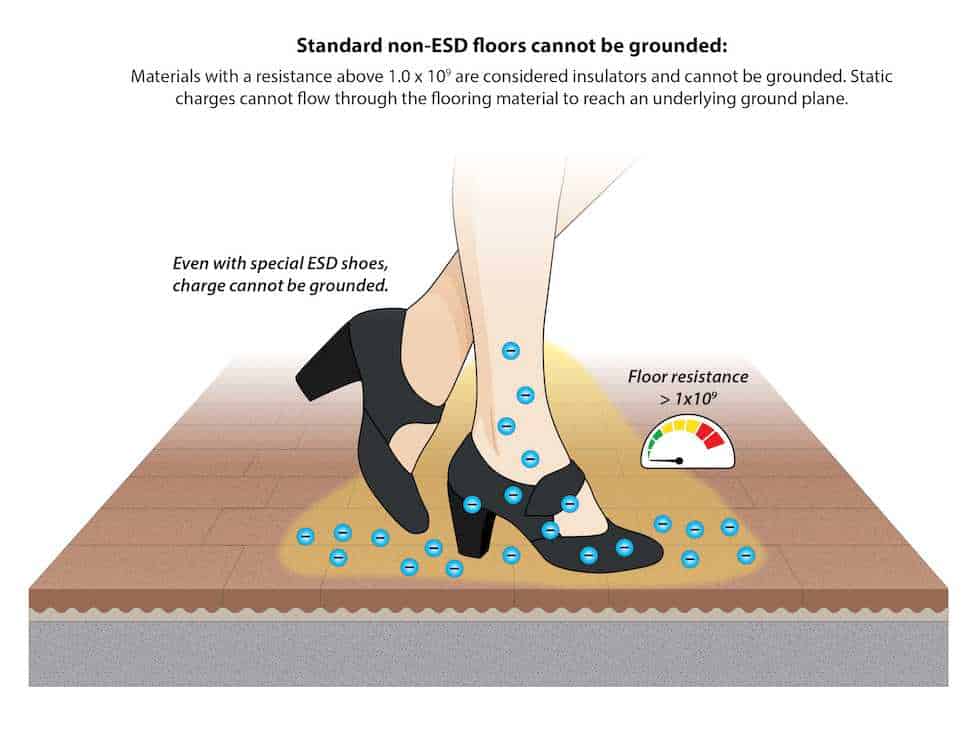
We determine the conductivity of a floor by measuring its electrical resistance, or its ability to slow the rate at which electrical charges move through the floor to ground. To meet ANSI/ESD S20.20 the electrical resistance of an ESD floor must measure below 1.0 x 10E9 ohms (also noted as under 1 x 10⁹ ohms).
- The term conductive refers to any floor measuring under 1 x 10E6 ohms
- The term static dissipative refers to any floor measuring at or above 1 x 10E6.
Determining which type of floor to use – conductive or dissipative – requires you to evaluate any needs specific to your application, determine the type of footwear that will be used in the space, and adhere to the static-control standards and specifications for your industry.
The right floor has conductivity. It also prevents static generation (i.e., it is also antistatic).
Antistatic Flooring
The term “antistatic” means that a material generates very little static electricity. When we say a floor is antistatic, we ask the questions “will it charge” and “how much will it charge?”
Believe it or not, the answers have very little to do with conductivity and more to do with footwear. Conductivity and static generation are separate properties. Even highly conductive floors can generate static on people wearing ordinary street shoes. For these floors to inhibit static generation, everyone in the space must wear some type of static-control footwear. Conductive elements in ESD footwear move charges from the wearer to the static-control floor, where they are discharged to ground, preventing static from accumulating.
Rubber – Inherently Antistatic
On a person wearing street shoes, such as sneakers, a marginally conductive rubber floor will control static significantly better than a highly conductive surface like metal. The reason for this phenomenon is that regular shoes have no conductivity. Although the metal floor is highly conductive, there is no electrical continuity between the floor and the sneakers. When the sneaker soles rub against the floor they generate static. With no electrical continuity, the charge has nowhere to go. With nowhere to go, it stays on the person.
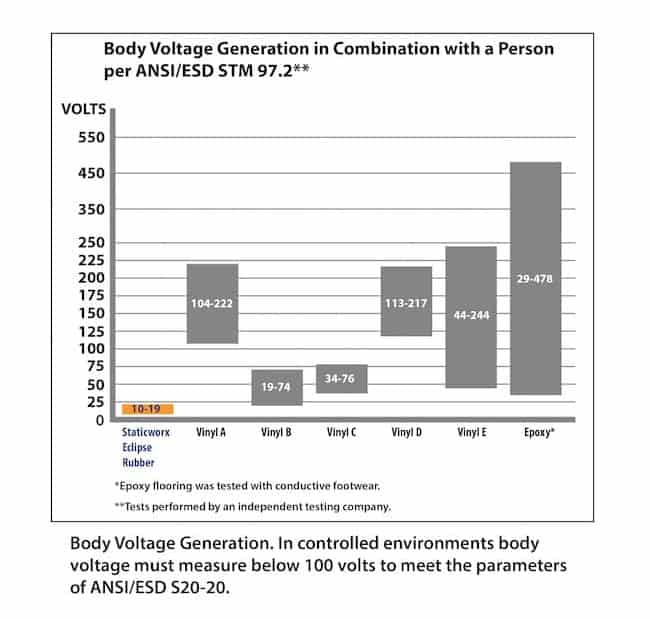
Preventing a charge on a person wearing regular (non-ESD) footwear requires that the floor be a low static-generating material. We call this type of low-generating floor antistatic. Conductive rubber, such as StaticWorx Eclipse EC rubber, is an inherently low-generating (antistatic) material. In independent lab tests, of any of the ESD floors tested, EC rubber generated the least amount of static on people wearing regular footwear.
ESD, Conductive, and Antistatic
The terms ESD flooring, conductive flooring and antistatic flooring are all different. ESD is generic term; conductive refers to the ability of a floor to dissipate charges; antistatic means that people can walk on the floor without generating static charges.
When choosing an ESD floor, there are two properties to consider:
- Charge generation per a standard lab test – ANSI or AATCC methods.
- Electrical resistance as measured per an ASTM resistance test.
Note: you don’t want a floor that is too conductive.
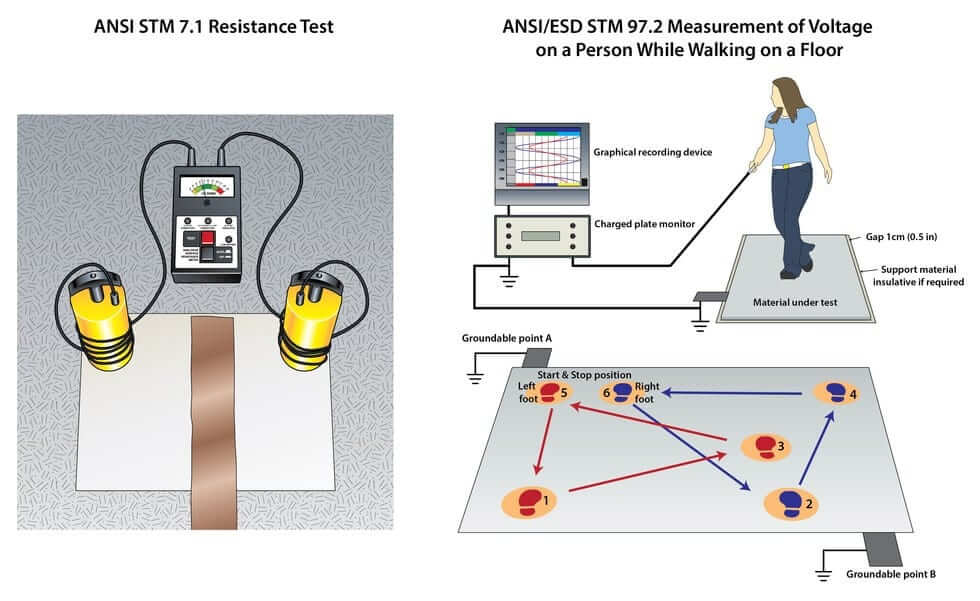
These two properties work together to prevent static generation and dissipate any charges to ground.
Read
Why Resistance Requirements Differ by Industry and Why Standards Matter
Listen
Resistance Tests Alone Are Not Enough to Qualify an ESD Floor