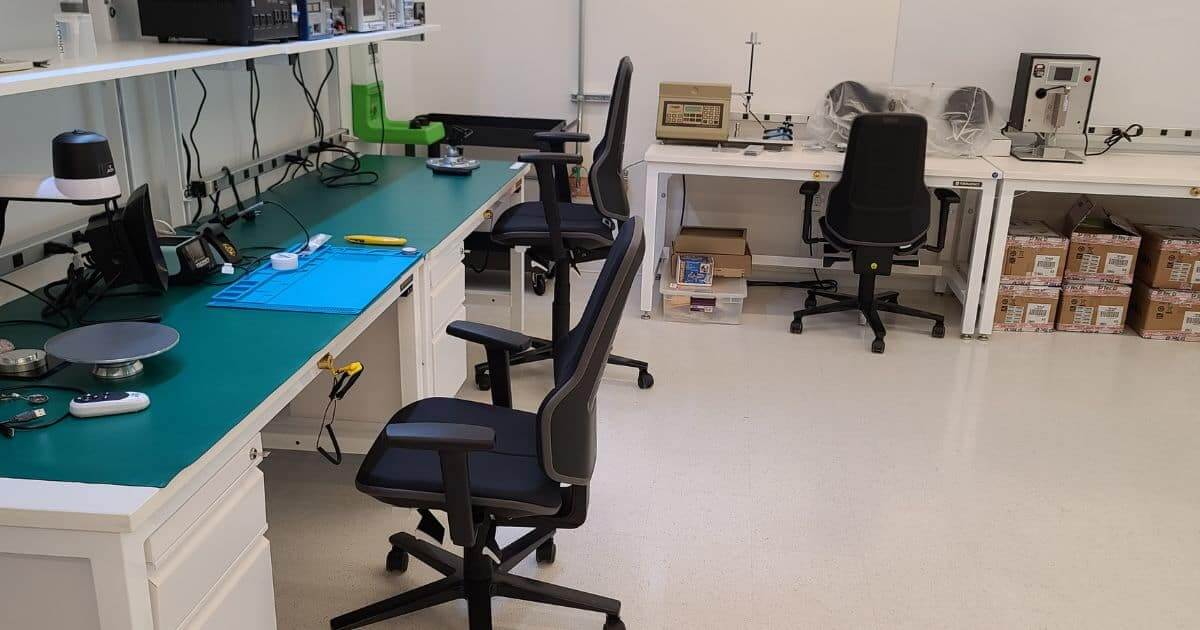
Do we need ESD chairs for when people sit down and take their feet off the floor?
A recent ASHRAE study identified standing from a chair, removing a sweater as a significant generator of static charges. In mission-critical operations that use static-sensitive electronic systems, ESD chairs are highly recommended to inhibit static generation. Using wrist straps in these spaces is impractical and unenforceable. In spaces like FAA flight towers, dispatch operations, 9-1-1 call centers and control rooms, the ESD chair provides a very effective leakage path to bring static charges to the ESD floor, where they are dissipated to ground. The ideal preventative measure in these applications is to use a static-control chair as part of an ESD flooring system.

Does it do any good to have ESD chairs if the floor is not ESD?
A chain is only as good as its weakest link. In an electrical chain, a weak link creates a breach in conductivity. A loose or disconnected wire is the simplest example: If a wire is loose or a cord is unplugged, the electrical current cannot reach its intended target.
With static control, the idea is to discharge the built-up (static) charge to ground. Static cannot discharge through plastic or other insulative materials. An electrical charge can flow only between conductive objects. A person can wear a heel and/or wrist strap and sit on an ESD chair; if the floor cannot discharge static generated by friction—walking on the floor, moving in the chair—the charge cannot flow to ground. It has no way to get there.
Think of the human body as an isolated conductive object (AKA a capacitor) capable of storing static electricity. When the static-charged person approaches and sits in the conductive chair, the static charge on his or her body immediately flows to the chair—until, that is, both the body and the chair share the same charge. We call this sharing potential.
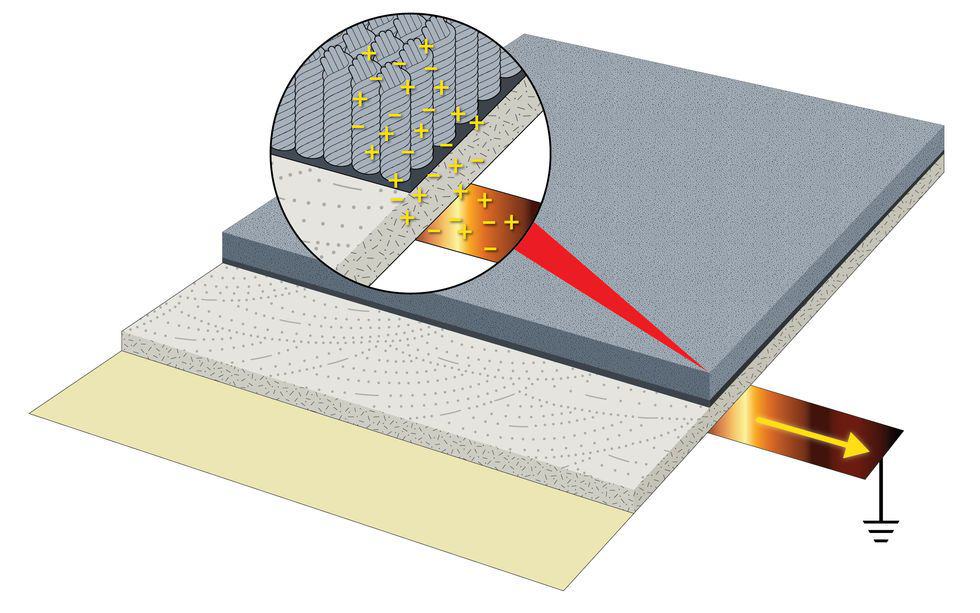
ESD Floors Ground Static Charges
If the chair were on an ESD floor, static charges would flow from the chair, through the flooring material, to ground – the floor would also protect against static when people walked in the space.
On a non-conductive floor, both chair and person are isolated from ground. With no conductive path through the floor, charges remain in place. If the person or chair makes contact with electronic equipment, both will discharge to the equipment simultaneously.
Without a conductive floor, a conductive (or ESD) chair is nothing more than another charged body looking for a place to discharge. Kind of like an accident waiting to happen.
Does the airflow below an access floor create static electricity?
We have an access floor in our computer room. Cold air flows across cables under the floor. Does the airflow create static electricity? If so, are personnel or hardware at risk?
No, the airflow beneath an access floor poses no static threat whatsoever.
Static electricity is generated by contact and separation. Airflow contributes to static generation only when it carries solid or liquid particulates capable of repeated contact and separation with surfaces. In sand and dust storms that occur in dry climates, sand and dust particles blow into and away from billboards and plastic signs. Friction between the particulates and the charged surfaces generates static electricity, leaving high charges on the billboards and signs. In these situations, static will cause dust and particles to cling to the billboard or sign.
Remember: it is the particulates, not the air itself, that causes the friction needed to create static charges. Normal air—even air in a typical wind storm—does not contain enough particulates to charge up other surfaces. Like compressed air or the air circulated by a forced hot air system, the cold air (even if very dry) flowing across cables under an access floor cannot generate static and poses no threat of static shock to personnel or hardware walking or standing on the floor.
How can you prevent ESD?
Preventing ESD requires a well-thought-out ESD prevention program. In end-user spaces like a 9-1-1 call center or bank, an ESD floor is enough to prevent static caused by people walking on the floor, the most common static generator. Facilities like electronics manufacturing or SMT require a more stringent static program involving some combination of ESD flooring, wrist straps, footwear and other ESD-prevention measures.
How do you get rid of electrostatic discharge?
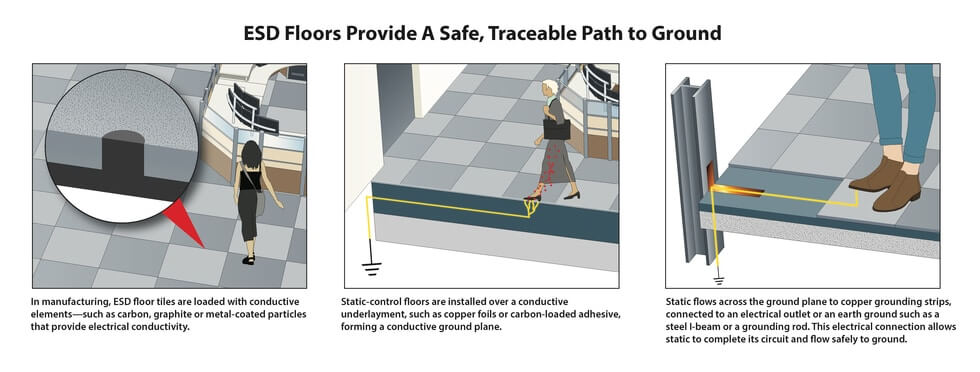
Most static in a workplace is generated by people walking on the floor. Because the floor is a central place for static generation, an ESD flooring system is the first line of defense in ESD prevention. Static control floors have two equally important functions: 1) they are grounded and remove static from shoe soles and the wheels on rolling carts and discharge static to ground; 2) they prevent static from building in the first place.
Not all ESD floors prevent static generation. Some ESD floors – ESD vinyl and epoxy, for instance – made from static-generating base materials, prevent static generation only when used in combination with ESD-protective footwear.
How does an ESD floor work?
ESD floors perform two distinct, equally important functions:
- Drain static from people and moving objects and transport charges to ground;
- Prevent static from building on people and objects as they move across the floor.
ESD floors transport static charges to ground. They must also generate minimal static electricity. ESD floors manufactured with insulative materials, like plastics or polymers, only perform static-control functions when used in conjunction with conductive footwear.
Some floors marketed as ESD provide only temporary protection and require regular application of an ESD floor finish. All StaticWorx flooring products provide permanent static protection without the use of ESD finishes.
Is electrostatic discharge harmful? Why is electrostatic discharge bad?
Electrostatic discharge can give you an annoying or, depending on the voltage, painful static shock. Unless you’re struck by lightning – a grand example of static discharge – ESD will not hurt you. What it can do is damage electronics you use or that people charged with your safety use to protect you. For instance, ESD in a flight tower can cause computers to lose track of planes; in a 9-1-1 call center ESD can cause lost calls or scrambled GPS signals. In fact, ESD can wreak havoc in any work environment where sophisticated electronics are manufactured, handled or used.
What are some examples of ESD?
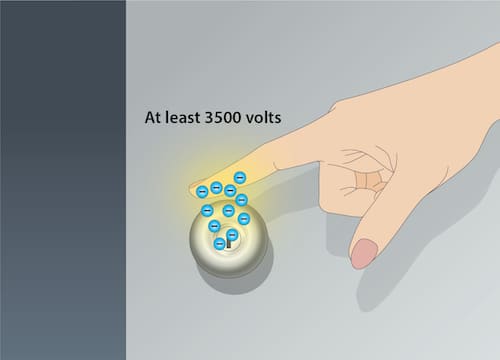
The shock you feel when you walk across a carpeted floor or remove clingy laundry from the dryer are examples of electrostatic discharge. To feel ESD the charge must be at least 2000 – 3000 volts. The same type of discharge can damage or destroy electronic components, but at voltages as low as 500, 100, or even 10 volts, depending on sensitivity. ESD that harms electronics is an invisible phenomenon – you cannot see, feel or hear the discharge, so you never know you had an ESD problem until your telephony equipment fails, calls are scrambled or dropped, sophisticated computers scramble data or lose GPS signals, electronics fail in the field, or a host of other problems resulting from compromised internal circuitry.
What does ESD stand for in flooring?
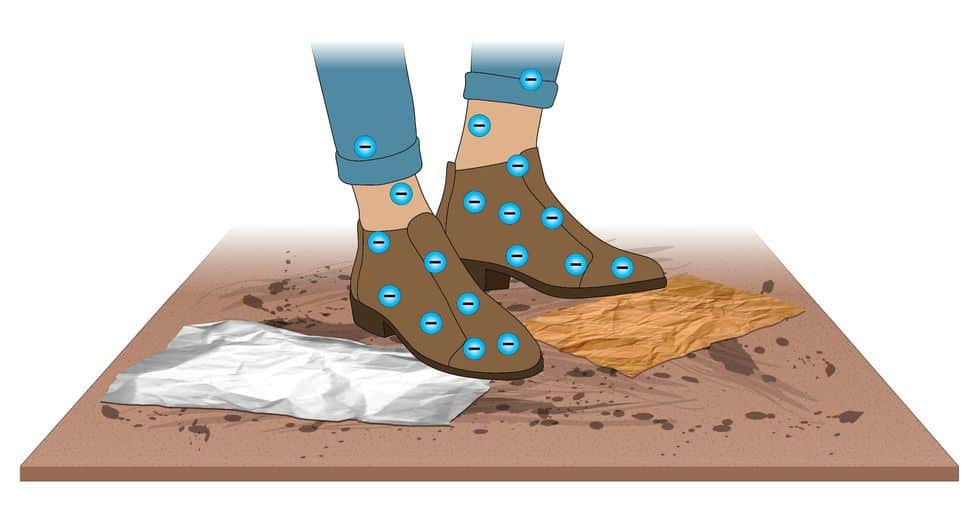
The acronym ESD stands for electrostatic discharge. When a person or object moves across a regular (non-ESD) floor, static builds on their body. When they touch another person or object, the static charge jumps to the other person or object. This sudden transfer of electricity is called an electrostatic discharge. ESD flooring protects electronic equipment by preventing static from building on people or moving objects and dissipating static charges to ground.
What is ESD flooring?
ESD floors are a special type of flooring that inhibits static and reduces charge generation.
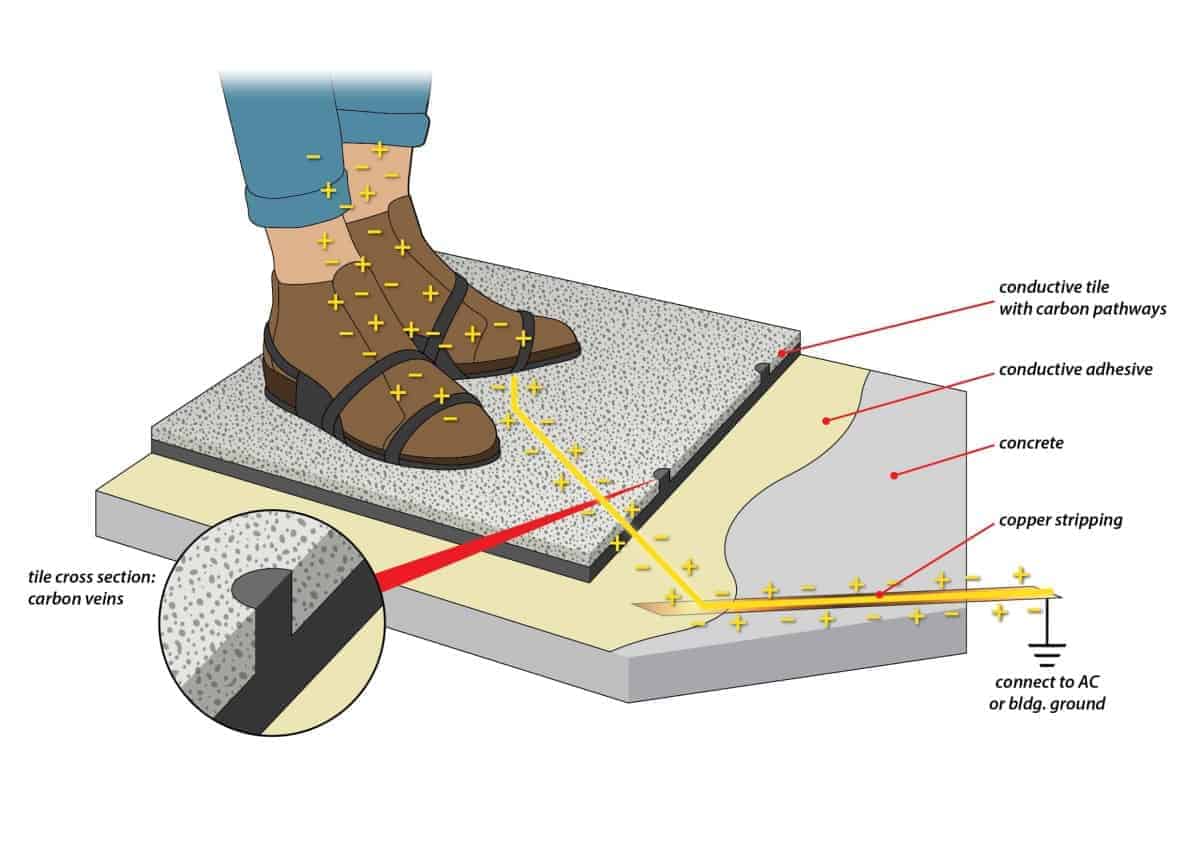
Conductive veins, filaments, or fibers in ESD floors provide an electrical connection that draws static electricity away from people/objects as they move across the floor and dissipates charges to ground. Dissipating static safely protects electronics from accidental damage due to electrostatic discharge (ESD) events. ESD floors are available in tiles and sheets in a range of materials, including carpet, vinyl, rubber, epoxy, and interlocking materials that can be installed directly over a problem subfloor.
What is ESD in manufacturing?
In manufacturing facilities, depending on the work being done, random electrostatic discharge can cause problems ranging from dirt and particulate contamination to explosions (in weapons manufacturing or where volatile chemicals are present, for instance) to machine failure to damaged electronic parts and components.
What is ESD-safe flooring?
ESD-safe floors protect electronics by drawing static away from people or objects, transporting charges to ground. They also prevent static generation. On a regular floor, people and objects gather charges as they move on its surface. If a charged person or object touches an electronic component, the sudden transfer of electricity could damage or destroy its internal circuitry. ESD-safe flooring draws static away from people and objects and transports charges to ground, protecting electronics from damage due to random electrostatic discharge (ESD) events.
What is meant by ESD?
When two objects contact and separate, friction causes a charge to build on their body. When a charged person or object touches someone or something, static on their body leaps to the other person/object. This transfer of electricity is called an electrostatic discharge or ESD.
Everyday examples of ESD include: rubbing a balloon over your head; combing your hair; petting your cat; and walking across a floor. The zap you feel is an electrostatic discharge. Minute ESD events, too small for humans to perceive, can damage electronic components.
Why is ESD flooring required?
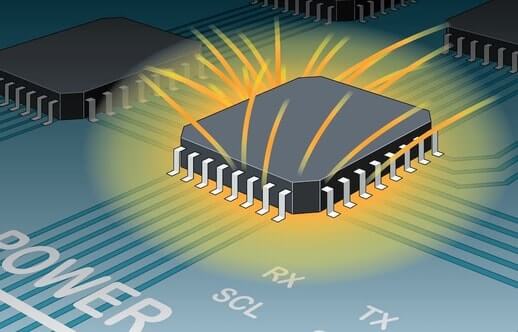
ESD flooring is required to protect most types of electronics’ parts, which are ultra-sensitive to static electricity. Electrostatic discharge events (ESD) cause data transfer disruption, lost or dropped calls, garbled GPS signals, blown circuits, staticky noise during concerts or in sound studios, product failure in the field, explosions and many other types of damage or destruction. ESD flooring protects electronics from accidental damage by drawing static charges away from people or objects in the workplace and safely transporting charges to ground.
Will our concrete floor protect against static?
While bare concrete—i.e., a concrete floor that hasn’t been sealed—often exhibits some static-dissipative or conductive tendencies, these electrical properties are variable and environmentally dependent. Conductivity is not inherent or consistent in concrete.
Concrete draws its conductivity from moisture in the floor, and its electrical resistance is subject to changing variables, including moisture permeation, geological conditions, subterranean activity, aquifers, weather, and ambient humidity or RH. A concrete floor that’s too conductive during a high humidity summer could be insulative in drier weather later that same year.
More important: Bare concrete does not reliably meet industry standards. ANSI/ESD S20.20, tested using method STM 7.1, recommends electrical resistance below 1 x 10E9 ohms. As concrete dries, its electrical resistance increases, making it less conductive. If a floor with an electrical ohms resistance at or near 10E9 becomes less conductive, it will not meet best practices or ESD industry standards.
Likewise, as resistance decreases, charge dissipation increases. Concrete can absorb vapor from the soil below, lowering its resistance, making the floor dangerously conductive.
The electrical resistance of bare concrete can vary by 2-3 magnitudes in either direction. Inherent dust and particles along with broad performance differentials, caused by uncontrollable site and environmental conditions, make bare concrete an impossible sell to an ESD-savvy customer or any auditor as part of an ISO certification.
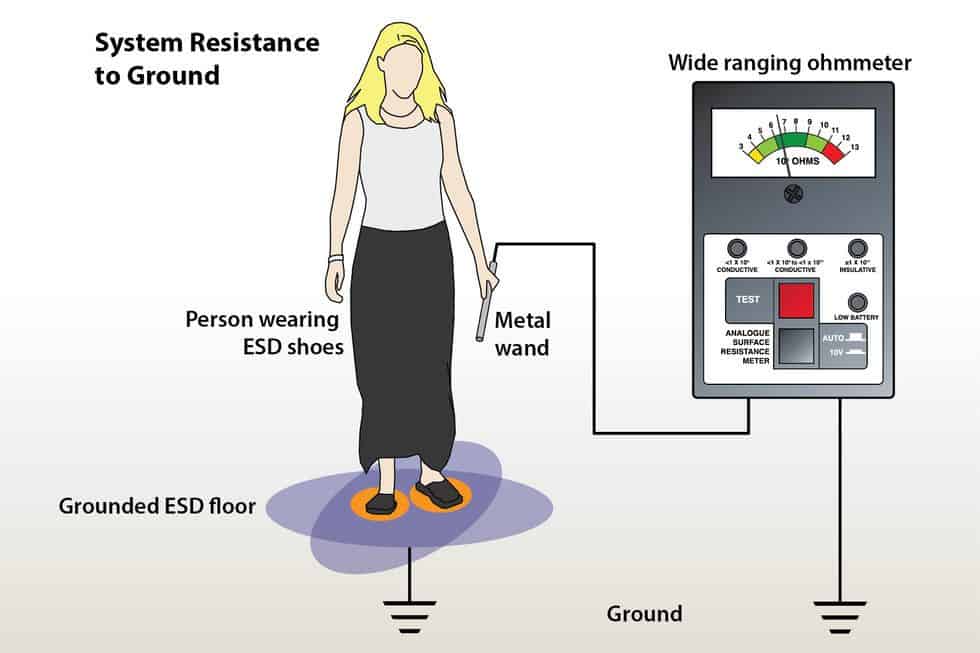
ANSI/ESD STM97.1 System Resistance
What do static-dissipative and conductive mean?
Static-dissipative and conductive are terms—expressed in ohms—used to mathematically express a floor’s electrical resistance. Electrical resistance tells us how quickly or slowly the floor will allow static electricity to move from its surface through or across its various layers to ground.
Conductive floors measure less than 1.0 x 10E6 ohms.
Static-dissipative floors measure above 1.0 x 10E6 and less than or equal to 1.0 x 10E9 ohms.
To say a floor should be conductive or should be dissipative is simply incorrect. Conductive (EC) rubber, for instance, outperforms static-dissipative (SD) rubber. SD rubber, which gets its conductivity from a chemical additive, gains electrical resistance as the material dries out; over time—7 years, as cited by one study, SD rubber can actually become insulative.
Conversely, carpet tile in the static-dissipative range may be preferred over some conductive carpet. If the carpet tile is too conductive—or resistance varies from tile to tile, with overly conductive “hot spots”—the floor could pose a safety risk. In fact, the U.S. government and telecommunications industry prohibit the use of conductive floors near electrified equipment.*
* Standards: FAA 019f, Motorola R56, ATIS 0600321
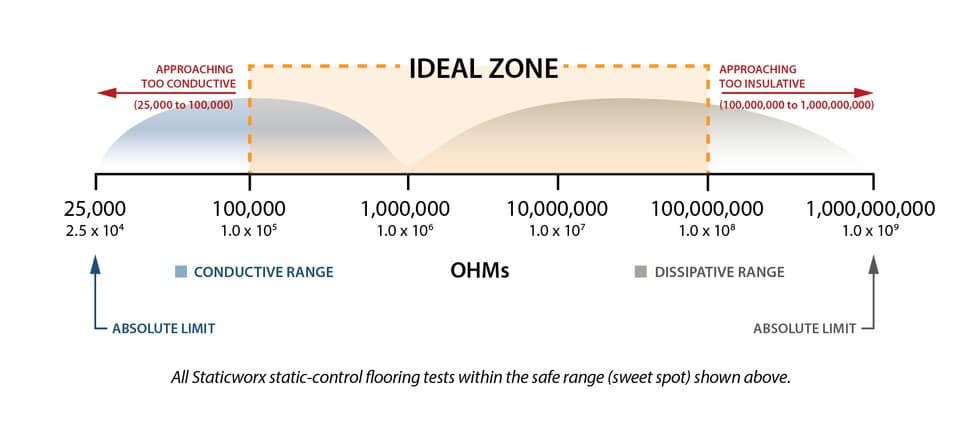
To perform effectively, a static-control floor should be neither too conductive nor too dissipative. Instead, the floor should fall into what we call the “sweet spot”—or within ideal functional range.
What is the difference between resistance and conductivity?
Resistance and conductivity are opposite material qualities, both used to describe the rate at which a material transports electrical charges. Conductivity refers to the speed with which electricity flows through a material. Resistance refers to the propensity of a flooring material to slow or stop the flow of electricity.
We use electrical resistance, measured in ohms, to describe the rate at which an ESD floor can dissipate static charges on people and moving objects and transport charges to ground. To control electrostatic discharge the floor resistance must measure below 1,000,000 Ohms (< 1.0 x 10E9 )
What is the difference between static-dissipative and conductive flooring?
ESD floors are categorized based on their electrical resistance properties. Resistance is measure in ohms. Conductive floors measure less than 1.0 x 10E6 ohms. Static-dissipative floors measure above 1.0 x 10E6 and less than or equal to 1.0 x 10E9.
Floors should never be purchased based solely on whether they are described as conductive or static dissipative. Watch these short videos to understand the importance of defining the right ohms range of your floors.
What is “The Sweet Spot” in ESD flooring?
The “sweet spot,” or ideal resistance, is not an absolute number. Rather, it’s a range—i.e., between 1.0 x 10E5 and 1.0 x 10E8 ohms (or between 100,000 and 100,000,000 ohms).
Where your floor should fall within the range depends upon your application and environment. To find out which static-control floor is right for you, see our Guide to ESD Flooring Selection.
Are all carpet lines antistatic?
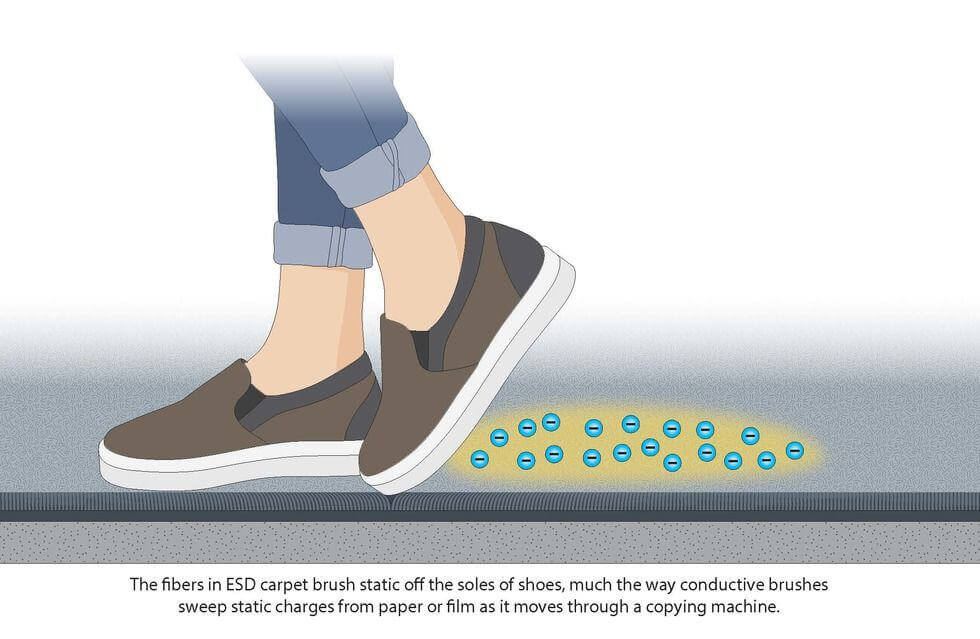
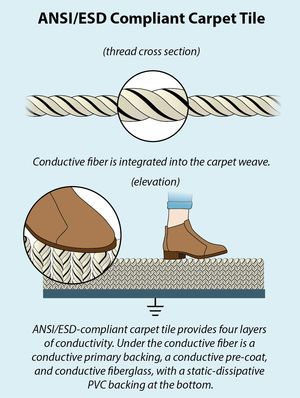
All ESD carpet tile is antistatic. With ESD tile conductive properties are woven into the yarn strands and the conductive or static-dissipative yarn strands act like tiny brushes, brushing static from shoe soles as people walk. Standard carpet is sprayed with a topical anti-stat that prevents people walking on the floor from feeling a static shock. This topical anti-stat is temporary, the reason you might suddenly feel a shock from a floor that was “static free.” Standard carpet has no conductive properties, cannot be grounded, and cannot come close to preventing static generation at the minute voltages that can damage or destroy electronic equipment.
Are dissipative floors also ESD?
Dissipative or static dissipative is a term used to describe the electrical resistance of a flooring material. To qualify as an ESD floor, resistance must measure below 1.0 x 10E9 ohms. A static-dissipative floor measures between 1.0 x 10E6 and 1.0 x 10E9. However, a dissipative – or conductive – floor can measure in the correct resistance range and still generate static. In end-user spaces where people do not wear special ESD-protective footwear, a floor that does not prevent static from building on people cannot protect electronics from damage due to electrostatic discharge.
Are interlocking tiles waterproof?
Interlocking tiles are not waterproof per se. The tiles lock together tightly, preventing moisture from the subfloor from seeping through the seams. As they do not require adhesive, which emulsifies from contact with water, interlocking floors can be installed over subfloors with vapor emissions with no vapor protection.
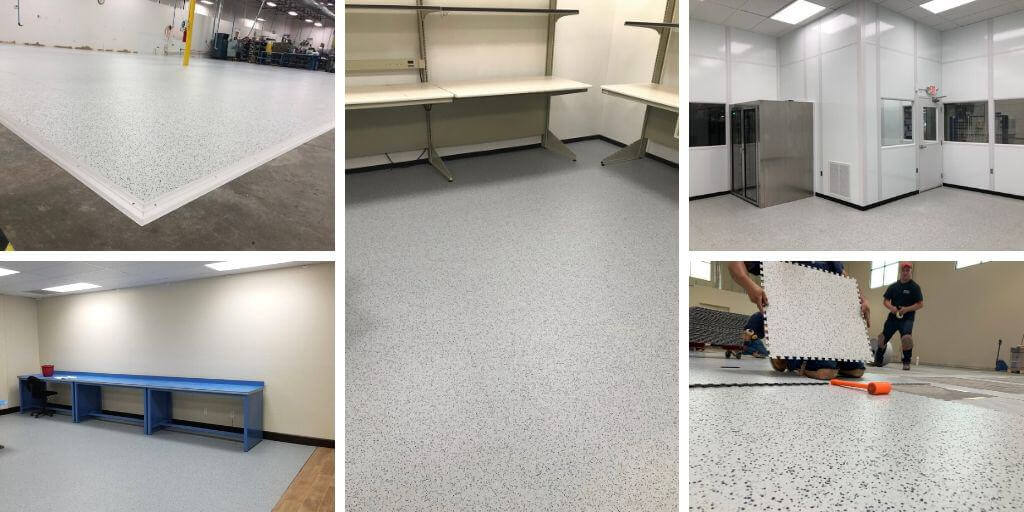
How does static-dissipative flooring work?
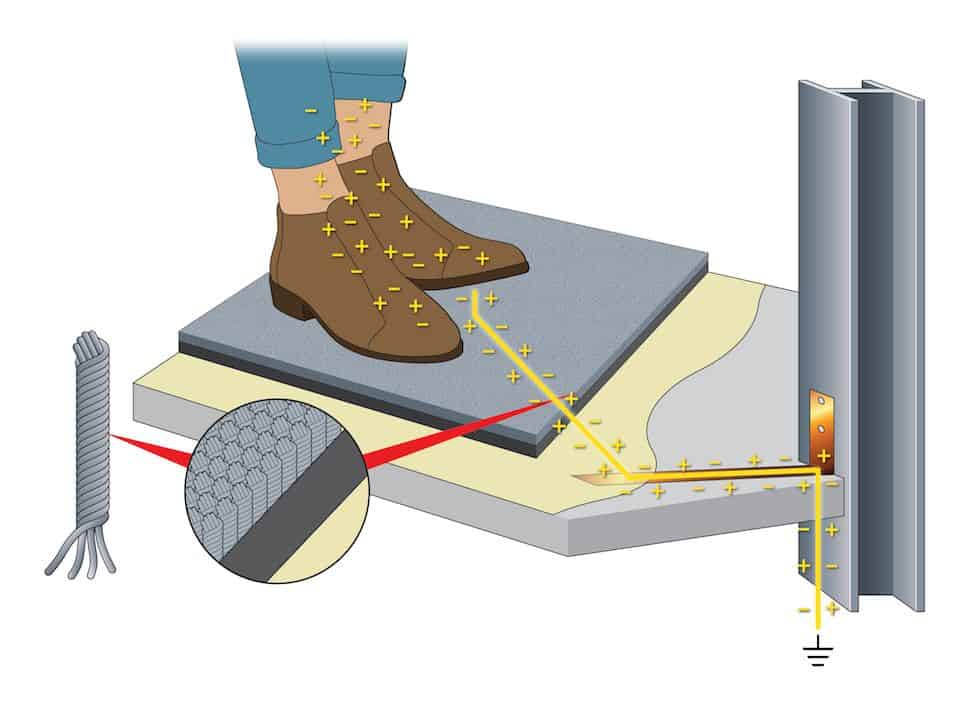
Static-dissipative flooring works by providing a conductive path to ground. A static-dissipative floor draws static charges away from people and moving objects, transports charges through the thickness of the flooring material to ground. Static-dissipative floors receive their conductivity from embedded conductive elements, such as carbon particles, which are added to the base flooring material in the manufacturing process.
Can ShadowFX carpet tile be installed one to one over raised flooring panels?
Your website says ShadowFX carpet tile can be installed one to one over raised flooring panels? Is this in new construction situations only? What about renovations where quick release adhesive was previously applied? Would you still recommend a one to one installation?
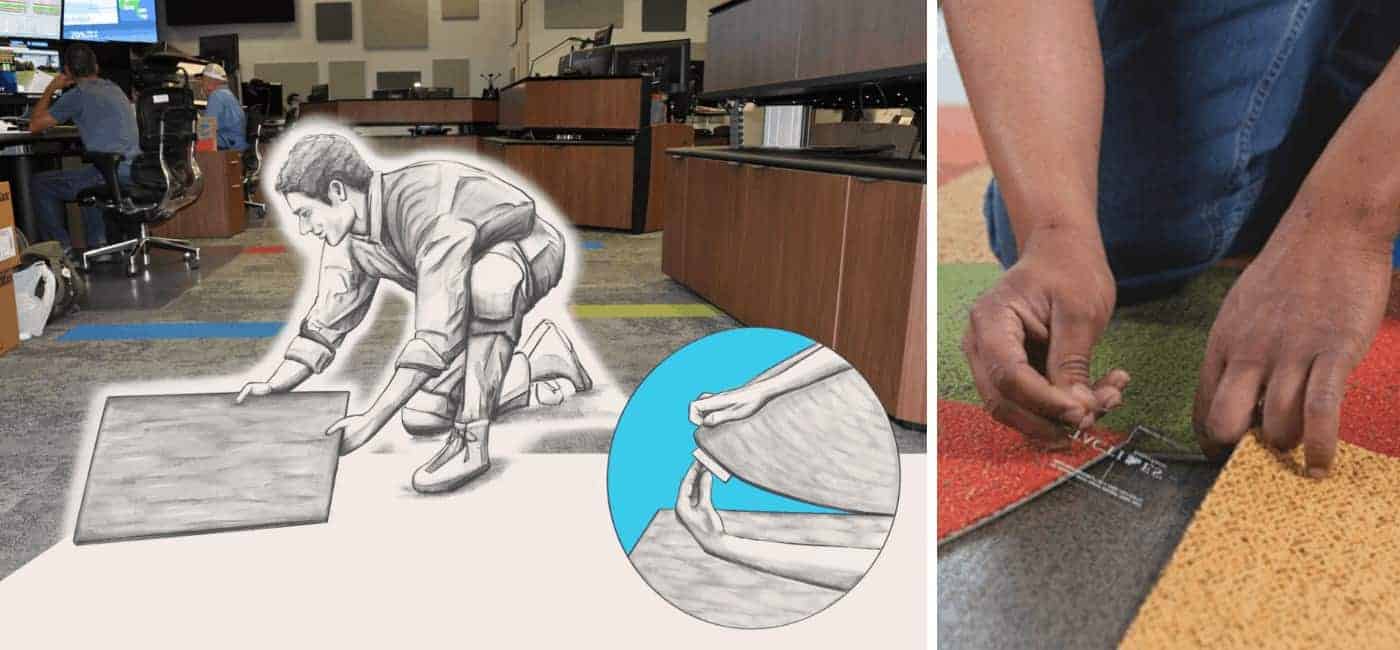
One-to-one installation of floor finishes over raised access panels offers advantages but also some disadvantages.
Let’s start with the advantages:
- Panel removal is easy. One panel and one floor finish – no picking up multiple overlapped tiles to remove just one access panel.
- Air diffusers can be relocated with no need for cutting. Just pull the panel and tile and bring it to a new location.
Disadvantages and Precautions:
- It is very difficult to install tiles one-to-one in the field. One-to-one usually requires removing panels one at a time and using a fixture to align the tiles over the old panels. This process can be obstructive, expensive and time-consuming.
- The easiest installation methods for field installs involve buying panel systems that are compatible with tile positioning devices. IFS Global panels require using CarpetLok® positioners and Tate Concore panels require carpet tiles with ultrasonically bonded PosiTile buttons.
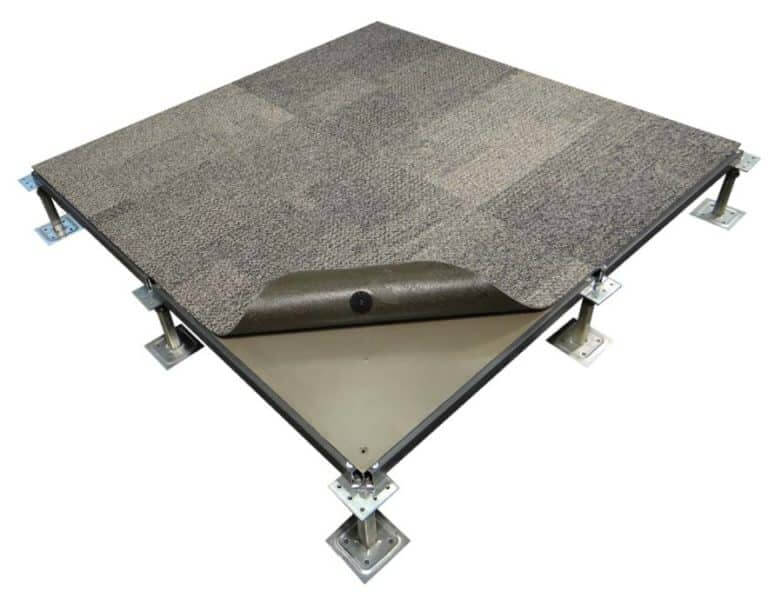
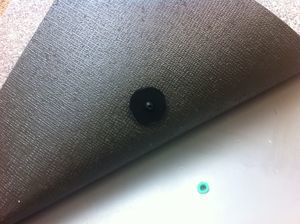
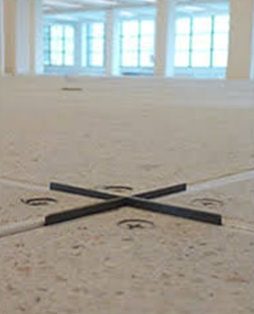
If you are changing out floor tiles in the field you will need to determine if the old adhesive needs to be removed. Some adhesives cannot be applied over the old adhesive. Excessive adhesive residue can telegraph through the new tiles.
When carpet tiles are installed one-to-one, the seams can be exposed to gapping if the panels are not perfectly aligned. Gapping can subject carpet tile seams to far more abuse than an overlap installation.
Overlap installations are fastest and least expensive. They can be done without adhesive by using glue free methods like ShadowFX tiles with TacTiles.
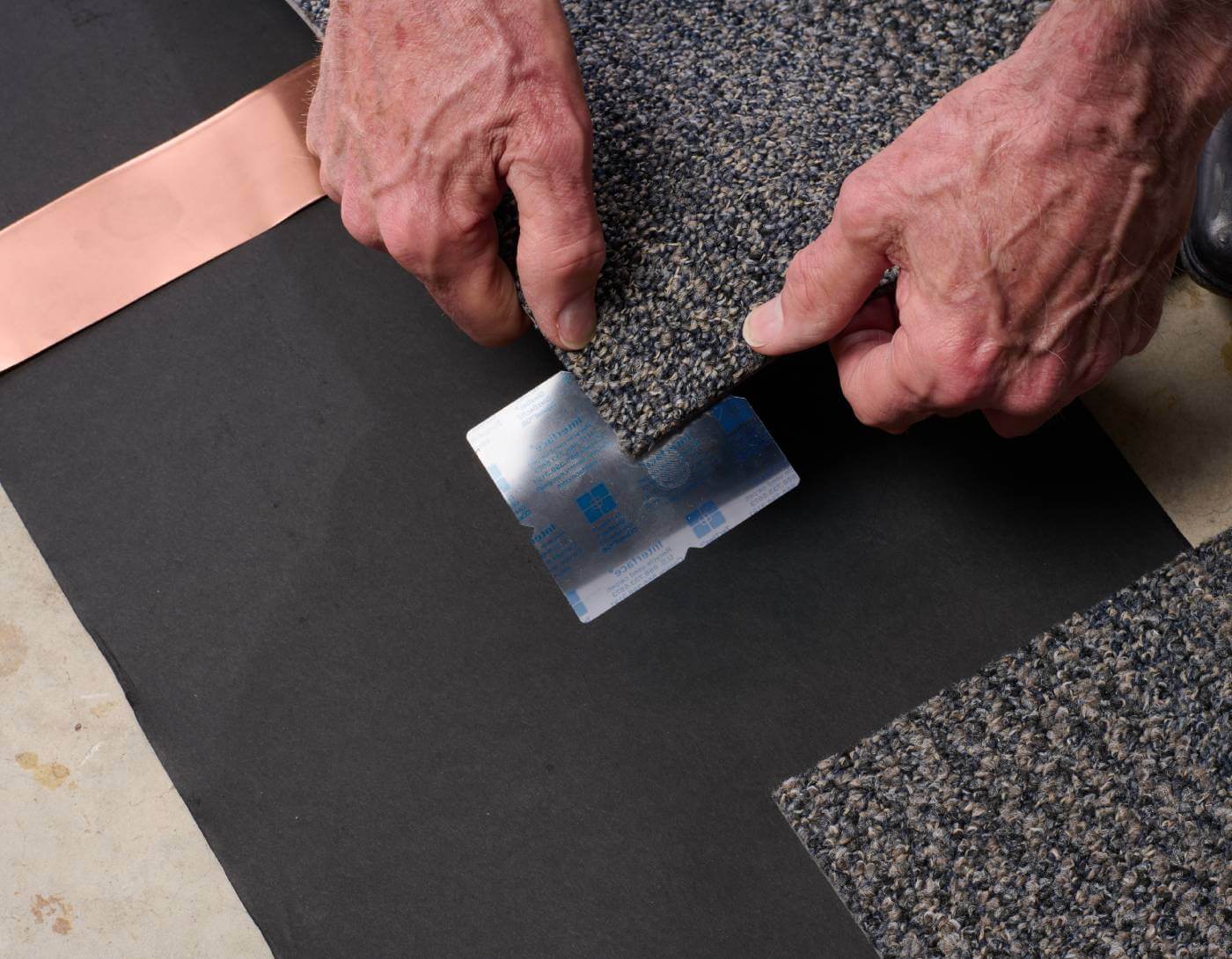
How does flooring material affect ESD?
Flooring materials with no ESD properties generate static electricity on people and mobile equipment as they move across the floor. Materials with no ESD properties cannot be grounded and do not dissipate static charges.
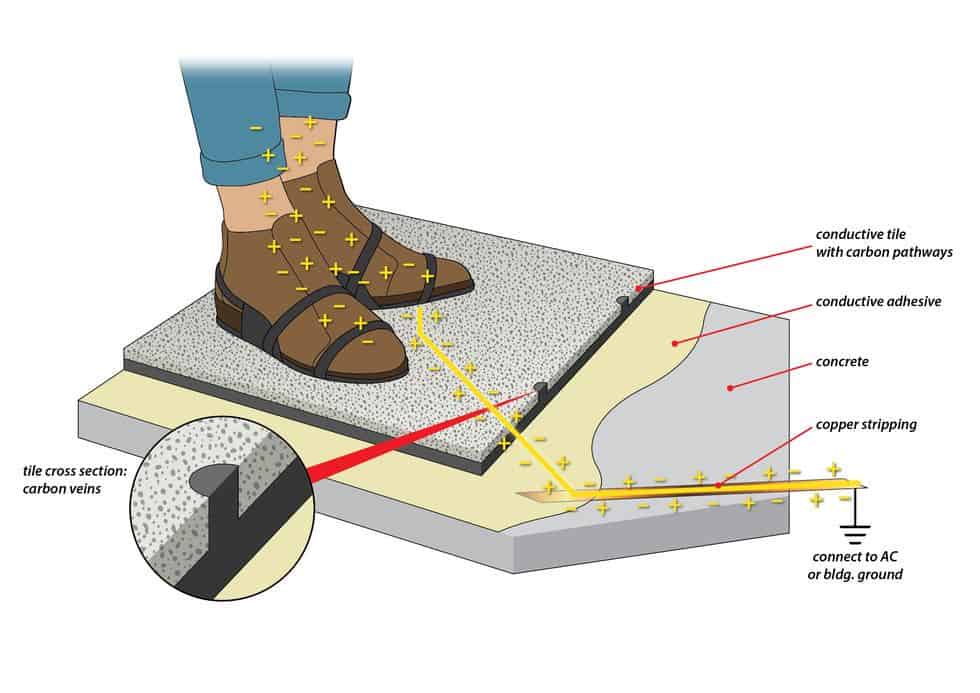
Floor materials with conductive elements transport static charges to ground, preventing random electrostatic discharge (ESD) events from harming electronic equipment. Static-control floors contain carbon veins, filaments or fibers that draw static away from shoe soles and wheels on moving carts, pull charges downward, through the thickness of the flooring material, across an underlying ground plane to copper strips at the perimeter of the room, to an earth ground.
How does static-dissipative flooring protect electronic equipment?
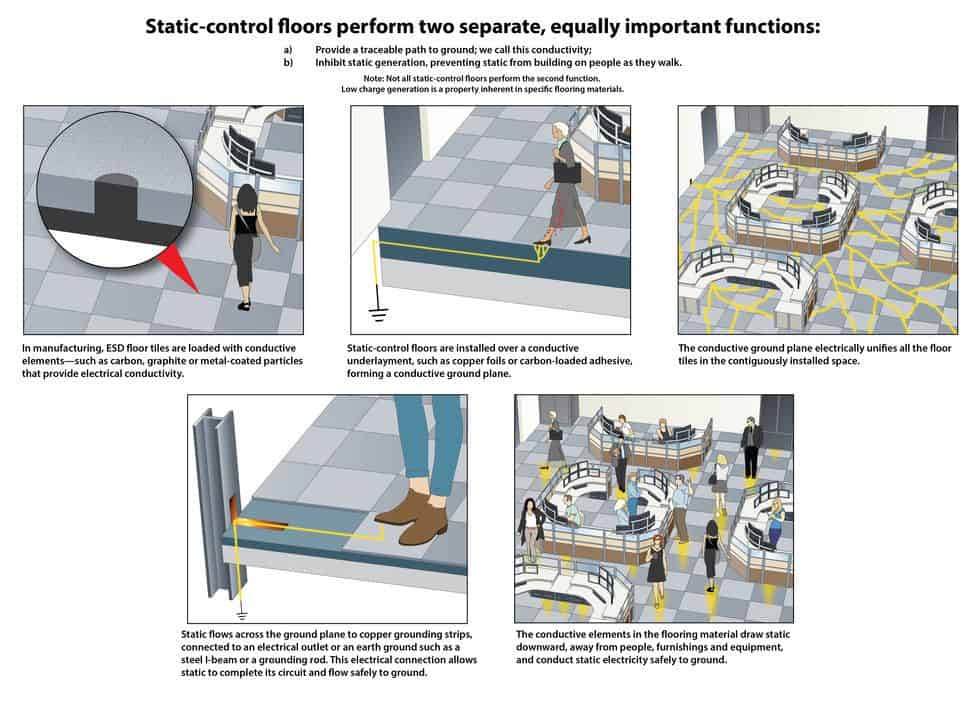
Static-dissipative flooring helps to protect sensitive electronic equipment from harm caused by random electrostatic discharge (ESD) events. When people or mobile objects move across a floor, friction between their shoe soles or wheels and the flooring surface generates static electricity. When the person or object comes into contact with someone or something else, accumulated static charges jump from their body to the other person or object. If they happen to touch an electronic component, the sudden jolt of electricity can damage or destroy its internal circuitry. Some static-dissipative floors are also antistatic, which means they prevent static from generating in the first place. Floors made with insulative base materials – such as ESD vinyl and epoxy – cannot prevent charge generation unless everyone walking in the space wears ESD-protective footwear.
*ANSI/ESD S20.20-compliance requires the use of ESD footwear.
Is all vinyl flooring anti-static?
No. Vinyl flooring is not antistatic. An antistatic floor inhibits static generation. ESD vinyl is made from static-generating (insulative) base materials and loaded with carbon chips or veins during manufacturing. ESD vinyl can be static dissipative or conductive, terms that indicate how slowly or quickly the floor discharges static to ground.
Without ESD footwear, ESD vinyl will generate static when people walk on its surface. ESD footwear creates a ground path between the person wearing the footwear and the ESD vinyl floor, preventing static generation as the person walks.
Is bare concrete an acceptable ESD floor?
Unsealed concrete can be conductive and may adequately control static, depending upon the relative humidity (rH) in the concrete itself. However bare concrete is rarely used as an ESD floor. Because rH varies, its conductivity is unreliable. Unsealed concrete is also unattractive and generates significant particulate.
Is ESD epoxy appropriate for a small server room?
We need to caution about the limitations of static-dissipative or conductive epoxy coating in a data center/server room application.
ESD coatings eliminate static by providing a path to ground. Conductivity is achieved by adding conductive fibers or carbon and graphite particulate. The fibers and particulate create an electrical bridge through a material that, otherwise, is an insulating static generator.
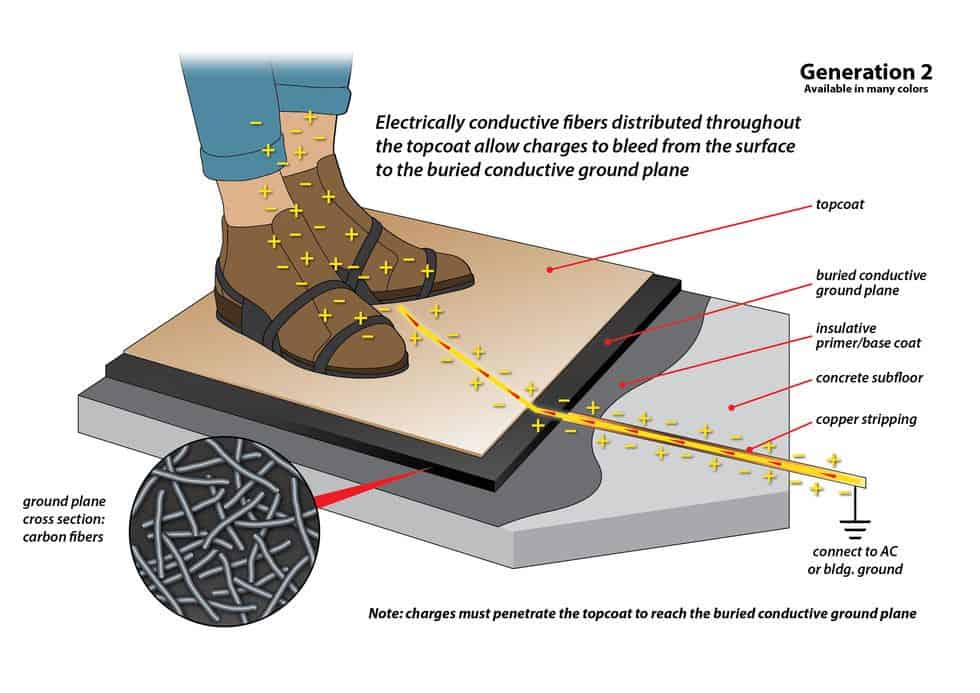
Conductivity is only one of the two critical static control properties provided by a coating.
Most epoxy is not a low charge-generating material. ESD epoxy coatings will eliminate static only if they are used in conjunction with special static-preventive footwear. If people walk on the floor with regular footwear (dress shoes, sneakers, hiking boots etc.), the coating will neither prevent the generation of static nor remove a static charge after it is generated.
To bridge the electrical gap between the human body and the floor, every person walking on the floor would need to wear special ESD footwear at all times. Walking on any ESD coating in street shoes would be the same as walking across a sheet of plastic. The result being the generation of thousands of volts and an increased likelihood of an ESD event.

In data centers, we recommend the following conductive materials:
- Conductive rubber;
- Conductive epoxy—but only if ESD footwear is mandated and rigorously enforced;
- Conductive vinyl tile—but only if ESD footwear is mandated and rigorously enforced;
- Static-dissipative carpet tile.
Is SDT the same as ESD tile?
The acronym SDT stands for static-dissipative tile. Static-dissipative tile has an electrical resistance measuring between 1.0 x 10E6 and 1.0 x 10E9 and is considered ESD tile.
Is static-dissipative flooring expensive?
Static-dissipative flooring can be more expensive than traditional flooring materials, due to the manufacturing costs of adding conductive elements to the material. But costs vary depending on the type of material and the installation method. The cost of static-dissipative flooring is typically lower than the cost of repairing or replacing damaged electronic equipment. More important, ESD flooring protects equipment from harm caused by random ESD events, including: garbled or disrupted data, lost or dropped calls, garbled media signals, lost or disrupted GPS signals, ghost planes (planes that cannot be seen on FAA screens), and other damage that disrupts the core mission.
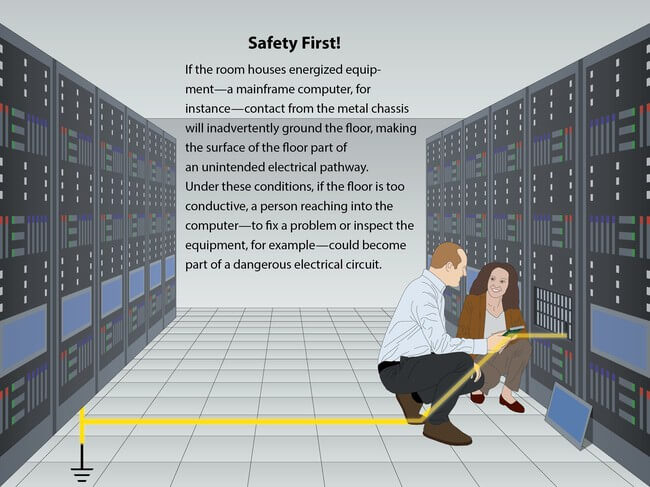
Is static-dissipative flooring safe for workers?
Yes, ESD flooring is safe. In rare cases, flooring that is too conductive could expose workers to unwanted or dangerous static shocks. For this reason, standards for facilities where people work near energized equipment – telecom, FAA flight towers, PSAPs, call centers, and other end-user spaces – require the use of static-dissipative flooring, or floors with electrical resistance measuring 10E6 to 10E9 ohms.
Is wood antistatic?
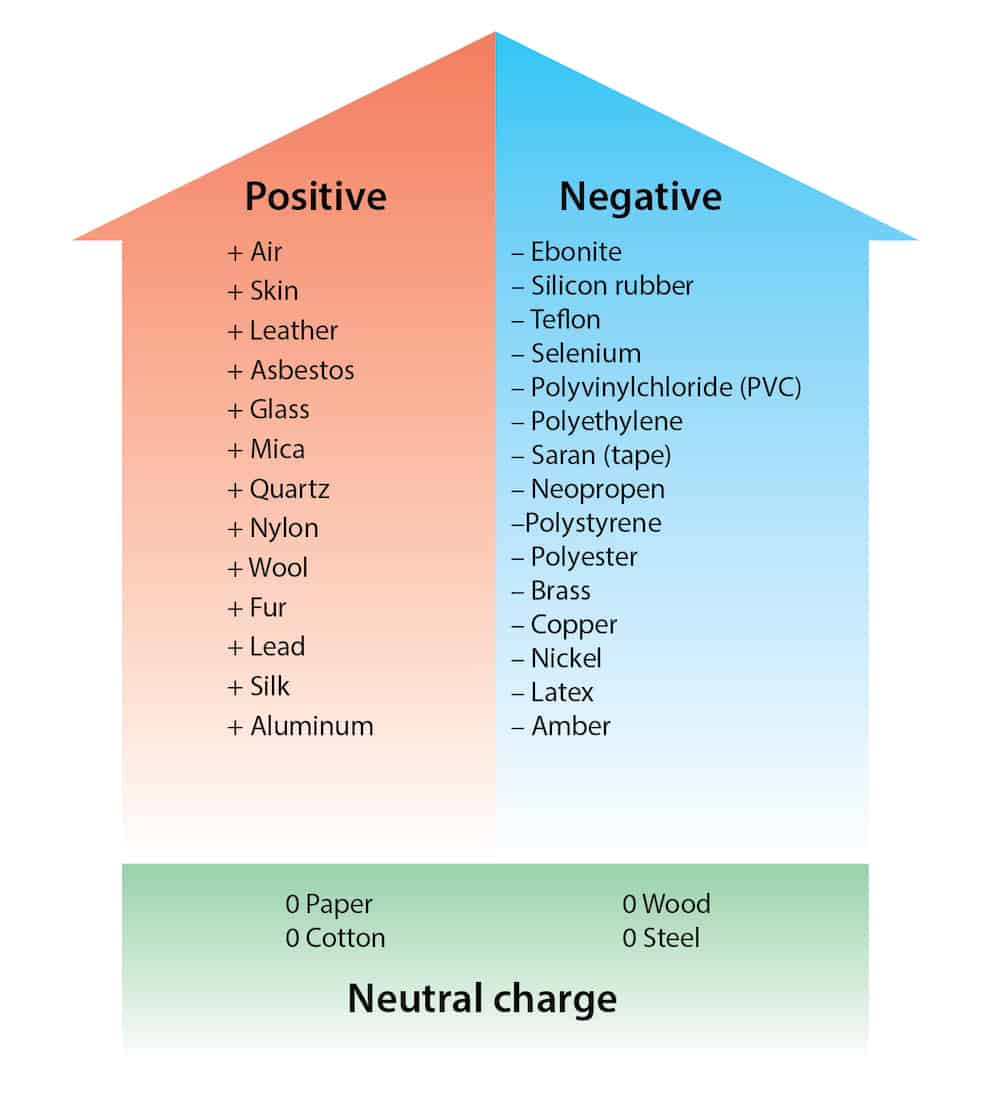
No, wood is not antistatic. You can learn which materials are antistatic and which are not by looking at the Triboelectric chart below.
What are the benefits of antistatic carpet tile?
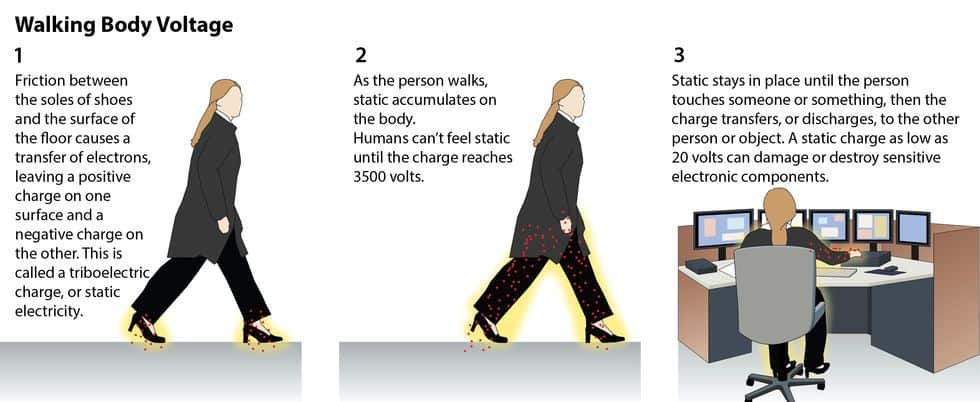
Antistatic carpet tile protects electronic equipment from harm caused by random electrostatic discharge (ESD) events. When people walk on a floor, the friction between their shoe soles and the floor generates static electricity. As people walk, static builds on their body then discharges to the first person or object they touch. This sudden jolt of electricity can damage or destroy sensitive electronic equipment.
Antistatic carpet tile protects electronics by preventing static generation. Manufactured with embedded conductivity, antistatic carpet also dissipates static charges to ground.
What are the benefits of ShadowFX static-dissipative carpet tile?
StaticWorx ShadowFX ESD carpet tiles are available in mergeable dye lots, making them easy to maintain and repair. With mergeable dye lots matching is not an issue. If a tile needs to be removed, it’s easy to replace with attic stock. Some ShadowFX carpet tiles can be installed non-directionally, for quick, easy installation. Non-directional styles also hide wear and tear. Due to their modular design and many styles and colors, antistatic carpet tiles can be used to create a variety of patterns and custom designs. Carpet tiles produce less waste and can be recycled at the end of their life cycle, making carpet tile more environmentally friendly than traditional broadloom carpeting.
What is a suitable hospital flooring material?
Most healthcare facilities and labs use low-VOC vinyl or rubber flooring materials. Vinyl is less costly than rubber and can be buffed or waxed to a high-gloss shine. Rubber requires less maintenance than vinyl, provides superior ergonomics and generates very little static even on people wearing regular street shoes. While hospitals often use tile, cleanrooms and labs typically prefer the seamlessness of sheet goods.

What is a suitable laboratory floor material?
Lab flooring is used for laboratories in healthcare or manufacturing facilities. Laboratory floors are typically covered with vinyl or rubber tile or sheets, sometimes epoxy or urethane, because these materials are hygienic, easy to clean and generate low particulate counts. Labs and cleanrooms usually prefer either coatings or sheet goods to tile because sheets are seamless, minimizing the risk of dirt and particulates accumulating on the floor, contaminating the space. Lab personnel prefer flooring materials like rubber with certain key ergonomic attributes – i.e., that limit foot and back fatigue, and provide sound attenuation and slip resistance.

What is an interlocking tile?
An interlocking tile is a tile with teeth that can be pressed into place with a mallet, locking the tiles together. Interlocking ESD floors do not require adhesive and are ideal for temporary or leased spaces or spaces that may be reallocated in the future. They can be laid in house or by a professional and are easy to lift and carry away.
What is antistatic carpet tile?

Antistatic carpet tile is a special type of carpet designed to protect electronics from random electrostatic discharge (ESD) events. People and mobile objects generate static charges as they move across a floor. When a charged person or object touches sensitive electronics, the sudden jolt of electricity can damage or destroy its internal circuitry. Antistatic carpet protects sensitive electronic equipment by preventing static charges from building on people or moving objects and dissipating static charges to ground.
Antistatic carpet tile is manufactured in small format tiles, usually 24” x 24” or the metric equivalent, allowing for easy installation, maintenance and repair. Because they produce less waste and can be recycled after their life cycle, antistatic carpet tiles are also more environmentally friendly than traditional broadloom carpet.
Antistatic carpet tile is commonly used in facilities that rely on sensitive, high-speed electronic equipment. Examples include data centers, labs, PSAPs, critical call centers, FAA flight towers, networked office spaces, media centers, financial institutions, electronic manufacturing and handling facilities and many other spaces.
What is antistatic floor paint?
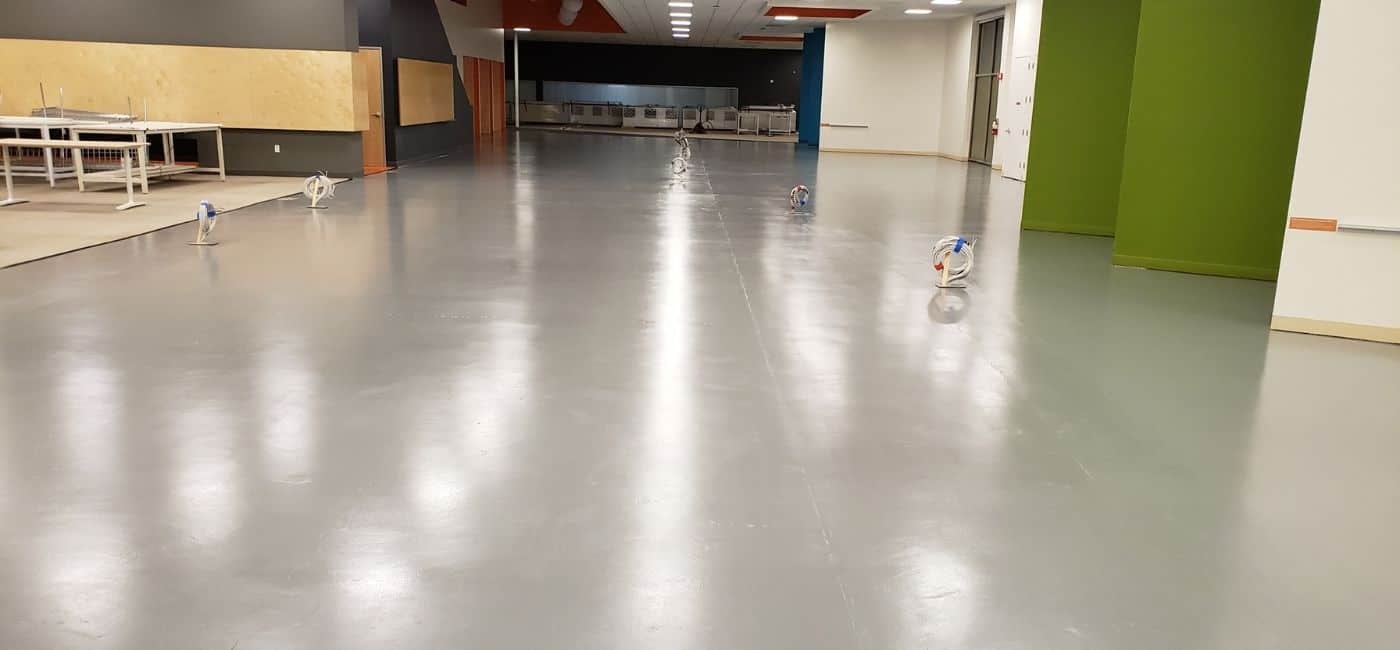
A type of paint, like GroundWorx Basics, made with conductive additives is sometimes called antistatic floor paint. Like antistatic vinyl, antistatic floor paint is a misnomer. The paint creates a path to ground – in other words, it grounds people walking on its surface – preventing static from building as people walk, but unless everyone walking on its surface wears special ESD footwear, paint is not antistatic.
What is electrically conductive (EC) rubber?
Electrically conductive (EC) rubber is rubber with conductive chips added to the material during the manufacturing process. The only documented low-generating flooring material, Eclipse conductive rubber generates minimal charges on people as they walk.
What is static-dissipative flooring?
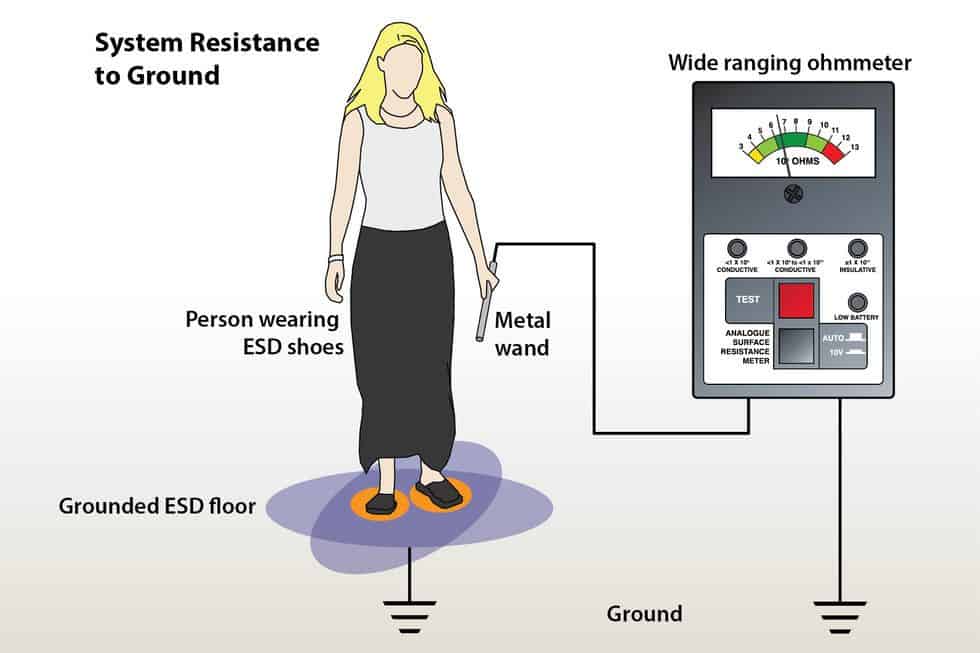
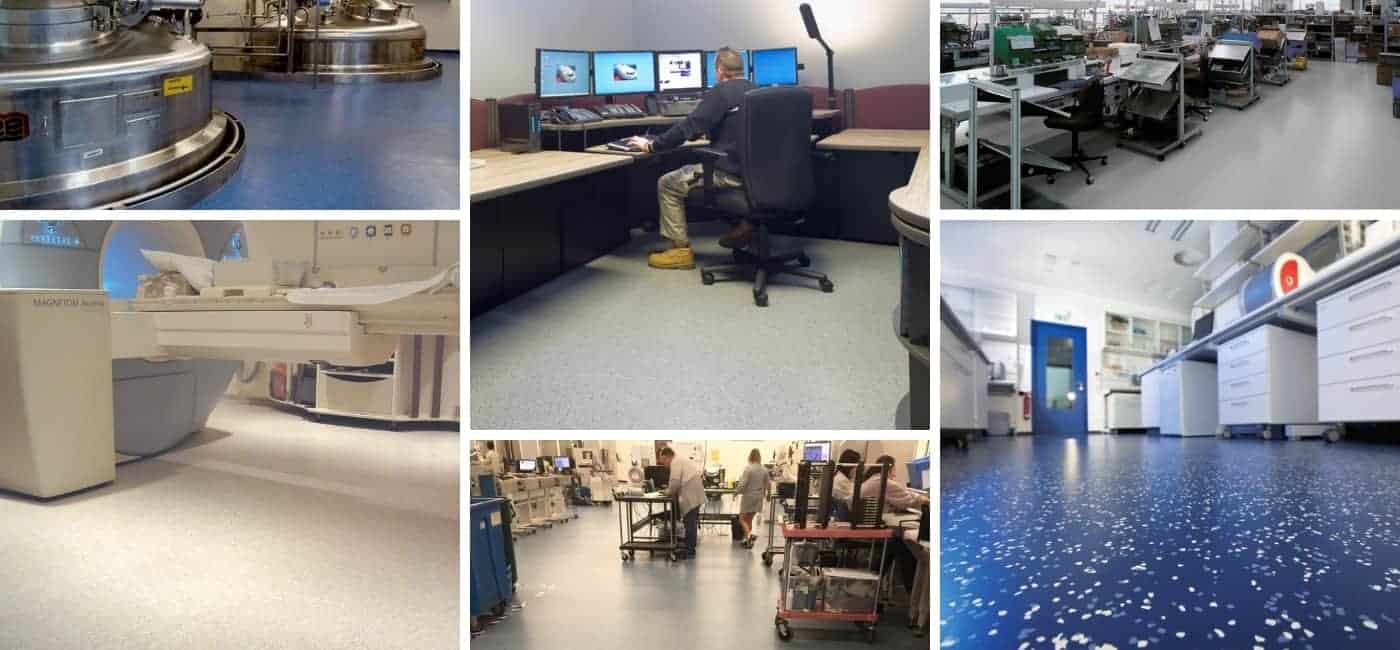
Static-dissipative flooring is a type of flooring that protects sensitive electronics by transporting harmful static charges to ground. Static-dissipative flooring is often used in facilities where people rely on electronic equipment to do their jobs and the equipment is crucial to the facility’s core operation. Static-dissipative is a term, or category, within the broader category of ESD flooring. To be categorized as static-dissipative, a floor must measure ≥ 1.0 x 10E6 and <1.0 x 10E9. Measurements must be taken with an ohm meter and tests conducted according to guidelines in ANSI/ESD STM7.1. A floor that does not measure between 1.0 x 10E6 and 1.0 x 10E9 is not static dissipative.
Where is antistatic carpet used?
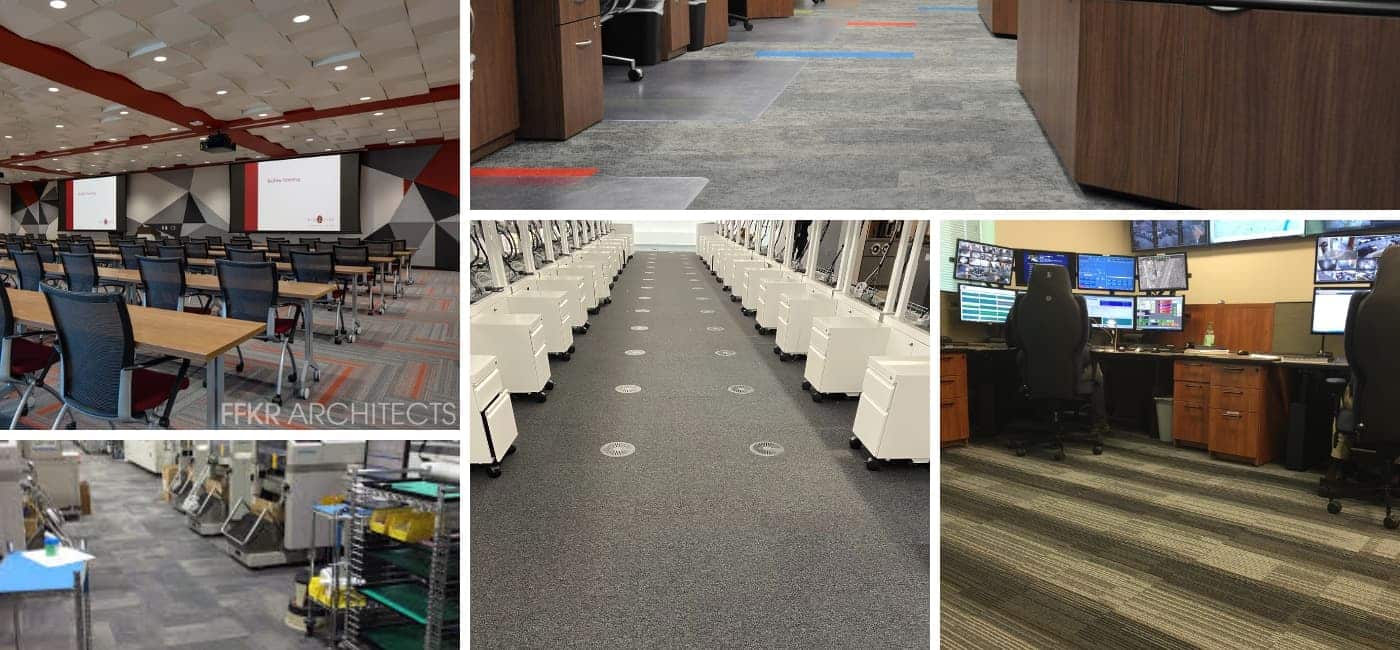
Antistatic carpet tile protects electronic equipment from harm due to random electrostatic discharge (ESD) events. This type of carpeting is commonly used in facilities that rely on electronics for their core mission and cannot afford disruption or downtime.
Some examples of where antistatic carpet tiles may be used include:
- Data centers: Random ESD events can damage servers and disrupt data.
- Laboratories: Labs often rely on expensive equipment to create and test new products. ESD can damage or destroy the internal circuitry inside this equipment.
- Manufacturing and Assembly facilities: Antistatic carpet tiles can help prevent damage to electronic components during production and assembly processes.
- Offices: Random ESD events can disrupt networked computer systems. In these facilities, antistatic carpet tile prevents static generation when people walk.
- Flight Control Towers: In a flight tower, static electricity can cause disruptions in flight monitoring equipment, possibly causing planes to ghost or go off course.
- Financial Institutions: ESD in a bank or financial institution can cause scrambled or disrupted data. In a Wall Street firm, seconds of disrupted data can be a disaster.
- PSAPs: In public safety facilities such as 9-1-1 dispatch centers, ESD events result in lost or dropped calls or lost emergency vehicles due to scrambled GPS signals.
This is just a small sampling of the many types of facilities that rely on antistatic carpet to control static and protect their sensitive electronics from harm due to ESD events. In general, antistatic carpet tiles are suitable for most carpet-friendly environments* where static electricity can cause problems or damage expensive electronic equipment.
* Carpet-friendly environments refers to facilities where the floors are not subject to chemical spills or abuse by heavy equipment such as fork lifts or pallet jacks.
Where is conductive rubber used?
Conductive rubber is a high-end static control product often used in labs, cleanrooms and electronics manufacturing facilities.

Where is static-dissipative flooring typically used?
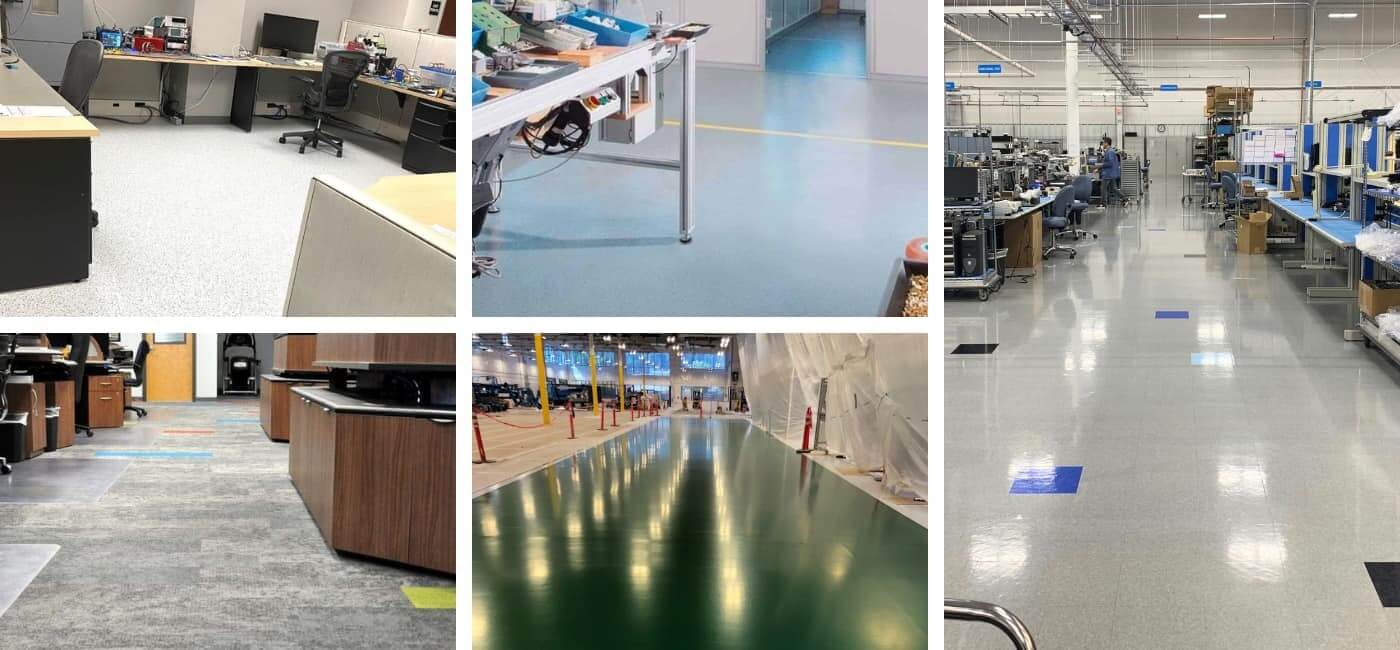
Static-dissipative flooring is used in facilities where people use sensitive electronic components to do their jobs and the facility relies on electronic equipment for their core mission. Examples include: PSAPs, critical call centers, financial institutions, networked government offices, media and IT rooms, and many other end-user spaces. Some companies that manufacture or handle electronic components, as well as some labs and cleanrooms use static-dissipative flooring, but many prefer floors measuring below 1.0 x 10E6.
Why not buy cheaper VCT tile?
VCT tile vs. SVT tile: lifetime cost vs. effectiveness

Vinyl Composition Tile (VCT), such as static-dissipative vinyl (SDT) is comprised of ordinary static-generating PVC, in combination with fillers like clay and limestone, and a chemical, known as an amine, to provide static-dissipative properties. While amines make the floor groundable, regular VCT is highly static generating.
When shoe soles contact and separate from VCT as people walk, static builds. To prevent static from building on people or objects—such as rolling carts or chairs—the floor must be waxed regularly, with three to five coats of antistatic polish. And everyone who walks on the VCT floor must wear special static-protective footwear—ESD shoes or conductive heel or toe straps, a requirement that is routine in electronics manufacturing facilities, but would be difficult if not impossible to enforce in most mission-critical spaces.
Cost
The initial cost of VCT is low. The ESD wax necessary to keep the tile from generating static is expensive. Maintenance costs quickly accumulate, negating any money saved on the original VCT. In other words, while the initial investment is small, the total, or long-term, cost of ownership is much higher than products requiring less maintenance. Conductive solid vinyl ESD tile (SVT) has a higher initial price tag, but SVT, uniform throughout the thickness of the tile, requires only periodic buffing to maintain its appearance.
Static-Control
ANSI/ESD S20.20 requires a system resistance measurement below 1.0 X 10E9 ohms. System resistance is the aggregate resistance of the person, footwear, flooring, floor coatings like waxes and polish, and the connection to ground. As the primary ESD flooring surface, the ESD wax must measure well below one billion ohms (< 1.0 X 10E9) at all times. Manufacturers of ESD wax, however, guarantee a measurement of < 1.0 x 10E10 ohms only on newly applied waxes.
ANSI/ESD S20.20 also requires a walking body voltage, tested per STM 97.2, to measure under 100 volts—a standard static-dissipative VCT tile does not and cannot meet this criterion.
Permanent Static Control
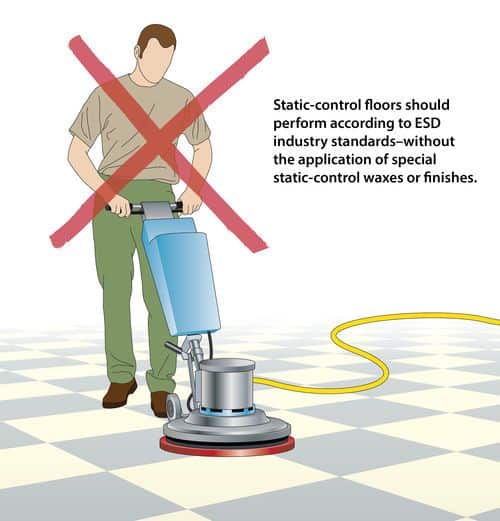
Any ESD flooring material that gains electrical properties from antistatic sprays or special waxes does not provide permanent static protection. Once the coating wears off, the floor loses its static-protective properties, exposing electronics to the hazards of random static discharge. There is no visible indication that the wax or polish is no longer performing. Unless the maintenance crew or someone in the facility is committed to testing the floor on a regular basis, there’s no way to know when the floor has stopped functioning. For peace of mind, it’s best to avoid these materials.
This article, published by In Compliance Magazine, details the key 2014 revisions in ANSI/ESD S20.20.
Are there any scientific studies about the performance of antistatic or conductive flooring for mission-critical environments or data centers?
Numerous scientific studies, standards bodies, and applied research programs have examined the role of static-control flooring in mitigating electrostatic discharge (ESD) risk in mission-critical environments. While direct attribution of individual ESD events to specific operational failures is impractical, broad consensus—reflected in ANSI/ESD S20.20, IEC 61340-4-5, and data-center research—confirms that uncontrolled human-body charging during routine movement is a primary ESD risk. Walking-voltage studies consistently show that properly designed ESD flooring systems reduce peak voltages and ESD probability.
To do so effectively, an ESD floor must perform two independent static-control functions, addressing both charge generation and charge dissipation under real-world conditions:
- The floor must provide a continuous, verifiable path to ground for personnel, equipment, and mobile objects.
- The floor must inhibit or prevent the generation of static charge on personnel during movement, including individuals wearing both standard street footwear and static-control footwear.

Can conductive tile be used as a 9-1-1 call center application?
We’re installing conductive vinyl tile, using copper strips to ground the tile. Is this the right static control prescription for a 9-1-1 call center application?
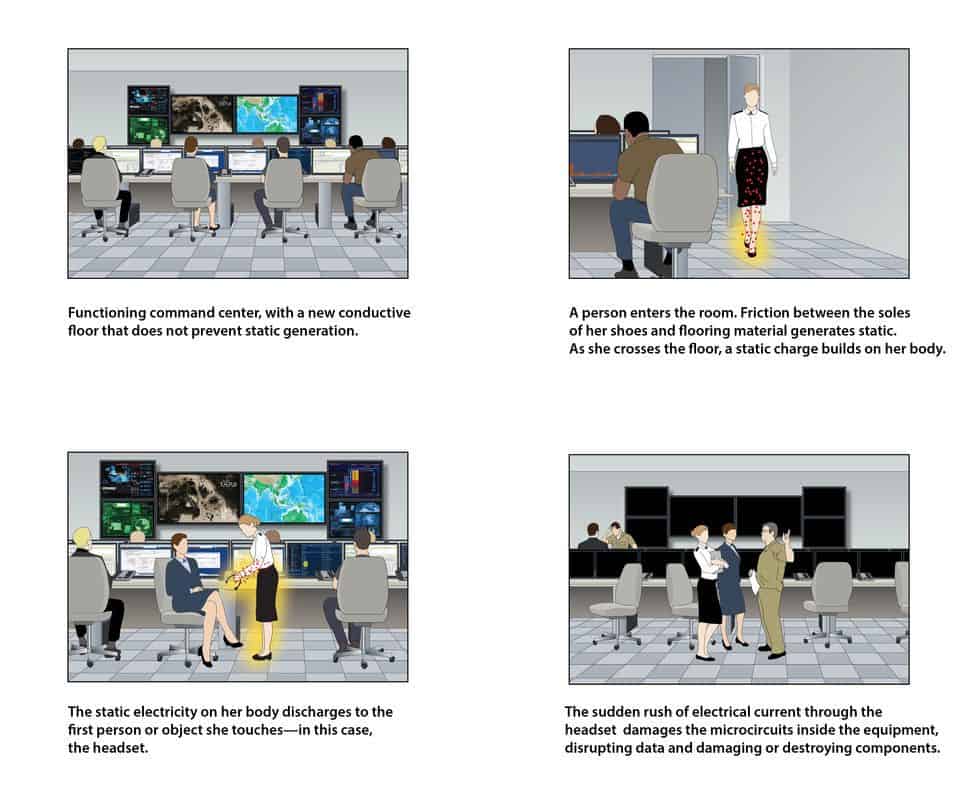
No. Conductive vinyl is not a low-charge-generating material. In other words, conductive vinyl will generate significant charges on people as they walk through the space while wearing standard footwear. When a person walks on a floor, the friction between the flooring material and soles of their shoes generates static. These static charges (called walking body voltage) build on the human body as the person continues to walk.

Like all electricity, static seeks its easiest path to ground. As soon as the charged person touches something—another person, a headset, an electronic component—the static on his or her body will jump, or discharge, to that person or object. This sudden spike in current can destroy headsets, corrupt data transmissions, or destroy the microcircuits inside electronic equipment.
Grounding the floor gives static charges a place to go, a path to ground, but does not stop charges from building on the human body. Unless protocols are diligently enforced, requiring every person who enters the space to wear special ESD-protective footwear, a conductive vinyl floor will not inhibit static generation or prevent random discharges from damaging equipment.
It is highly unlikely that people in mission-critical spaces, such as an emergency police dispatch center, would be required to wear ESD footwear. With people in street shoes, the best conductive vinyl floor will not prevent static—it will actually contribute to static generation.
Why isn’t antistatic flooring enough for mission-critical environments?
What’s the difference between antistatic flooring and true ESD-protective flooring—and why does grounding matter?
Questions about “antistatic carpet” versus permanent static-control or ESD flooring arise on nearly every project. The terms are often used interchangeably, but they are not the same—and in mission-critical environments, that distinction matters.
Antistatic or “low-static” flooring is typically intended to reduce nuisance static shocks felt by people. These products may limit charge generation under certain conditions, but they are not required to provide a permanent, verifiable path to ground. In many cases, their performance depends on surface treatments, finishes, or environmental conditions such as humidity. As those conditions change, static-control performance can change with them.
That difference may be inconsequential in a hotel lobby or general office space. In a 9-1-1 dispatch center, utility control room, data center, or financial trading environment, it can be critical. In these spaces, uncontrolled static on people moving through the room—often invisible and unpredictable—can disrupt sensitive electronics and operations.
True ESD-protective flooring is designed to address this risk at its source. It must limit the generation of static charge on personnel during normal movement and provide a continuous, measurable path for that charge to dissipate safely to ground. This grounding path cannot be created by a wire alone; it must be built into the flooring material itself and remain effective over time.
Equally important, ESD flooring must perform consistently under real-world conditions. Traffic, rolling loads, and chair castors should not degrade its performance, and static control should not depend on waxing, spraying, or special maintenance. Verified through resistance and walking-voltage measurements, a properly designed ESD floor becomes a stable part of the grounding system—supporting people, equipment, and operations where reliability matters most.
Are conductive reducers and transitions necessary?
No, reducers occupy very little surface area. They are usually installed at the point where flooring transitions from standard static generating materials like carpet, vinyl and bare concrete to the grounded ESD surface. The 2″ wide reducer need not have any conductivity since the first full step on to the ESD floor will remove any charges generated from walking on standard flooring surfaces.
Are the static-dissipative aspects of an ESD floor affected by transitions or reducers?
The static dissipative aspects of an ESD floor are not affected by the type of transitions, reducers and wall base used on a project. In the case of reducers, the standard operating procedure is the installation of the standard (non-ESD) versions of any of the following vinyl/rubber products:
- Roppe
- Johnsonite
- Tarkett
- VPI
If you or your client prefers a metal reducer it would likely be anodized aluminum which normally has no surface conductivity due to the anodization process.
Can regular flooring become ESD flooring if it is installed with conductive adhesive?
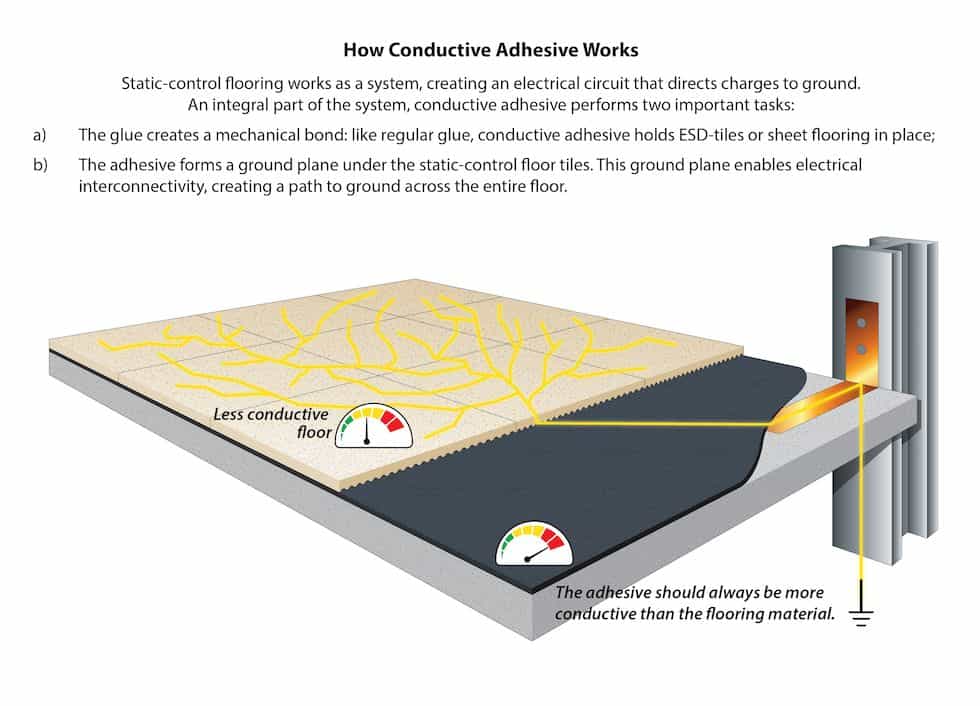
No, regular flooring is not conductive and cannot be grounded. With ESD floors, conductive adhesive acts as a conductive ground plane, drawing static charges through the thickness of the ESD flooring material, across the conductive ground plane to an earth ground. Because regular floors are not conductive they cannot transport static charges. In other words, even with an underlying ground plane, static charges cannot move through a regular floor, so charges stay on its surface.
If a material is antistatic, does that mean it will dissipate or conduct electricity?
No. The terms antistatic and conductive describe different properties and are not interchangeable.
Under certain conditions, a floor described as antistatic—or low charge generating—may limit the amount of static produced on shoe soles during walking. That performance can depend on footwear. For example, leather-soled shoes often generate little static on rubber flooring, and static-control footwear can suppress charge generation even on floors, such as ESD vinyl or epoxy, that would otherwise produce static.
Importantly, a flooring material does not need to be conductive to inhibit static buildup on people. However, a low charge-generating floor cannot dissipate charge to ground unless it also has conductive or static-dissipative properties. Many antistatic floors achieve limited conductivity through topical sprays or moisture-dependent additives, which can lose effectiveness over time or in low-humidity environments.
For this reason, ANSI/ESD and AATCC protocols require charge-generation testing on floor samples conditioned at very low relative humidity. Charge generation is measured in volts or kilovolts, while conductive and dissipative properties are measured in ohms. Both metrics are necessary to understand how a floor will perform in real-world environments.
ESD Flooring: Static Dissipative vs. Static Conductive
This video explains the difference between static dissipative and conductive:
Should I use ESD flooring in a residential home?
I’m getting ready to build a residential home, and I’m considering having my builder install your flooring. I understand that your company primarily deals with commercial properties and the discharge of static electricity to protect electronics, but does your flooring ground the human body as well (for instance, if someone were standing on it barefoot)?
I assume your question involves the concept of earthing the human body and it probably stems from a lot of chatter over the health benefits of discharging extremely low voltages from the human body. There is an article about this on the NIH website. Here’s the rub: to eliminate these extreme low voltages you must be grounded with almost zero electrical resistance between your body and the earth. No static control floor will do that. All static control floors, for safety reasons, must have an intrinsic resistance of greater than 25.000 ohms. Bottom line: you would be wasting your money and settling for a design you would not like as much as the floor your interior designer would choose for you.
What is a mission-critical environment in the context of ESD flooring?
Mission-critical electronics represent equipment and systems used in a variety of sectors involving tasks that that must never be compromised or rendered inoperable.
These environments usually involve 24/7 operations where the electronic systems monitor and enable critical functions, ranging from responding to emergency calls in a 9-1-1 police dispatch center to operating the command and controls of a nuclear power plant.
Electrostatic discharge is a well-documented problem in the assembly, repair, and operation of electronic systems. The installation of static-control (ESD) flooring in mission-critical environments is a standard operating procedure in the construction of data centers, control rooms, emergency public safety operations, flight control areas, and numerous other electronic environments where continuous operation is an absolute requirement.

Would I be better off with an antistatic, static-dissipative or a conductive floor?
First, let’s be clear about terms: for specificity and to help avoid confusion, the terms “static-free” or “anti-static” were recently changed to “low charge generating.” A floor described as static-free, anti-static, or low charge generation won’t contribute to triboelectrification. This means, when people walk, the floor won’t generate static on the soles of their shoes. A low-charge generating floor is not necessarily a grounded floor. Only conductive and static-dissipative materials (materials measuring < 1.0 x 10E9)—or materials that transport electrical current—can be grounded.
Grounded ESD Floor
The fact that a floor exhibits low-charge-generating tendencies does not mean it will also dissipate static properly. Static dissipation, and therefore conductivity, is unrelated to charge generation; one has nothing to do with the other. The ability of a floor to discharge—or dissipate—static is related to its conductivity, which is evaluated based on electrical ohms resistance tests. Charge generation is expressed in volts.
Finding the right static-control floor means matching the floor to the specific needs of the environment. A conductive floor that performs well in an electronics facility, where people are required to wear static-protective footwear at all times, might be ineffective in a data center or 9-1-1 public safety dispatch operation where people wear regular street shoes.
These two videos should help alleviate confusion and provide a good starting point for research.
Does an ESD floor do the same thing as a wrist strap?
Wrist straps are highly effective devices. They ground the wearer as do grounded ESD floors. For a wrist strap to work it must be connected to ground. To be grounded, the wearer must be tethered to the same ground connection as the wrist strap, inhibiting movement. ESD floors in combination with ESD footwear provide the same connection to ground as a wrist strap. Used properly, ESD flooring provides mobility without the restrictions of tethering.

Can a floor finish prevent static?
Applying static-dissipative floor finish over standard resilient flooring (VCT) is always a calculated risk. Before purchasing a floor that gains its static-protective properties from a special finish or wax, the following caveats should be taken into account:
- Waxes and floor finishes are temporary. Like any wax, static-control finishes abrade; as they wear off, the floor will increasingly generate static.
- Dissipative floor finishes rely on humidity. ESD floor finishes gain conductivity by drawing moisture from the air. When RH drops below 30%, they lose effectiveness, and the ohms resistance of the floor increases.
- Losing one order of magnitude would turn SD vinyl tile with a resistance of 10E8— at the upper end of the dissipative range—into an unacceptable flooring surface measuring > 1.0 X 10E9 ohms.
- There is no visible sign that static-protective properties have worn off. Unless someone commits to testing the floor on a regular basis, and follows through, the floor could generate high levels of static without anyone knowing.
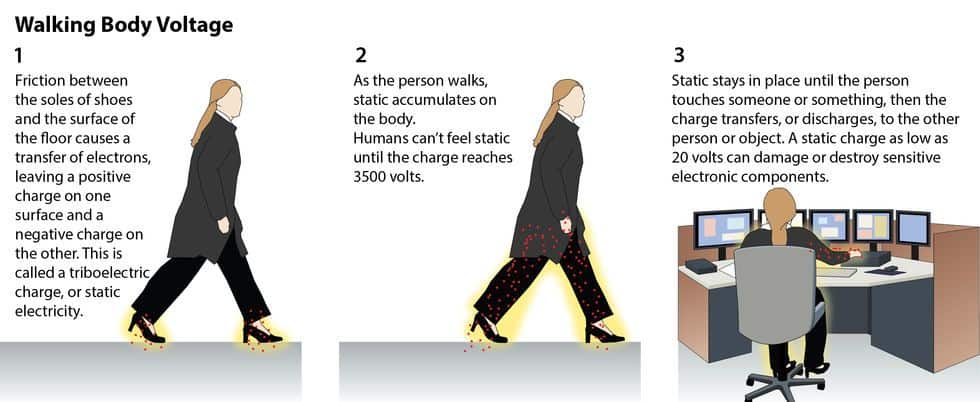
Humans can’t feel a static zing until it’s approximately 3.5 kV (3500 volts). This means, any discharge under 3.5 kV would go undetected. In a residential environment, this is no big deal. In most electronics workspaces, a discharge as small as 100 volts—or as low as 20 volts for ultra-sensitive microcircuits—can damage or destroy electronic components.
Why buy static-control flooring?
If it’s to prevent static shocks—at home or in an office that doesn’t rely on sophisticated electronics—we advocate for antistatic sprays and floor finishes. When people start feeling shocks, it’s time for a reapplication.
To avoid mission-critical failure by preventing malfunctions in a data center, control room, call center, 9-1-1 dispatch operation, or flight tower, a floor finish won’t do the job. Short of routine performance tests, there is no way to monitor the effectiveness of the floor—the very events the ESD floor is meant to avert will be the only barometer indicating that the finish has worn off and the floor is no longer static-protective.
Using Wax for Routine Maintenance
While waxes and floor finishes do not provide adequate static protection, buffing waxes work well for routine maintenance—that is, to keep the floor clean and, in the case of conductive SVT, maintain its hospital-like shine.
How are static-dissipative and conductive properties added to flooring?
Unlike standard flooring, static control floors promote the flow of electricity—in other words, static charges flow across and through the floor to electrical ground. When people walk across a regular floor, the contact and separation between the floor and the soles of their shoes generates static. Regular flooring, which is electrically insulative – the opposite of conductive—cannot be grounded. As there is nowhere for the static to go, it builds on people and discharges to the first person or object they touch.
Static-control flooring transports—or dissipates—static electricity and other electrical currents to ground. Because of their conductivity, static-control floors can be grounded.
Most types of flooring can be made into a conductive or static-dissipative floor. The most common way to produce a static-control floor is to add carbon or graphite to the standard flooring formula.
Here are a few examples of how this is done:
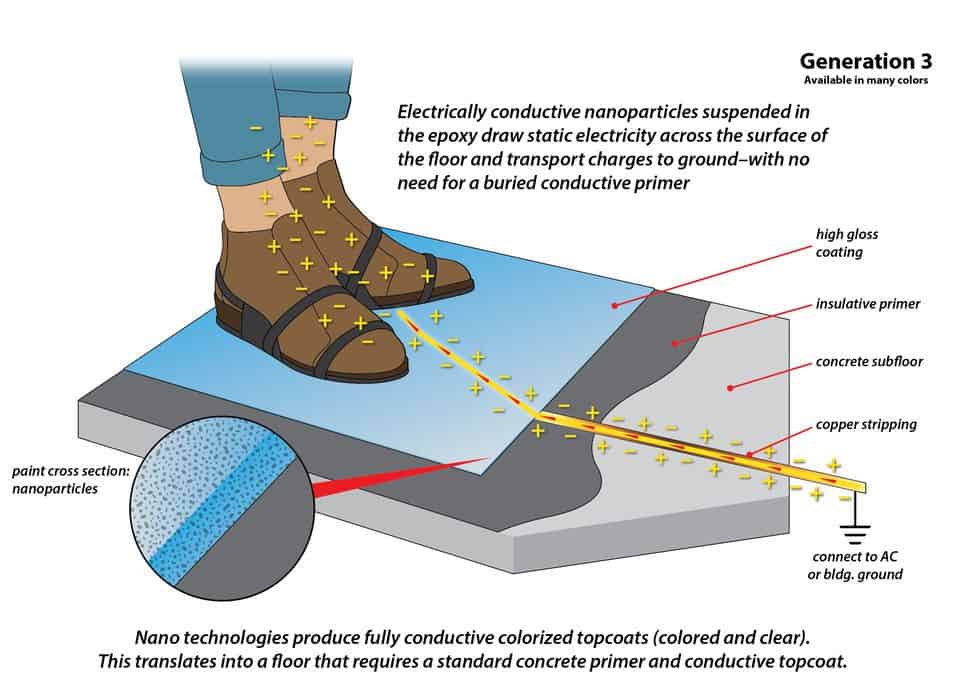
Epoxy floors are made with liquid catalyst-driven resins. Carbon particulate or carbon fibers are added to the epoxy while it is in liquid form. Depending on the percentage of the additive, manufacturers can produce a highly conductive epoxy coating for explosives handling or, by adding slightly less of the additive, create a static-dissipative version for electronics handling applications.
Standard carpet tile, often made with insulative wool or nylon fibers, is a natural static generator. By wrapping carbon-loaded fibers around the tile’s nylon filaments, manufacturers turn a static-generating carpet into a static-control floor.
Depending on the type of carbon fiber and the design of the carpet tile, it is possible to control the ohms resistance of the tile and create either static-dissipative or conductive flooring.
Since carpet tiles are rarely used in explosives-handling operations (which require smooth, non-porous washable conductive flooring), most carpet tile applications are for light electronics assembly, labs and end user environments, better suited to the static-dissipative version.
What is electrostatic discharge (ESD) Flooring?
This video provides an overview of static control flooring options:
How does relative humidity affect the performance of an ESD floor?
Dry air resists the flow of electricity. That’s why more static is generated when the climate is dry. Because static can’t move through dry air, static tends to stay on surfaces when the air is dry. As water is conductive, humidity promotes the flow of electricity. By pulling moisture from the air, some ESD floors may appear to perform better when the humidity is over 40 percent. This is quite normal with carpet. Dry air can do the opposite.
All ESD floors should be conditioned and tested at least as low as 12 percent relative humidity. Unless the floor is loaded with carbon fibers, most floors will fail ANSI/ESD walking and resistive property tests below 20 percent RH.

How long do conductive and static-dissipative properties last in ESD flooring?
In a properly designed flooring material, static-control properties should last as long as the floor itself. Most conductive and static-dissipative floors are manufactured using elemental conductive or dissipative materials like carbon, graphite and silver. As long as these additives are bonded to the flooring in adequate concentration, they should provide static dissipation forever.
Some ESD flooring materials lose their ability to eliminate static because of outside influences like maintenance. Dirt and debris can insulate a static-control floor, for example, causing performance failure. ESD vinyl tile will become a static generator if it is polished with generic floor waxes.
Is our tile is out of spec if a reading is 1.0 x 10E9?
We measured the resistance of our ESD tile and the measurement reads 1.0 x 10E9. S20-20 specifications state that the floor must read less than 1.0 x 10E9. Does this mean our tile is out of spec?
You are correct. To meet ANSI/ESD S20.20, ESD flooring systems must measure less than x 10E9 ohms. A floor that measures greater than or equal to 1.0 x 10E9 is non-compliant. (Older versions of ANSI and ASTM did not state this clearly.)
S20.20 also requires system resistance testing. Measured following the guidelines set out in STM 97.1, a person wearing ESD footwear in combination with the floor must measure less than 1.0 x 10 E9 ohms. These are the resistance parameters required by S20.20. But resistance testing alone is not enough. S20.20 also requires the floor to be low charge generating. To meet the standard, the floor must control charges to < 100 volts, using test method ANSI/ESD STM97.2.
To educate specifiers about resistance and body voltage parameters we were asked by In Compliance Magazine to write this article: Qualifying ESD Flooring
Is ShadowFX carpet tile rated for chair castors rolling over it (without a chair mat)?
Yes – the traffic classification for all of our carpets is “Heavy,” meaning rated for heavy-duty use. In regards to ESD flooring, you would never want to use a regular (non-ESD) chair mat because then you would eliminate the ESD properties of the floor in that space.
How do you test an ESD floor?
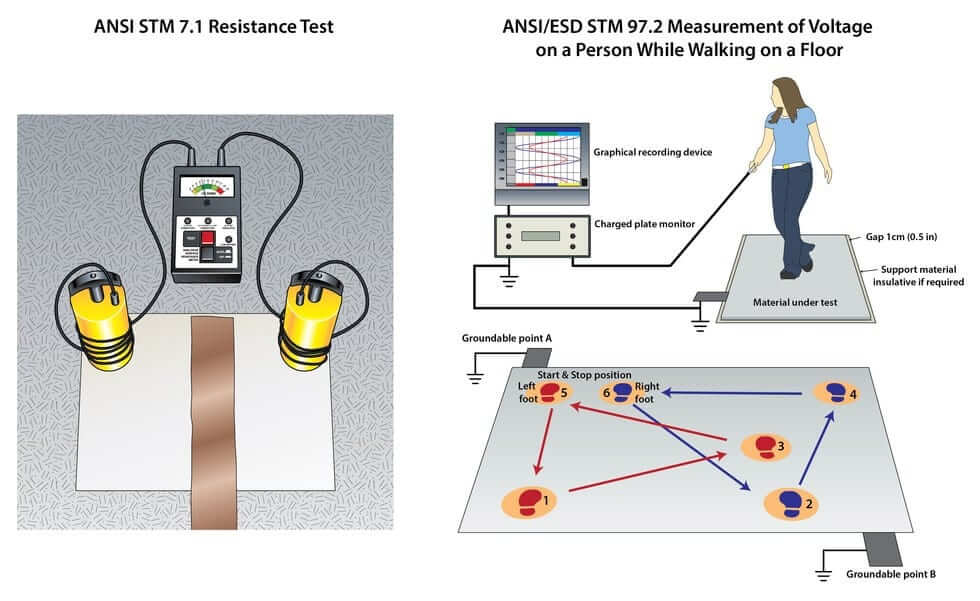
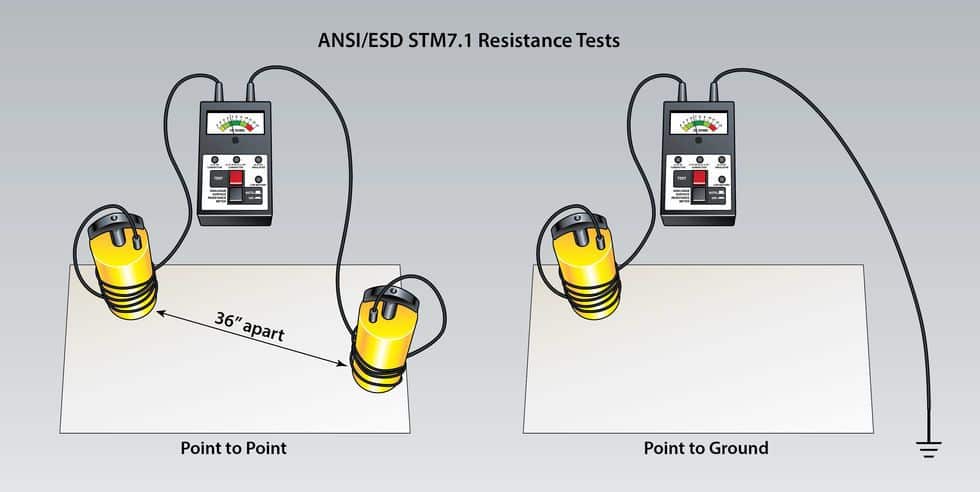
To ensure they meet pertinent standards, ESD floors are tested for electrical resistance and static generation. Resistance is measured with an ohmmeter, following either ASTM F150 or ANSI/ESD STM 7.1, by placing two 5 pound probes 3 feet apart on the floor, and applying 10 volts of electricity. Static generation is tested using a volt meter, following ANSI/ESD STM 97.2, and measures the static generated when a person wearing a certain type of footwear walks in a pattern on the floor.
To see a resistance test demo, watch this video:
Watch this video to see a body voltage test.
Is it possible for a conductive floor not to meet ANSI/ESD S20.20?
First, floors do not meet ANSI/ESD S20.20. S20.20 is a process document, citing recommended electrical parameters based on the measured results of ANSI standard test methods (STM).
But, yes, a floor can fail to meet those electrical parameters. First, the system resistance could be higher than the resistance of the flooring material. That is, a material may fall within the acceptable range when tested alone, but fail when the entire flooring system is tested. (Explanation below.)
Second, previous versions of S20.20 included only resistance testing. S20.20 also requires that the floor generate no more than 100 volts of body voltage, tested per STM 97.2. A floor can pass resistance tests, yet fail body voltage tests.
Electrical Resistance (measured in ohms)
Under ANSI/ESD S20.20, the resistance to ground (RTG) of a flooring material must measure at or below 1 x 10E9 ohms, or 10E9 Ω.
If RTG exceeds 1.0 x 10E8, the resistance of the flooring system—i.e., the aggregate resistance of a person, the footwear the test subject is wearing, the flooring, and the connection to ground—may not be able to compensate for potentially higher resistive properties of, for example, certain types of ESD footwear. As each element in the system has some electrical resistance, the complete system could measure well above 1.0 x 10E9.
Measuring resistance through a person and footwear (as opposed to testing only the floor, using two five-pound weights) yields a different resistance value than you’d get with just the 5-pound NFPA probes. Again, it would be difficult, if not impossible, for a flooring material measuring in the upper end of the static dissipative range (> 1.0 x 10E8) to be part of a total system—person, footwear, potential floor contamination—measuring less than 1.0 x 10E9. The math just may not work.
Body Voltage/Charge Generation (measured in volts)
In 2014, the ESD industry changed their standard to include charge generation—also called walking body voltage—that is, the static that accumulates when people walk on the floor.
Charge generation is the result of a material’s tribo-charging properties. Charge generation and resistance are two separate properties; resistance does not correlate to charge generation.
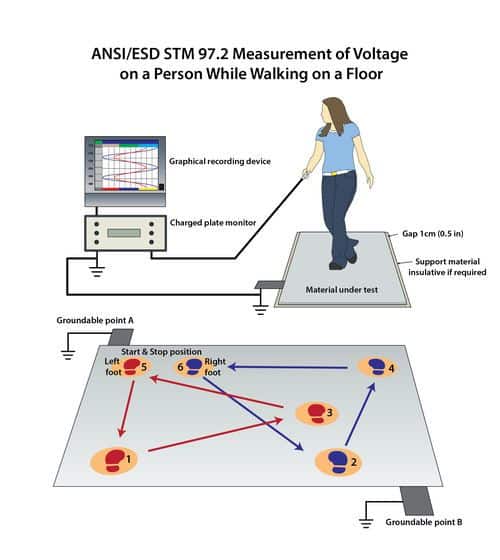
Floors for electronics manufacturing and handling should generate no more than 100 volts of static, tested per STM97.2.
Most static-dissipative epoxy coatings—and even some conductive floors—are incapable of preventing body voltages from exceeding 100 volts. Since the goal of ANSI/ESD S20.20-2014 is to prevent body voltages above 100 volts, it is impossible to categorically state that all static-dissipative and conductive floors measuring less than 1.0 X 10E9 will automatically meet ANSI/ESD S20.20-2014.
In fact, the opposite is true. Many conductive and static-dissipative floors measuring below 1.0 x 10E8 fail body voltage testing.
What are ESD guidelines?
ESD guidelines, or standards, vary across industries. Why is this? Because different applications require different specifications for static control. Electronics manufacturing and assembly (SMT) follow standard ANSI/ESD S20.20. S20.20 requires every person in an electronics manufacturing or assembly facility to wear special ESD-protective footwear. The resistor inside ESD footwear protects the wearing, allowing the floor to measure within a much wider resistance range – any measurement under 1.0 x 10E9 is acceptable – without concern for personnel safety.
In industries such as telecommunications, where people do not wear ESD footwear, static must dissipate at a more measured pace; guidelines for these industries specify floors with higher electrical resistance. Telecom facilities follow Motorola R52 and ATIS 0600321. U.S. flight control towers and facilities using FAA equipment follow FAA 019f. And government facilities follow S20.20 or their own government standards.
What are the ANSI/ESD S20.20 specifications?
First of all, ANSI/ESD S20.20 is not a specification. It’s a process document.
Flooring does not meet S20.20. It meets (or doesn’t meet) the recommended electrical parameters derived from the standard test methods referenced in S20.20.
In fact, S20.20 references not one, but 3 standard test methods:
ANSI/ESD STM7.1
Floor Materials—Resistive Characterization of Materials. Any flooring material must measure below 1.0 X 10E9 ohms to ground. However, the flooring must also comply with the 2 parameters listed below:
ANSI/ESD STM97.1
Floor Materials and Footwear—Resistance in Combination with a Person. The recommended maximum system resistance is 3.5 X 10E9.
ANSI/ESD STM97.2
Floor Materials and Footwear Voltage Measurement in Combination with a Person. The recommended maximum voltage allowed is 100 volts.
What does it mean when someone says a floor "Meets ANSI/ESD S20.20"?
When discussing the electrical properties of their static-control floors, manufacturers usually refer to ANSI/ESD documentation, stating that their floor “meets ANSI/ESD S20.20.”
What they actually mean is that, in resistance testing, their floors measure less than 1.0 X 10E9 ohms. By itself, that fact tells only part of the story. For any floor used in a program that must meet the 2014 revision of ANSI/ESD S20.20—the flooring and flooring resistance are only one part of a bigger picture.
The floor must also meet walking body voltage (or charge generation) requirements: that is, material must generate no more than 100 volts of static on people walking on the floor, wearing whatever type of footwear is to be worn in the space.
Do grounding wires create an antistatic or static-control environment?
Grounding wires by themselves do not create an antistatic or static-control environment. They only provide a path to ground for materials that are already conductive. If a flooring system lacks intrinsic conductive or static-dissipative properties, adding a ground connection will not make it effective.
For true static-control flooring, grounding is simple. A single physical connection – typically a short copper bridge between the conductive adhesive and building steel or building ground – is sufficient. Because conductive flooring materials and adhesives are electrically bonded across the surface, only one ground connection is generally required for approximately every 1,000 square feet. Performance is easily verified by measuring resistance with an ohm meter.
This distinction is especially important with carpet. The term antistatic is often used to describe carpet that generates little static when new, typically based on AATCC-134 testing performed under controlled conditions with leather-soled shoes. That test does not reflect long-term performance, and the antistatic residues introduced during manufacturing wear off quickly. Grounding a carpet with no permanent conductive properties does not change that behavior.
For carpeted spaces, meaningful static control depends on permanent electrical properties that can be measured and verified over time, supported by a warranty that specifies those properties, not on ground wires alone.
Do I have to use grounding strips?
Yes. The copper strips tie all elements of the ESD flooring installation—tile and adhesive or conductive floor coating—to the same electrical potential. The strips can be attached to ground through an electrical outlet, a dedicated grounding rod, or the metal superstructure of the building. Use 1 copper grounding strap per 1000 sq.ft. installation or one strap per room.
Do conductive and static-dissipative tiles need to contact one another in order to be grounded?
Static-control floor tiles draw static from the top of the tile through its thickness to the bottom of the tile—not side to side. If two tiles were placed tightly against each other and we measured electrical continuity from the top of one tile to the top of the other, we would likely measure a very high resistance. A high resistance indicates no electrical continuity between static-control tiles. The conductive adhesive or underlayment solves this problem.
A conductive adhesive or underlayment, acting as an electrical conduit, forms a conductive ground plane below all contiguously installed tiles. Without this conductive ground plane, each tile would be nothing more than a small ungrounded island. The conductive ground plane unites the tiles electrically, creating one single grounded static-control surface. Proper installation with the right adhesive or underlayment enables easy grounding of an entire installation with only a few ground connections. A rule of thumb is one ground connection per one thousand feet of ESD flooring.
Does static-dissipative tile need to be grounded?
All ESD tile must be grounded. Any floor that is not grounded cannot conduct electricity and cannot dissipate static charges. Floors that are not grounded cannot remove static from shoe soles or dissipate charges to ground and cannot protect electronic components from damage caused by random electrostatic discharge.
How is electrical continuity maintained across an installed ESD tile floor?
Electrical continuity across an ESD tile installation is a function of the flooring system. Not all static-control floor coverings are designed to form a continuous electrical plane. Some rely on topical finishes to achieve conductivity, while others described as antistatic are not conductive at all and cannot be electrically bonded across an installation.
In a properly functioning ESD flooring system, continuity is created by the way the tiles, adhesive, and grounding work together. The tiles are electrically bonded to one another through a conductive adhesive, allowing static charge generated anywhere on the surface to move laterally across the floor rather than remaining isolated to individual tiles.
That electrically bonded floor plane is then connected to building ground through a simple physical connection, typically a copper strip placed beneath a tile and attached to building steel or another grounding point. Because the floor functions as a single continuous system, only one ground connection is generally required for approximately every 1,000 square feet.
When the flooring, adhesive, and grounding are designed and installed as an integrated system, electrical continuity is maintained across the entire floor, ensuring static charge can be safely and predictably dissipated wherever it is generated.
How do you ground a raised floor?
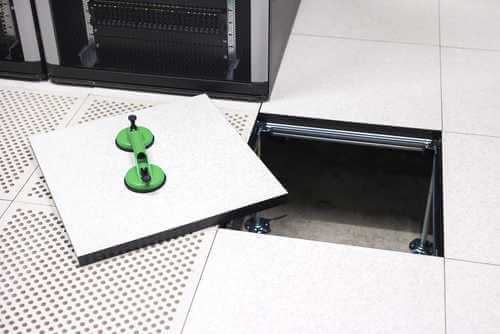
Raised floors can be grounded to the metal access floor panel or grounded like any other ESD floor with copper tape placed every 1000’ at the perimeter of the room and connected to an electrical outlet or other earth ground.
How do I ground materials and carts to a conductive tile floor?
To ground carts to ESD flooring, use conductive casters.
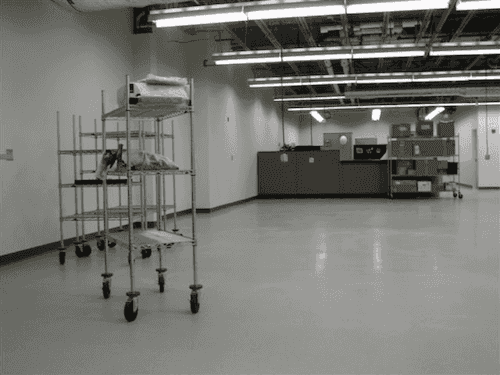
The photo below shows a conductive vinyl tile installation. This client planned to use wire shelf carts to move electronics assemblies around the floor. Although the floor is grounded and conductive, the cart could not be grounded because its wheels are insulators.
Static cannot discharge through an insulator—even if the insulator is resting on a static-protective floor. The cart in the photo does not have conductive casters. Adding conductive wheels to the cart will drain static charges to the floor.
More on insulators
Insulators can never be grounded, because insulators are inherently non-conductive.
Examples of common non-conducting materials are:
- Rubber sole shoes
- Child-proof electrical outlet covers
- Plastic wrapped around an electrical wire, preventing electrical shocks.
Floating conductors
The metal cart, pictured above, with no ground chain or conductive castors is a “floating conductor,” as its insulative wheels are insulating it from ground. Since the rest of the cart is metal and conductive, it will potentially accumulate static and store it—the same way a capacitor stores voltage.
What is a floating conductor?
Any conductive object electrically separated from ground. In the case of the metal cart, the metal is conductive and the floor is considered ground. By the exact same principle, people walking on an ESD floor wearing regular street shoes are also floating conductors.
Need more advice? Click here to e-mail us with questions on how to maximize the effectiveness of your ESD floor.
How is conductivity established and maintained across an ESD floor installation?
Questions about mating copper strips, conductive tape, or grounding conductors usually stem from a broader concern: how conductivity is created and maintained across the entire static-control floor. The answer lies less in how individual components are connected and more in the design of the flooring system itself.
Not all static-control floor coverings behave the same way. Some materials rely on surface treatments or special waxes to achieve conductivity, meaning performance can vary with maintenance and wear. Other products described as antistatic may limit charge generation but lack the conductive properties needed to form a continuous electrical plane.
In a properly functioning ESD flooring system, conductivity is built into the installation. Conductive tiles are electrically bonded to one another through a conductive adhesive, creating a unified ground plane beneath the surface. Static charge generated anywhere on the floor moves through the thickness of the tile into that adhesive layer, where it is distributed laterally and directed toward ground.
Grounding the system requires only a simple physical connection. A copper strip placed beneath a tile bonds the conductive adhesive to building ground, such as electrical conduit or structural steel. Because the floor and adhesive function as a single electrically continuous system, only one ground connection is typically required for approximately every 1,000 square feet.
When the flooring, adhesive, and grounding connection are designed to work together, conductivity across the floor is inherent to the system, not dependent on how individual wires or tapes are mated, and static charge can be safely and predictably dissipated wherever it is generated.
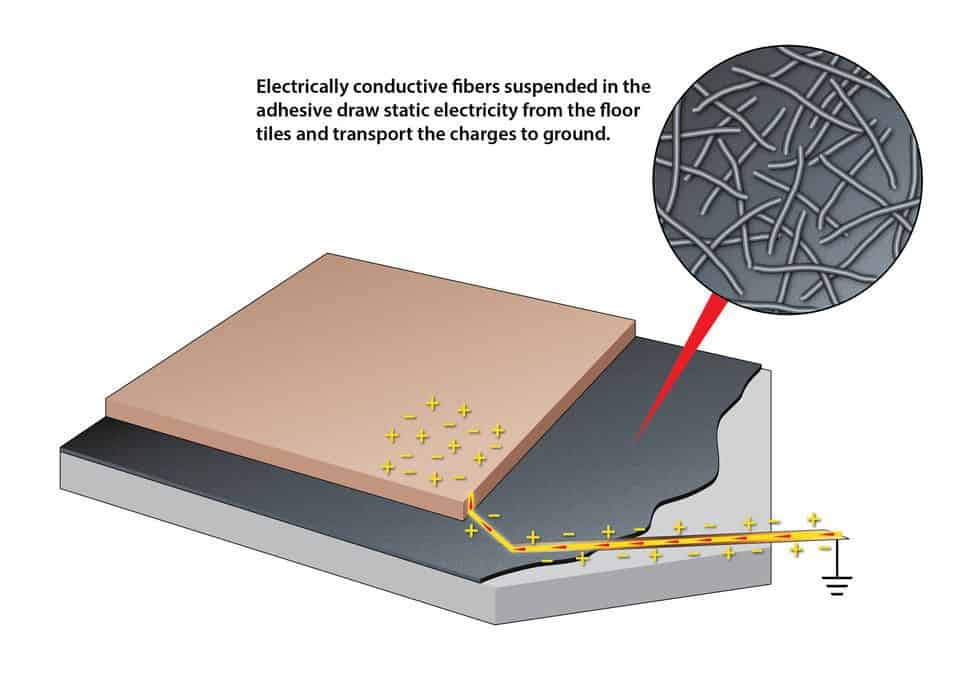
Proper floor grounding: Under the surface
As the local EMS provider, we employ automated external defibrillator (AED). If the patient is on the floor and the defibrillator discharges a shock, will the shock be transmitted over the entire floor, possibly shocking other individuals in the area?
You have asked a perennial question that has been an ongoing concern since the first conductive floors were installed in hospital ORs back in the late 1940s.
If you have regular flooring with no conductivity, you should not have any concerns.
We are operating on the assumption that your question was prompted by the fact that your space has a grounded floor (a floor with conductivity). We call grounded floors either conductive or static dissipative floors, based on their electrical resistance.* Some people call them ESD floors because they prevent electrostatic discharge.
If you are working on a grounded floor, there are some simple best practices that you should follow:
- It is best to choose a floor that does not have too much conductivity. The absolute minimum resistance for a floor per NFPA and ASTM standards is a floor that has an electrical resistance of no less than 25,000 ohms (2.5 x 10E4 ohms). However, you don’t want to start out selecting flooring materials that approach the bare safety minimum. For this reason, for most environments, we always recommend the use of what are called static-dissipative (SD) floors and carpet. These floors get rid of static but they are not so conductive that they support high electrical currents.
- The second thing to consider is how the floor is grounded. Best practice is to place grounding strips underneath the floor. In order to ground under the floor most effectively, the floor should be more conductive on the underside than it is on the surface. That’s an easily achieved outcome as long as the floor is installed with either conductive adhesive or an underlayment that is more conductive than the surface.
For example, we make ShadowFX ESD carpet. ShadowFX carpet is a static-dissipative carpet with an electrical resistance of approximately 10 million ohms (1 x 10E7 ohms). The adhesive we use has less than 10,000 ohms of resistance (1 x10E4). Since electricity follows through the path of least resistance, it will flow under the floor, where the resistance is lower, rather than over the surface. Electrical charges will dissipate from the surface, flow through the thickness of the carpet tiles to the adhesive and on to ground. - Be sure the floor is grounded to either electrical ground or to building steel. That is where charges will flow.
- The resistance of a conductive floor measures < 1.0 x 10E6 ohms
- A static-dissipative floor measures from ≥ 1.0 x 10E6 ohms to < 1.0 x 10E9 ohms.

Can I mix non-ESD tiles with ESD tiles?
No. Only materials with a resistance below 1 x 10E9 can be grounded. Regular floor tiles are insulative—meaning they do not promote the flow of electricity—and cannot be grounded.
If regular tiles were mixed with ESD tiles, it would be impossible to know which were grounded and which were not. While the floor might work in some spots, it won’t get rid of static in others.
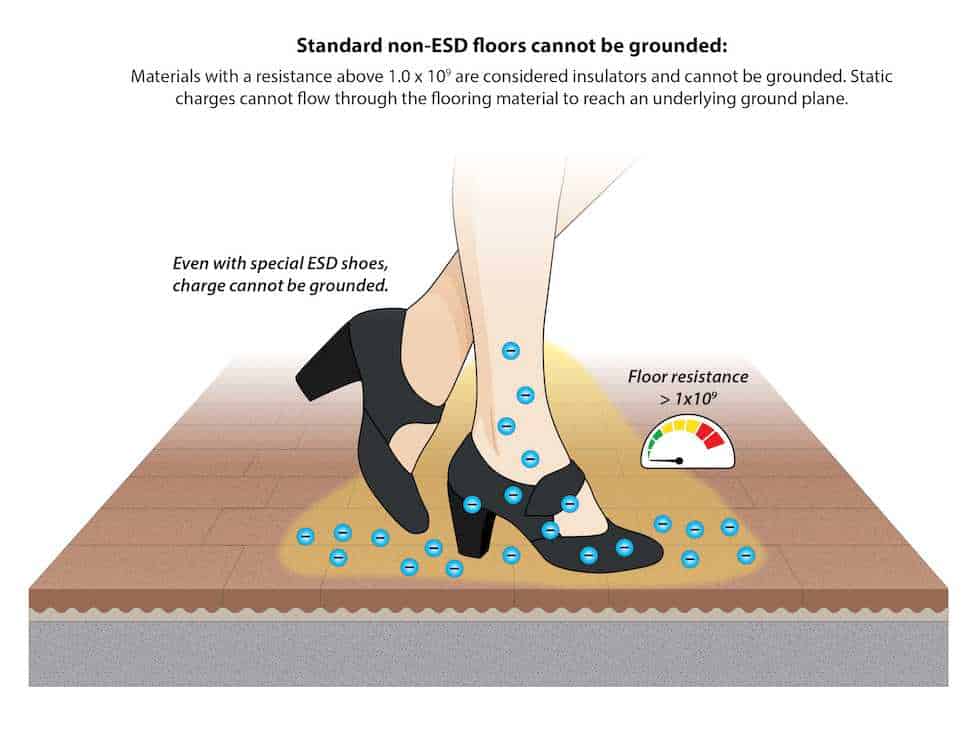
Can I mix non-ESD tiles with ESD tiles?
This is a question that should be answered only by a qualified flooring professional, based on either a site inspection or a lengthy conversation. Almost any floor can be installed over an old floor as long as the old floor is in good condition and well-bonded to the subfloor. The easiest way to cover existing floors is with an interlocking tile like GroundLock. Designed for installation over problem subfloors, GroundLock is 6mm thick with a fiberglass core. As tiles lock together, it’s also easy to lift and carry, making it ideal for leased or temporary spaces.
Some floors are easier and less risky to install over old floors. Vinyl, for example, can be installed over existing vinyl. Besides being easier and less messy than removing old tile, if the existing floor contains asbestos, tiling over it protects installers from exposure to toxic vapor inhalation during removal of the old tile.
On the other hand, vinyl is stiff and unforgiving—it could delaminate if the adhesive does not cure well or if the surface is slightly uneven. The possibility of failure is much greater installing vinyl over vinyl than if ESD carpet tile were installed over old vinyl. Carpet tiles are flexible and the release-adhesive bonds extremely well to old vinyl and epoxy. In many cases, carpet tiles can even be installed using glue-free methods like GroundBridge.
Many installers prefer installing carpet tiles over old vinyl rather than over new concrete, because concrete presents a host of variables—such as curing and moisture mitigation—that cost time and money. As often as not, the choice of installing over old floors comes down to concerns about downtime, removal cost, and subsequent damage, asbestos or other environmental factors or budget considerations.
Do I need a specialist to install a static-control floor?
No. Any competent flooring contractor is capable of installing an ESD floor. The only difference between an ESD floor and standard flooring is the electrical properties of the flooring material and adhesive. Regular flooring has little to no conductivity, while ESD flooring is formulated to dissipate or conduct electricity.
Glue-down ESD tile requires a conductive underlayment, such as conductive adhesive or metal access panels. The conductive underlayment electrically unifies all tiles in a contiguous installation, and transports static to ground.
Once ESD flooring has been installed, it must be grounded to either an electrical outlet, a dedicated grounding rod, or the steel superstructure of the building. Basically, grounding the floor involves a mechanical connection between the floor and any of these three grounding options.
After installation, an ESD floor should be tested with an ohm meter to confirm that the floor provides the electrical resistance to meet the standard for the application and specifications provided by the manufacturer.
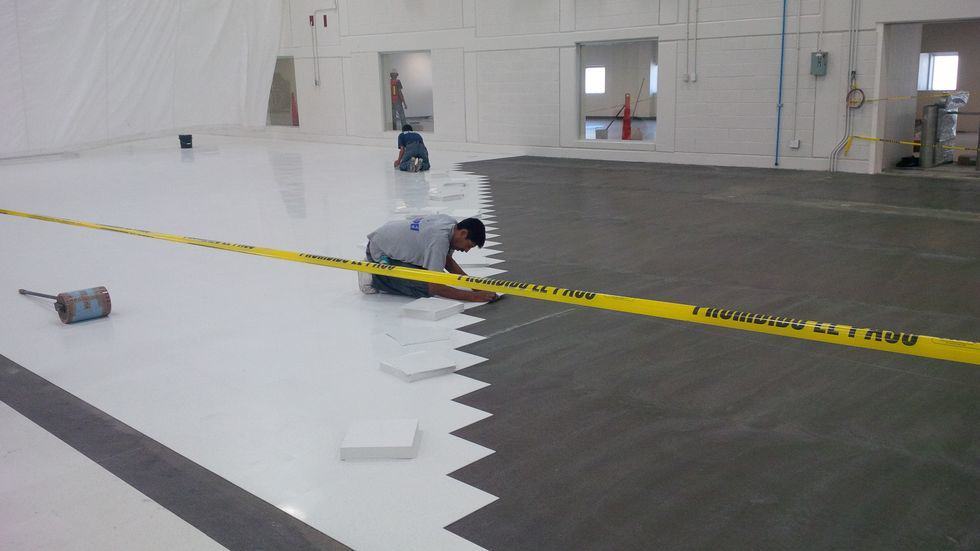
How should I prepare a concrete subfloor for ESD flooring?
When you’re installing ESD tile, you prepare the concrete subfloor exactly the same way you’d prep for any other tile or flooring. You’d consider the condition of the concrete, test for moisture or vapor issues, check for contamination and so on. The only difference is that ESD flooring is grounded. This means, ESD flooring requires an underlying conductive ground plane to carry charges to ground. A conductive ground plane can be conductive adhesive, a conductive underlayment, like GroundBridge, or the metal surface on metal access panels. You also need copper strips, which attach to ground through an electrical outlet or some other type of earth ground, such as a bus bar – one copper strip per room or every 1000 feet of installed material.
Don't let moisture ruin your ESD flooring installation
We were recently contacted by a client who wanted our opinion about an inexpensive system designed to eliminate moisture vapor in concrete. Measurements using Test Method ASTM F2170 showed moisture levels in the concrete throughout the client’s facility in excess of 95%. At nearly 100% humidity, any ESD floor installed with low-VOC conductive adhesives will fail without some form of moisture mitigation system.
The supplier of the moisture-mitigation system had promised the client that their system would prevent the installation from failing and guaranteed it for the life of the floor. The warranty covered up to “8 pounds” of moisture per the ASTM F1869 calcium chloride test method, stating, “in the unlikely event of any failure resulting from moisture vapor below 8 pounds, XYZ, Inc. will either replace the material or refund the cost of the floor.”
Here’s the problem with this scenario:
- Brand-new, manufactured by a small company, the system had not been thoroughly vetted. The warranty guaranteed performance for “the life of the floor,” but the system hadn’t been in use long enough to justify such a claim.
- A warranty claim could cost 100s of thousands of dollars. Did this small company have the financial backbone to pay out such a claim? It wasn’t clear.
- The manufacturer cited a different ASTM test method than the method the client had used for the first set of tests. If there was a problem, how could the client be sure the method cited by the manufacturer would produce consistent results?
- The guarantee covered only the replacement costs of materials. It did not cover labor. Nor did the warranty compensate for inconvenience or cover any costs associated with lost business due to shutdowns. On a big job, labor can cost as much as or more than the material. And lost business could cost an operational facility 5, 10, or even 50 times more than the cost of an ESD floor.
Moisture is a serious issue, and it’s expensive to solve. It’s even more expensive if not handled with lock-tight solutions up front. If moisture testing indicates a problem, there’s a problem. Don’t be like property owners or facility managers who try to hide from a problem by looking for contrary test results. Remember: there is always a contractor out there who, to gain your confidence – or get the job—will be willing to take on a risk. But will that contractor compensate you fully if the floor fails and needs to be replaced?
If a solution sounds too good—or too cheap—to be true? It probably is.
Please note: StaticWorx is not in the moisture mitigation business. We’re providing this information as a service to the many clients and contractors who use our ESD flooring.
Why should I worry about moisture protection with ESD flooring?
Moisture permeation through concrete slabs can cause installation failures with all types of flooring. In the early 2000s, the Rubber Association determined that moisture levels, tested per test method ASTM F-1869 exceeding 3 pounds per 1000 square feet per 24-hour period caused serious problems, such as delamination, adhesive breakdown, and adhesive oozing. High moisture can also foster bacteria and molds, causing foul odors, and contributing to sick building syndrome.
The industry standard test methods for moisture permeation and relative humidity in concrete are the ASTM F-1869 calcium chloride test – and ASTM F2170.
These tests are simple and the equipment and materials readily available. For the reasons stated above, high readings must not be ignored
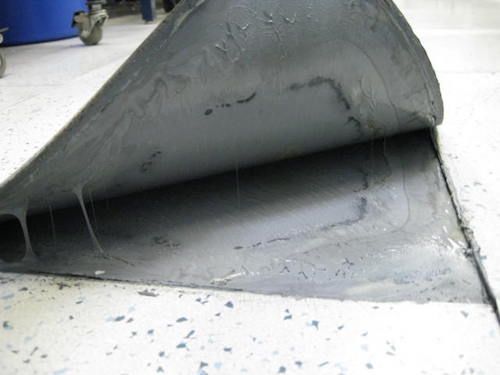
Can I apply a conductive dry adhesive over any type of subfloor?
Conductive dry adhesives can be rolled out over any clean, smooth subfloor, allowing for instant attachment of tiles to the floor. Normal operations can continue in the room while installation is in progress. There is no “move-in” or “move-out” time.
Dry Adhesive can be installed only over firm, dry (<3.0 lb/1000 sq ft.) structurally-sound, dust and oil-free surfaces, such as concrete, old glue-down carpet, VAT, vinyl composition tile, homogeneous vinyl sheet or tile, poured epoxy, ceramic, stone or terrazzo.
Dry adhesive may be used over steel or HPL covered access floors. It may be used over wood and parquet, plywood and laminates. These sub-floors must be free of acrylic finishes and, due to moisture concerns, dry adhesive cannot be installed directly over on-grade or below-grade concrete without an air space between the concrete and the wood products. Dry adhesive may not be used over gypsum patches and is not suitable for outdoor installations.
Can I install an ESD floor using regular adhesive?
No. You must use conductive adhesive. Dissipative and conductive tiles require an underlying ground plane to tie all tiles to the same electrical potential. The conductive adhesive provides physical bonding, but it is also a ground plane. Without conductive adhesive, each tile would be an island with no path to ground and no interconnectivity to the other tiles in the installation.
This electrical model can also prevent stray voltages from riding on the flooring surface. Electrical currents, including static electricity, seek the fastest pathway to ground. The pathway should be designed so that electricity flows through the flooring material or tile to a more conductive material underneath.
In the unlikely event of a short circuit, stray voltage on the surface of the floor could put personnel in harm’s way. Directing charges downward, to the adhesive, adds a level of safety to the installation.
Note: The adhesive should always be more conductive than the flooring material.
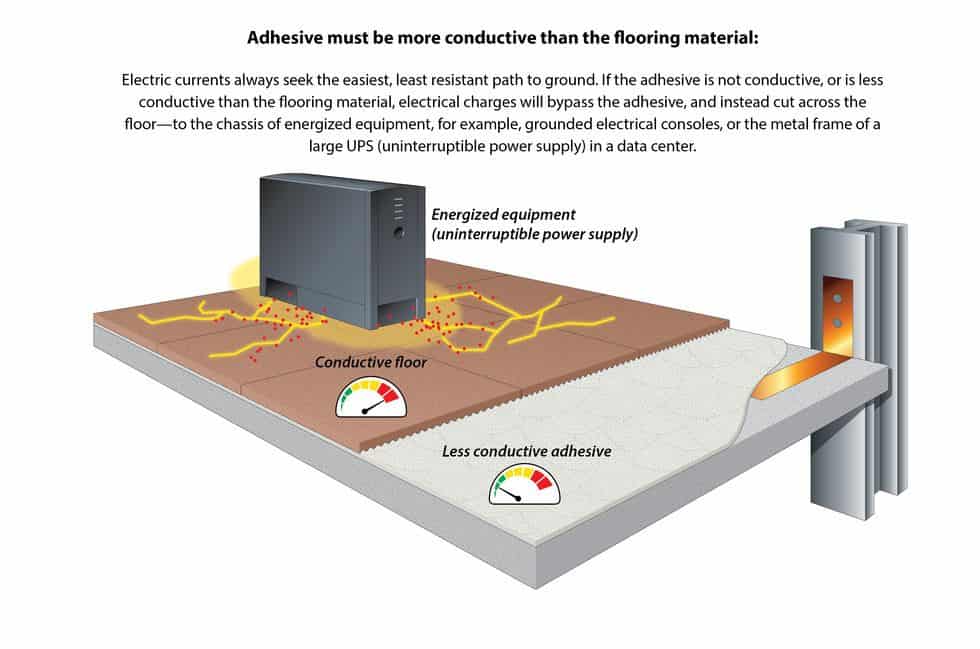
Can I use regular tile with conductive adhesive?
No. Regular tile is insulative. Like the plastic insulation on electrical cords and AC plugs, regular flooring has no conductivity. Electricity cannot flow through an insulator because the resistance is too high.
Only flooring materials with a resistance measurement below 1 x 10E9 can be grounded. This means, static electricity cannot flow through regular flooring material to reach the conductive adhesive.
Conductive adhesive only works with ESD flooring materials. Regular, non-ESD flooring does not promote the flow of electricity, so static charges have no way of reaching the conductive adhesive.
Why should the adhesive be more conductive than the ESD flooring material?
In any ESD flooring installation we need to look at several factors.
- Does the floor meet ANSI/ESD or ATIS grounding requirements?
To meet ANSI/ESD S20.20, resistance should measure below 10E9.
To meet ATIS, resistance should be 10E6 or above. - Is the system inherently or potentially unsafe due to electrical safety issues, such as over conductivity, improper installation or misapplication?
The first variable we investigate is what we call system resistance. System resistance is the ohms resistance of the floor, the adhesive and the ground connection. System resistance will always measure equal to or greater than the most resistant—least conductive—component in the chain.
Important: To direct all electricity downward to ground, as intended, the adhesive must be the most conductive (least resistant) element in the flooring system.
The flooring surface should always be the most resistant (least conductive) component in the system.
Using an adhesive that’s not conductive or is less conductive than the flooring material could pose a safety hazard.
If the adhesive is not conductive, or the adhesive underlayment is less conductive than the flooring material, electrical charges could bypass the adhesive, preferring the less resistive route, across the top of the floor—to the chassis of energized equipment, for example, or grounded electrical consoles, or the frame of a large UPS (uninterruptible power supply) in a data center.
Note to specifiers: A simple audit with an ohm meter can expose this potential problem. We suggest that the flooring material be tested for point-to-point resistance—across the same floor tile. This will indicate whether or not the surface of the flooring material falls within the proper resistivity range.
After the flooring is installed, to verify that it’s properly grounded, test point-to-ground resistance—that is, from the tile to the copper ground strip, or whatever attachment was used to ground the floor.
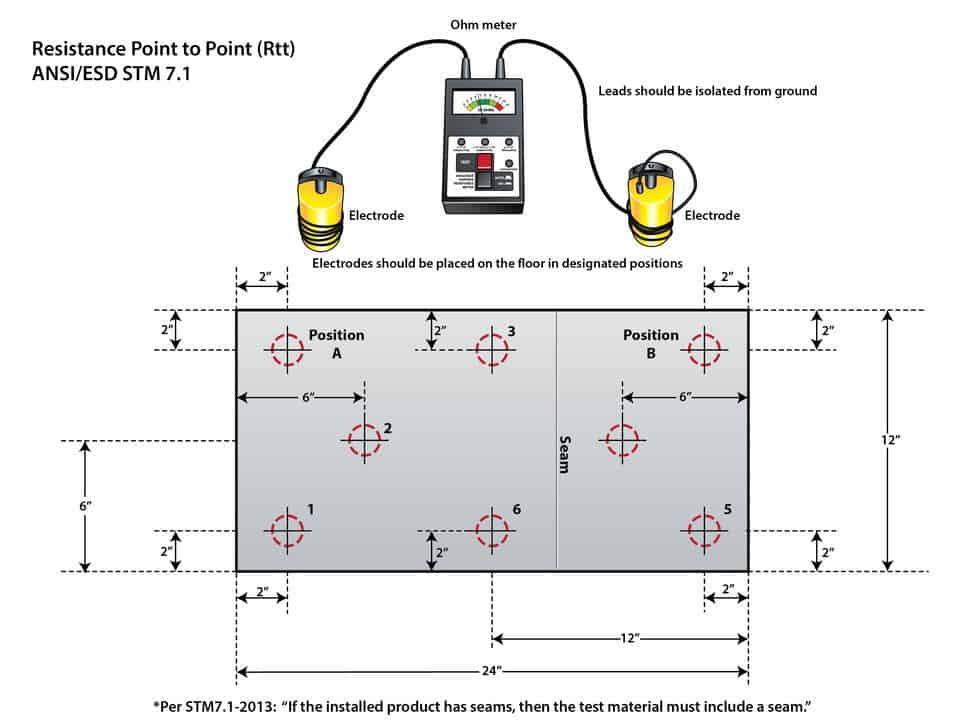
Remember: system resistance is always equal to or greater than the most resistive element in the chain—so an adhesive that’s not conductive or is less conductive than the flooring material will raise the overall system resistance.
If point-to-point resistance is lower than the point-to-ground resistance—which, again, would happen if the adhesive were not as conductive as the tile—there may be cause for safety concerns.
For this reason, it is best to install tiles with a point-to-point resistance above 100,000 (1 x 10E5) ohms.
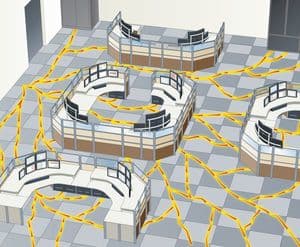
Do I need to apply special antistatic sprays after the floor is installed?
No. A floor should never acquire its electrical conductivity from topical sprays or floor finishes. Sprays and floor finishes wear off. It is impossible to detect their deterioration in performance without testing the resistance of the coating on a routine basis using an ANSI/ESD test method involving a special ohm meter and NFPA probes.
Can a floor finish prevent static?
Applying static-dissipative floor finish over standard resilient flooring (VCT) is always a calculated risk. Before purchasing a floor that gains its static-protective properties from a special finish or wax, the following caveats should be taken into account:
- Waxes and floor finishes are temporary. Like any wax, static-control finishes abrade; as they wear off, the floor will increasingly generate static.
- Dissipative floor finishes rely on humidity. ESD floor finishes gain conductivity by drawing moisture from the air. When RH drops below 30%, they lose effectiveness, and the ohms resistance of the floor increases.
Losing one order of magnitude would turn SD vinyl tile with a resistance of 10E8— at the upper end of the dissipative range—into an unacceptable flooring surface measuring > 1.0 X 10E9 ohms. - There is no visible sign that static-protective properties have worn off. Unless someone commits to testing the floor on a regular basis, and follows through, the floor could generate high levels of static without anyone knowing.
Humans can’t feel a static zing until it’s approximately 3.5 kV (3500 volts). This means, any discharge under 3.5 kV would go undetected. In a residential environment, this is no big deal. In most electronics workspaces, a discharge as small as 100 volts—or as low as 20 volts for ultra-sensitive microcircuits—can damage or destroy electronic components.
Why buy static-control flooring?
If it’s to prevent static shocks—at home or in an office that doesn’t rely on sophisticated electronics—we advocate for antistatic sprays and floor finishes. When people start feeling shocks, it’s time for a reapplication.
To avoid mission-critical failure by preventing malfunctions in a data center, control room, call center, 9-1-1 dispatch operation, or flight tower, a floor finish won’t do the job. Short of routine performance tests, there is no way to monitor the effectiveness of the floor—the very events the ESD floor is meant to avert will be the only barometer indicating that the finish has worn off and the floor is no longer static-protective.
Using Wax for Routine Maintenance
While waxes and floor finishes do not provide adequate static protection, buffing waxes work well for routine maintenance—that is, to keep the floor clean and, in the case of conductive SVT, maintain its hospital-like shine.
How do you maintain and repair ESD flooring?
To maintain ESD flooring, it is important to keep it clean. Vacuuming or sweeping the floor regularly can help prevent the accumulation of dirt and debris, which act as insulators between shoe soles and the dissipative floor, affecting its performance. To clean the floor use a neutral pH cleaner or cleaning chemicals designed specifically for ESD flooring. Avoid harsh cleaners or solvents that could damage the floor. If repairs are necessary, remove and replace the damaged section. Tiles are easier to repair than roll goods or epoxy. Static-dissipative carpet tile, resilient interlocking tile and glue free rubber tiles are easiest, fastest and least expensive to repair as the tiles can be simply lifted and replaced 24/7 with no downtime and without the need for messy adhesives.
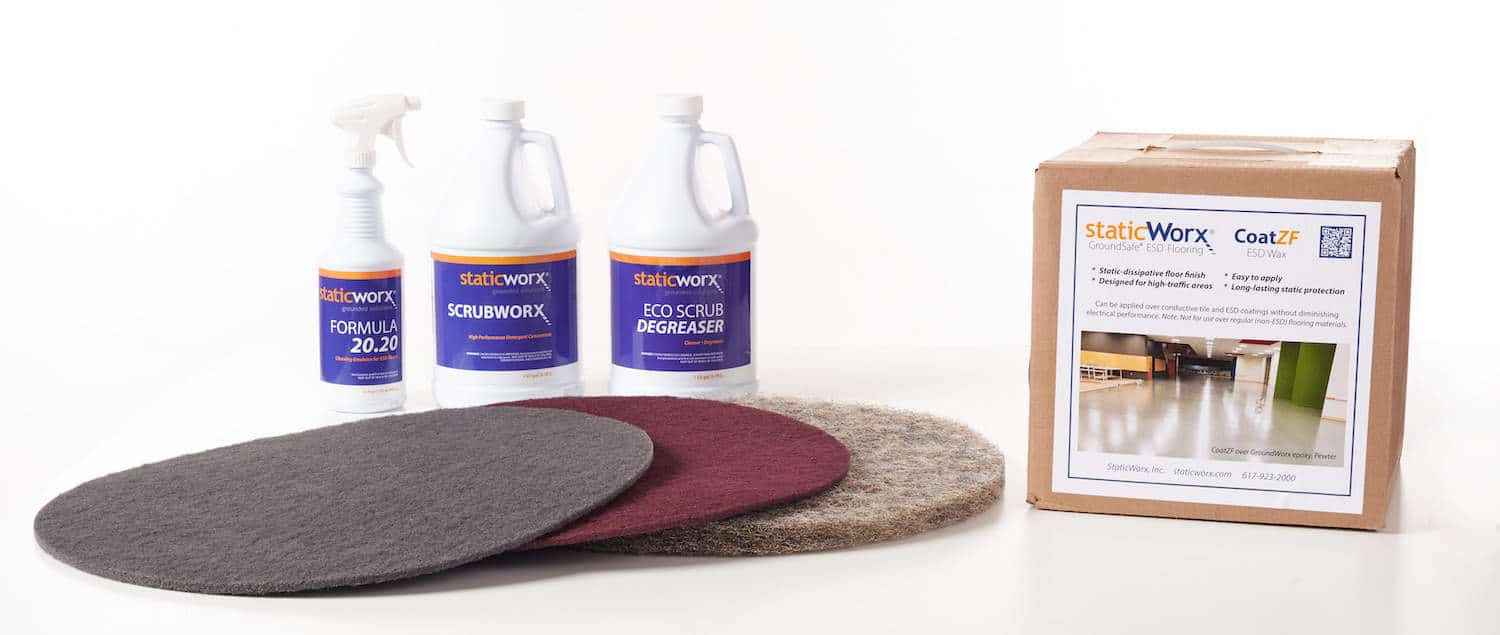

Ready to Eliminate Static Risk?
When your facility’s protection depends on getting it right the first time, choose
the company with an unmatched track record. We’re standing by to assist you.