ANSI/ESD S20.20 Compliant Green Label Plus Certified
Body Voltage Generation
Where Generation 3 epoxy can be installed
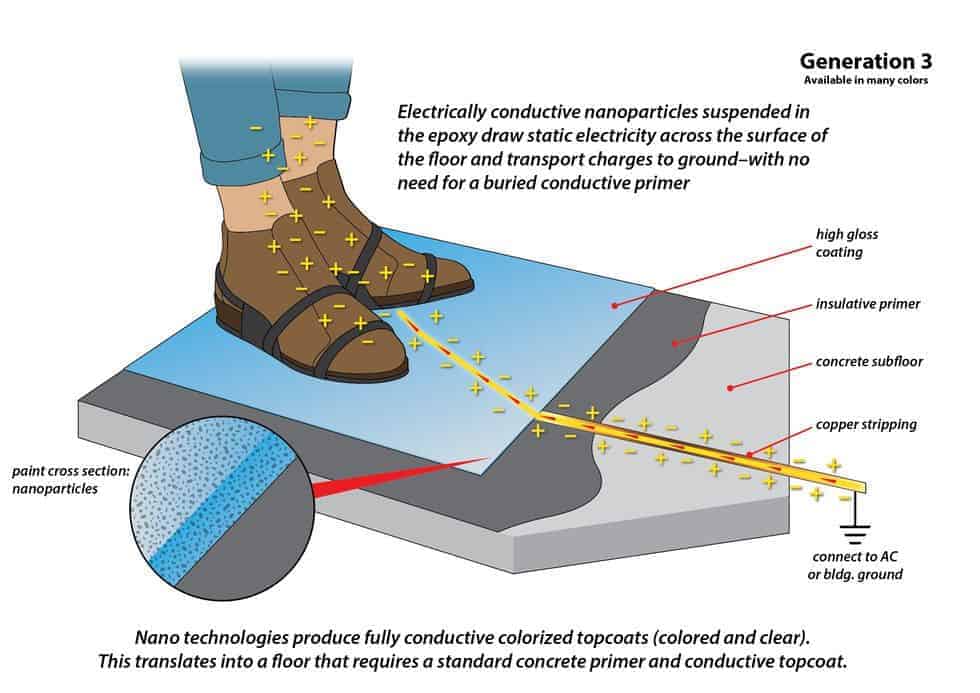
Generation 3 Epoxy Coatings: Eliminate Variables
New additive technologies enable us to produce fully conductive colorized epoxy top coats (colored and clear). This translates into a floor that requires a standard concrete primer, one layer of top coat and no conductive primer layer. This means, the coating is not thickness dependent – thus more reliable than older coatings with a buried ground plane.
Less Vulnerable to Blistering and Vapor
A thinner top coat provides the added benefit of being less vulnerable to blistering and vapor problems from high RH concrete. In most cases Generation 3 floors can be installed at ASTM 2170 RH numbers as high as 95%. This enables installations over relatively new concrete.
Easy Repair
In the event a Generation 3 floor requires a repair in an area that was heavily abused by frequent dragging of wooden pallets with protruding nails, a new top coat can be applied directly over the existing floor. The new surface will become the new path to ground.
Superior Static Control
GroundWorx Ultra meets all aspects of ANSI/ESD S20.20. It can be formulated in either the conductive (< 1.0 x 10E6 ) or the static dissipative (10E6 to 10E9) range.
With the conductivity at the surface, we can provide a coating with extremely low tribocharging properties – used with any ESD footwear at any humidity level.
Generation 1, 2, and 3 ESD Epoxy Coatings Compared
Although many ESD epoxy floors measure conductive or static-dissipative, they do not all control static electricity in the same way. Over time, ESD epoxy coatings have evolved through three distinct generations—each reflecting changes in materials, installation methods, and, most importantly, ESD standards and qualification testing.
Early-generation systems focused primarily on resistance measurements, while modern standards emphasize walking body voltage control and tribocharging performance. The differences between Generation 1, Generation 2, and Generation 3 coatings directly impact reliability, ease of installation, repairability, aesthetics, and long-term compliance with ANSI/ESD requirements. The comparison below highlights how each generation approaches conductivity—and why Generation 3 coatings eliminate the variables that cause older systems to fail.
Want the technical explanation behind these differences? Read Body Voltage and ESD Epoxy Coatings to learn how tribocharging, coating construction, and standards changes affect real-world ESD performance.
| ESD COATING | Carbon Black Generation 1 | Multi-layer Epoxy with Conductive Groundplane Generation 2 | ESD Urethane Generation 3 | Epoxy Acrylate Generation 3 |
| Electrical Specification/ANSI S20.20 | ||||
| Always meets ANSI/ESD S20.20 | Yes | No1 | Yes | Yes |
| Available in dissipative (> 1.0 x 10E6) | No | Yes | Yes | Yes |
| Available in conductive(< 1.0 x 10E6) | Yes | No | Yes | Yes |
| Measures below 100V with heel straps per STM 97.2 | Yes | No | Yes | Yes |
| Measures below 100V with ESD shoes | Yes | Yes | Yes | Yes |
| Material | ||||
| Requires carbon black ground plane | No | Yes | No | No |
| Available in light colours | No | Yes | Yes | No |
| Scratch resistant | No | No | Yes | No |
| Installation | ||||
| Can be installed over sub- or old floors in one coat | Yes | No | Yes | Yes |
| Can be repaired in a single coat | Yes | No | Yes | Yes |
| Gloss finish without use of sealer or wax | No | Yes | Yes | No |
1 – In qualification testing, multi-layer epoxies that rely on a groundplane fail 97.2 walking body tests with heel straps.
Key Benefits of Generation 3 Epoxy Floors
Seamless
StaticWorx coatings prevent contaminants from burrowing into seams and crevices
Rugged
StaticWorx epoxy and coatings can handle heavy loads such as forklifts and hospital beds
Easy to Install and Maintain
Our coatings do not require a carbon middle layer, making them clean and easy to install. Cleaning is quick and easy, requiring only water and disinfectant
Superior Static-Control
All StaticWorx epoxy and coatings meet resistance and charge generation parameters of ANSI/ESD S20.20
Slip-resistant
Our coatings provide a safe walking surface for personnel
Attractive
Our epoxy and coatings come in matte finish or high gloss, and resist stains and abrasion, maintaining the appearance of hospital-like cleanliness

What Clients are Saying

We are 10 months in our new facility. We had damaged several floor tiles during the move but I will say replacing them was painless. Our facility guy wasn’t overly excited with the decision of going with the tile over the epoxy floor but now that he has had a chance to work with it he is glad we went with the tile. We worked with our cleaning crew and have worked out a cleaning/polishing process that really shows off the floor. It was a pleasure working with both of you on the project.
…the floor is awesome! It’s very durable and it’s very convenient that we can lift tiles up to remove debris from underneath, and even replace tiles if they are damaged. So from a functional perspective, this is the best floor for our manufacturing operation.
Your product is impervious to most/all conditions. It’s impressive. Happy to be working with StaticWorx.
You would never know it was ESD, WHICH IS AMAZING! Your product rocks and I’m so glad we were able to find an attractive solution that didn’t leave us with some run-of-the-mill ugly disaster in the middle of our workspaces!
Ideal Applications
StaticWorx ESD epoxy coatings provide reliable static control for demanding environments


Explore Our Epoxy and Urethane Coatings
GroundWorx Basics
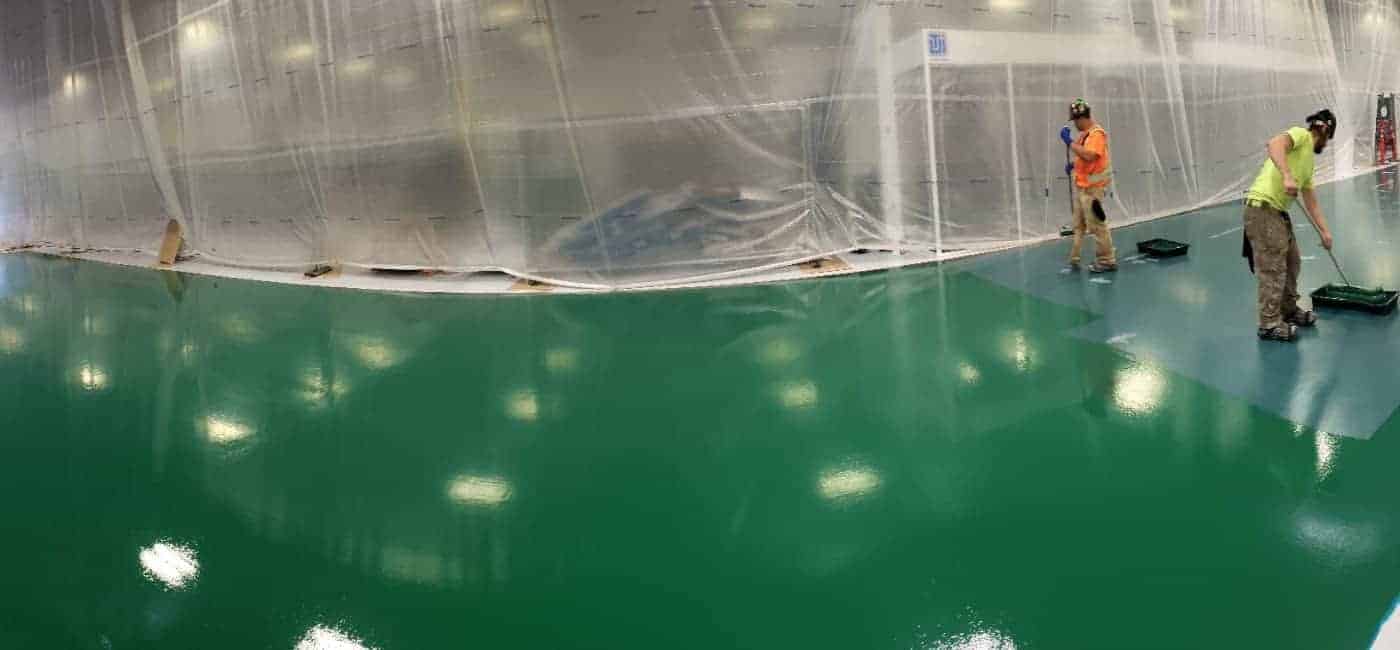
GroundWorx Basics is a low-cost ESD epoxy coating that’s stronger and more durable than ESD paint. So strong that it resists damage from forklifts and heavy machinery—making it ideal for warehouses, shipping/receiving areas, and manufacturing spaces. If the surface does get scratched, GX Basics is quick, easy and inexpensive to repair.

Platinum

Pewter

Beige

Teal

Emerald

Black
GroundWorx Ultra
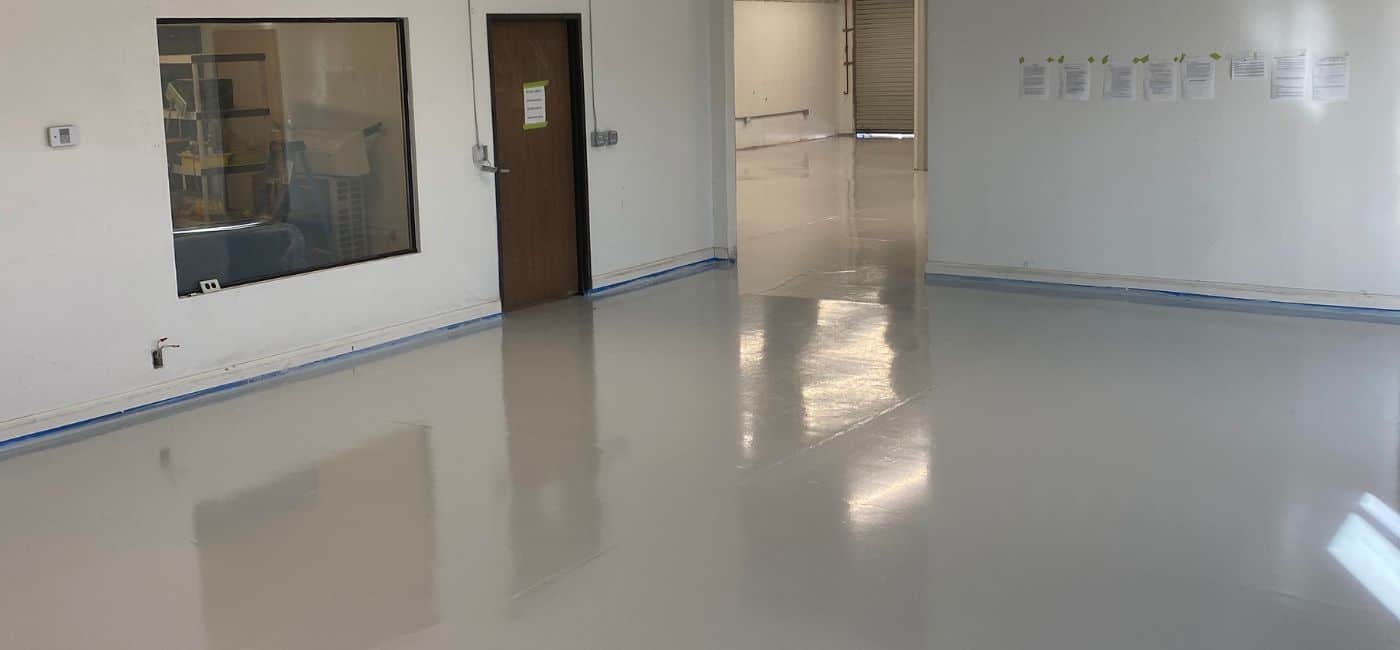
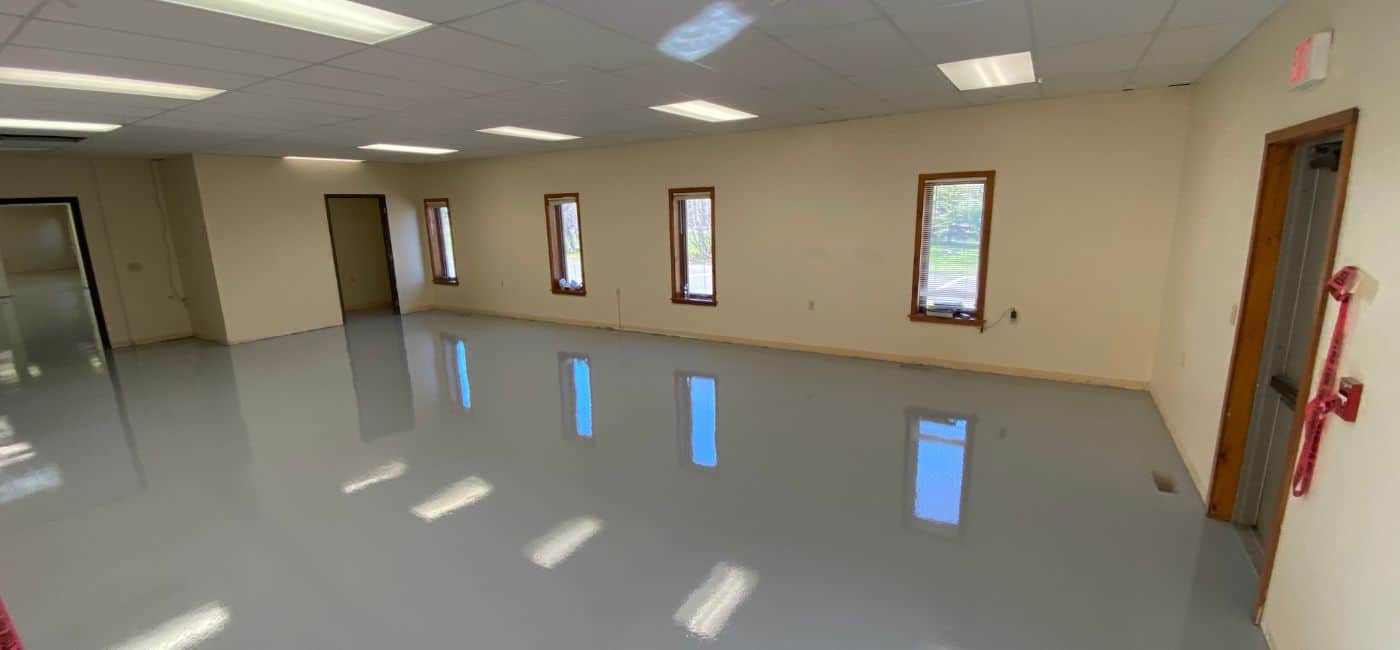
Our premium GroundWorx ESD coating, GroundWorx Ultra gives you a beautiful, high- performing static-free surface – for an excellent value at a favorable cost point. With a tensile strength exceeding 6,000 pounds, GroundWorx Ultra is extra durable and can handle forklifts and other heavy loads. GroundWorx Ultra is easy to install and is quick and cost effective to maintain.

Off-white

Light Gray

Medium Gray

Dark Gray

Umber

Light Blue

Beige
StaticWorx ESD Urethane & Epoxy Coatings
Technical Information & Support
Electrical Properties
Standards Compliance
System Construction

Further Reading

StaticWorx ESD Urethane & Epoxy CoatingsFrequently Asked Questions
Is ESD Epoxy Appropriate for a Small Server Room?
We need to caution about the limitations of static-dissipative or conductive epoxy coating in a data center/server room application.
ESD coatings eliminate static by providing a path to ground. Conductivity is achieved by adding conductive fibers or carbon and graphite particulate. The fibers and particulate create an electrical bridge through a material that, otherwise, is an insulating static generator.
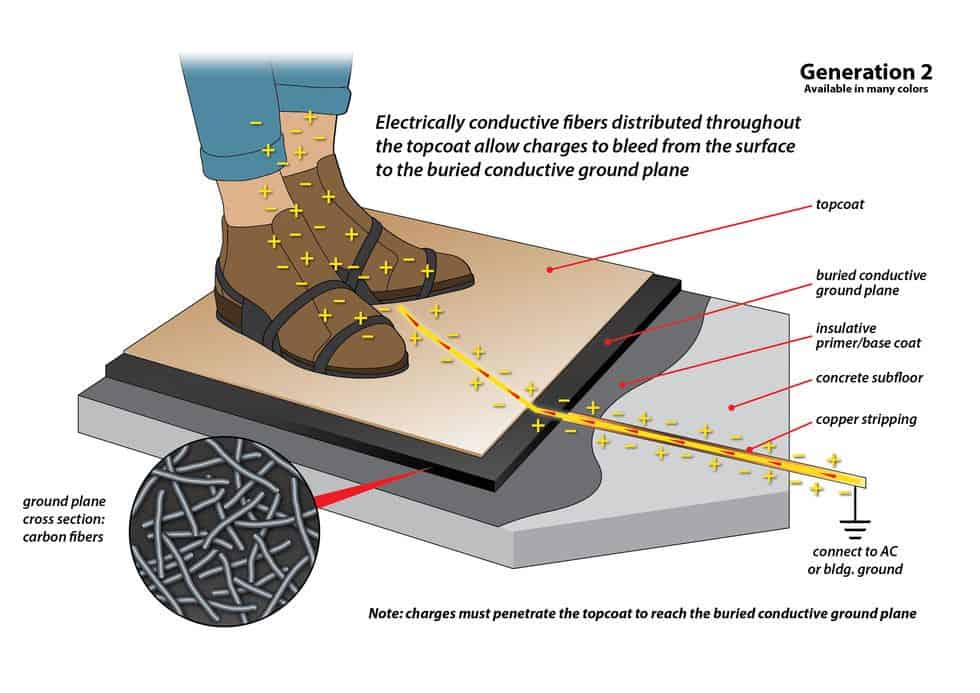
Conductivity is only one of the two critical static control properties provided by a coating.
Most epoxy is not a low charge-generating material. ESD epoxy coatings will eliminate static only if they are used in conjunction with special static-preventive footwear. If people walk on the floor with regular footwear (dress shoes, sneakers, hiking boots etc.), the coating will neither prevent the generation of static nor remove a static charge after it is generated.
To bridge the electrical gap between the human body and the floor, every person walking on the floor would need to wear special ESD footwear at all times. Walking on any ESD coating in street shoes would be the same as walking across a sheet of plastic. The result being the generation of thousands of volts and an increased likelihood of an ESD event.

In data centers, we recommend the following conductive materials:
- Conductive rubber;
- Conductive epoxy—but only if ESD footwear is mandated and rigorously enforced;
- Conductive vinyl tile—but only if ESD footwear is mandated and rigorously enforced;
- Static-dissipative carpet tile.
What is Antistatic Floor Paint?
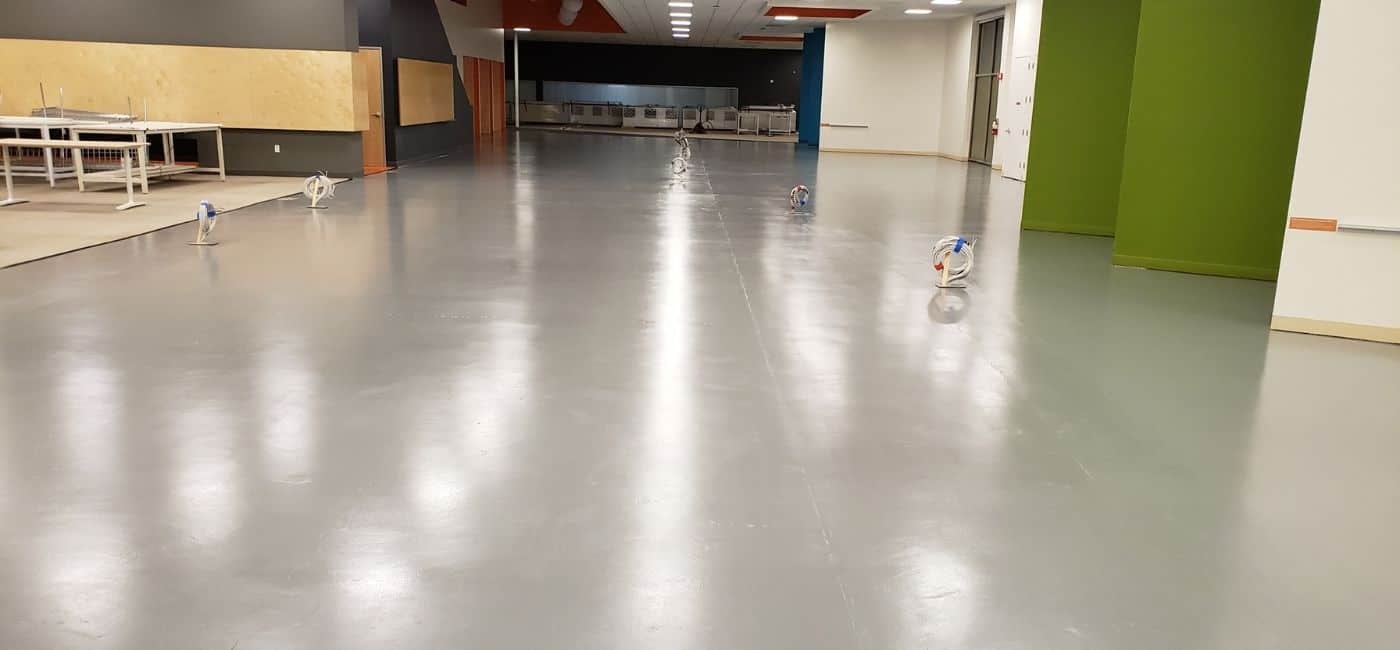
A type of paint, like GroundWorx Basics, made with conductive additives is sometimes called antistatic floor paint. Like antistatic vinyl, antistatic floor paint is a misnomer. The paint creates a path to ground – in other words, it grounds people walking on its surface – preventing static from building as people walk, but unless everyone walking on its surface wears special ESD footwear, paint is not antistatic.

What makes Generation 3 ESD epoxy coatings different from older epoxy floors?
Generation 3 ESD epoxy coatings place conductivity at the surface of the floor, not in a buried ground plane. This eliminates common failure points found in older Generation 1 and Generation 2 systems, such as inconsistent conductivity, thickness sensitivity, and excessive tribocharging. The result is more reliable static control, easier installation, and simpler long-term maintenance.
Do StaticWorx epoxy coatings meet ANSI/ESD S20.20 requirements?
Yes. All StaticWorx Generation 3 epoxy and urethane coatings are engineered to meet ANSI/ESD S20.20, including walking body voltage limits of less than 100 volts when tested with approved ESD footwear per ANSI/ESD STM 97.2.
Can ESD epoxy coatings be installed over existing floors?
Yes. Generation 3 coatings can be applied over concrete, VCT, LVT, and existing resinous flooring with proper surface preparation. Unlike older multi-layer systems, they do not require reinstalling a conductive ground plane, making upgrades and retrofits faster and more cost-effective.
Are these coatings suitable for low-humidity environments?
Absolutely. Generation 3 ESD coatings are designed to perform reliably even in very low humidity conditions (as low as 12% RH). Because conductivity is present at the surface, static charge generation is minimized regardless of ambient humidity.
Can the floor be repaired or recoated without losing ESD performance?
Yes. One of the major advantages of Generation 3 coatings is that they can be repaired or recoated in a single coat. The new topcoat becomes the new path to ground, preserving electrical performance without the need for additional conductive layers.
What’s the difference between GroundWorx Basics and GroundWorx Ultra?
- GroundWorx Basics is a cost-effective Generation 3 ESD epoxy designed for warehouses, manufacturing, and shipping/receiving areas where durability and easy repair are key.
- GroundWorx Ultra is a premium urethane-based system offering superior scratch resistance, higher tensile strength, and enhanced durability for demanding, high-traffic environments.
Static-Control Education at Your Fingertips
Explore the StaticWorx Knowledge Center for technical articles, videos, and guides to help you specify, install, and maintain ESD flooring with confidence.


Ready to Eliminate Static Risk?
When your facility’s protection depends on getting it right the first time, choose
the company with an unmatched track record. We’re standing by to assist you.