

Dave: Welcome to Static Talks. I’m your host, Dave Long, founder and president of StaticWorx. We make static-control flooring. In our podcasts we’ll discuss the threat static electricity poses to your business and how to address these risks.
Many of the people I’ve talked to over the last couple years have had some similar concerns about their projects. And one of the concerns revolves around – how do I put a new static-control floor in my building without interrupting my process, because I am not moving to a new building. I have a situation where I need static control on the floor because I need mobility. I need carts to be grounded when they’re being rolled. I need visitors, as they walk throughout my facility, to be grounded. How do I get that floor in my building and do it without disrupting my entire operation?
I’m going to tell you a little bit of history about a project in California that we did for a company that makes motion controls. They contacted us about a year ago, year and a half ago, I guess. They had had a fire in their building. And after the fire, they had called in a national static-control company to put a floor in, in sections in their building that would ultimately be done, I think, in eight phases, and give them the new facility they were they were looking for. After about three months into this installation – and call this about 10,000 square feet of installed floor – they realized that this new floor was starting to exhibit raised sections about the size of a quarter. And these tiles, as obvious to them, were not adhering properly to the concrete. And, in fact, they could puncture the tile and they would actually see a little bit of leakage of liquid.
Rick: So this particular client needed a new ESD floor in their manufacturing facility. But after completing the first phase of installation with another flooring company, they had major issues with moisture accumulating underneath a new floor and causing it to delaminate just weeks after it was installed. And this client really wanted to minimize operational downtime as much as possible while installing their new floor. So Dave, how did you get involved and how did you approach the situation?
Dave: I ended up getting contacted by the plant manager of this company and then ultimately the owner of the company. And they asked me to come in and give them my opinion. Like any of these situations, it’s a little bit uncomfortable to come in and basically second-guess someone else’s assessment. But I was interested in their problem. I didn’t know the entire scope of their problem. So I went to a meeting and in the meeting we quickly realized that there was no point in talking about something on a whiteboard. Let’s go out and walk around the facility.
As we walked around their facility, it became obvious to me that the approach of ripping up old tile, blasting concrete, putting down the various layers of flooring that had to be put down, in order to make this project work, was probably not a good idea anyway. So I quickly asked everyone to reconvene and go back in the conference room. And I said, Let’s do this. Let’s start from the very beginning. Let’s pretend that there’s no new installation. You’re actually looking at your building from the perspective of – what kind of floor can I put in? And how can I do this job with the least amount of interruption possible to my process?
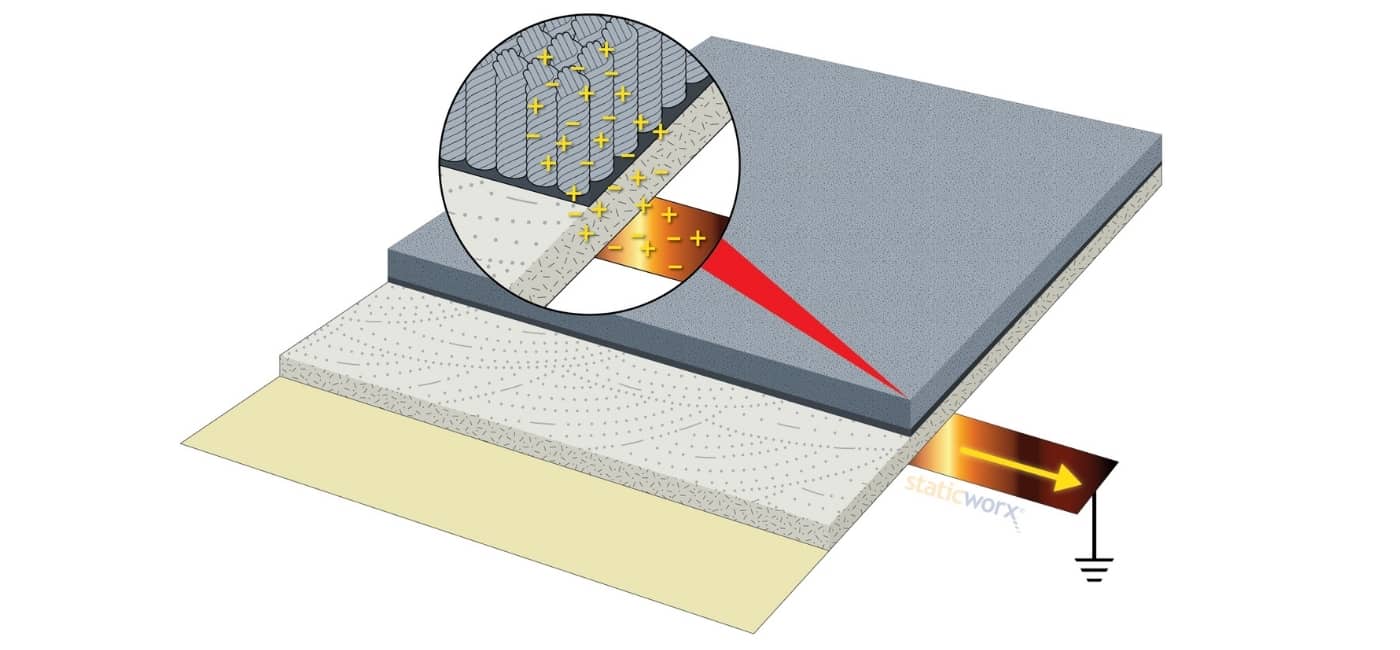
The first thing we talked about was, what are the static-control requirements? And that was easy. They wanted to meet ANSI 20.20. All that meant was that the floor by itself had to measure less than a billion ohms, which is 10 to the ninth, and in a walking body voltage test done in the lab, the floor had to generate less than 100 volts on a person walking with heel straps. The second objective was they needed the new floor to be able to be put in place without future concerns about it delaminating.
A lot of the building still had the original vinyl composition tile. As we walked around their building, all the old VCT had been getting pulverized at the seams; the middle of the tile looked like a smooth, polished surface. But as you got towards the seam, you actually saw these little, almost like pebbles built into the tile. So it was quite evident to me that they had a serious problem under their slab. And when I asked more questions, I learned that they’d had a geologist in and a couple of concrete forensic specialists. It became quickly clear to everybody that they needed to just spill the beans and tell me what the rest of the problem was. Because it looked to me like their building had been constructed using what they call tilt-up construction, which is where the original concrete slab that’s the floor – after it cures, they spray it with silicone, and they pour more slabs on top of that. And then they pull those slabs up off the concrete and they become the walls. So I mentioned that to them and they said, Hey, we’ll show you the report. You’re right. This was a tilt-up building. And one of the theories is that the concrete is contaminated with bond breakers or silicone sprays, which in fact, it was.
Rick: So not only was the concrete subfloor contaminated by the bond-breaking agent that was used in the tilt-up construction of the facility, but it was also lacking a vapor barrier underneath it which can’t be remedied without pouring a whole new slab. This combination of problems means that any flooring adhesive would be exposed to the moisture coming up through the concrete, causing the bond to break down and fail over time. How do you solve a complex problem like that?
Dave: As we discussed their problem, the more I thought about it, the more I realized that they’ve got a building that’s over 20 years old. Turns out there was no vapor barrier ever put underneath their building. And because of their location, the environment inside the building was often times going to be very different than the environment outside the building, which is going to cause, I guess you could call it entropy, where the environments are going to be in collision with each other, which is going to cause an exchange at the floor level between the environment underneath the concrete and the environment in the building.
As I looked at their problem, I said to them, you know, you’ve already tried working with a company that sells static-control tile. They hired a company in Chicago to manage project, and they brought in a team in California to implement the solution. And it failed. And the reason I believe it failed is not only because of the too many parties involved in one project, but I also believe it failed because you’re trying to take a situation that is intrinsically wrong and fix it. But you can’t fix the root cause, which is the fact that underneath the building, there is no original vapor barrier.
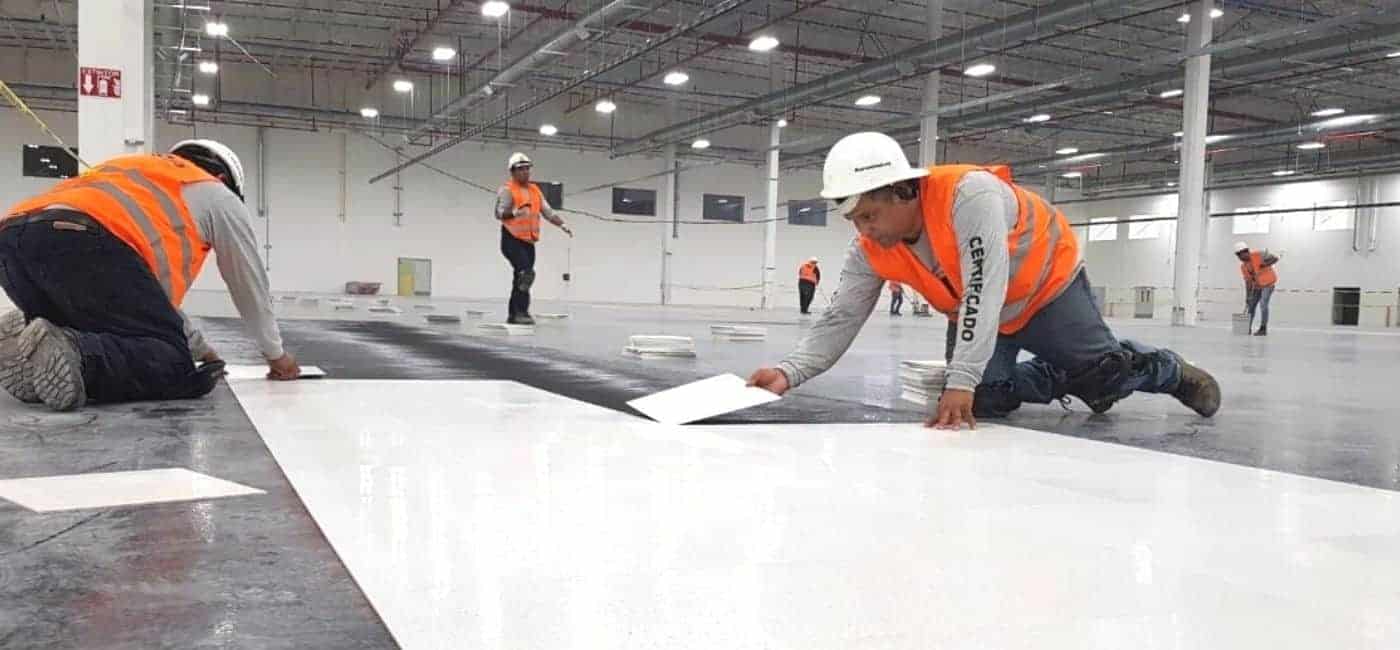
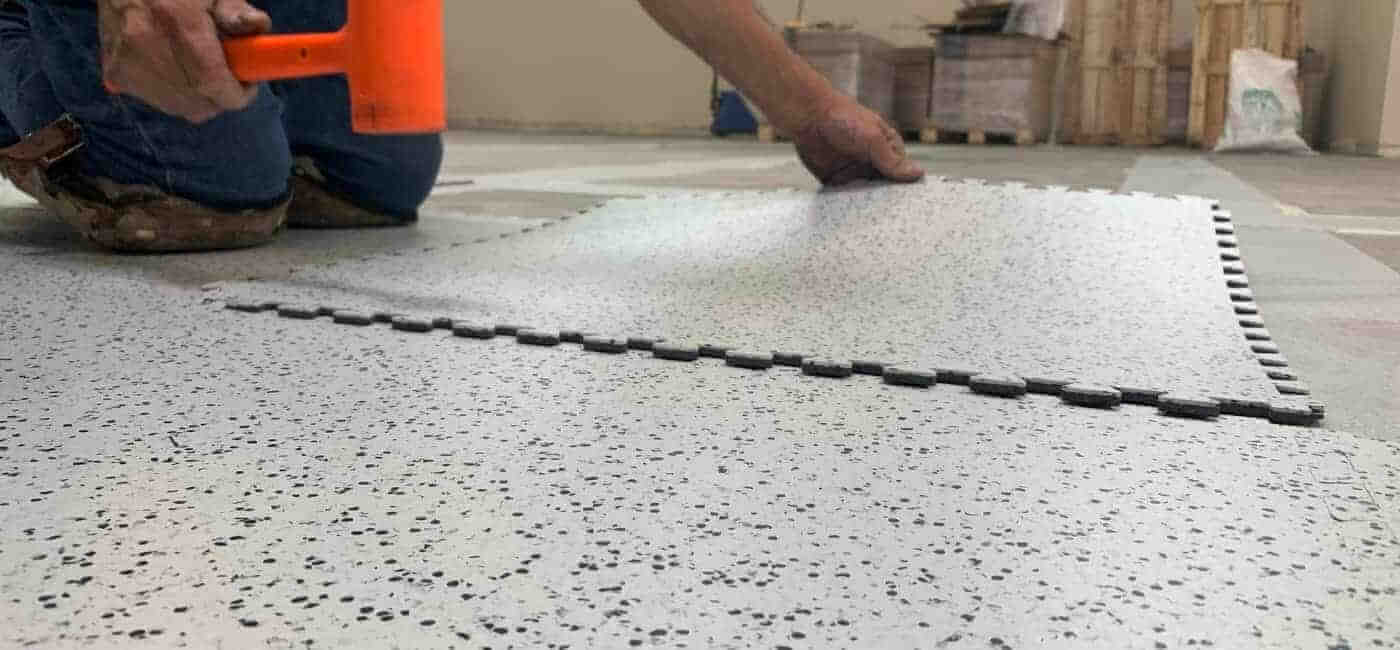
I proposed to them that instead of trying to fix a problem that I didn’t believe was fixable, let’s disregard the problem and put something on top of the floor that will not react with the problem in the first place. So what we proposed to them was to use a technology of interlocking tiles that are locked with dovetails. When I say dovetails, I’m talking about all four sides of each tile have a shape, kind of like a puzzle that you need to use a dead-blow hammer in order to attach them to each other, and the new floor will actually float on top of the old floor. And before I even strongly suggested they do this, I suggested to them that we put together a mock-up of it, and see how it works out for a short period of time.
Rick: So a floating installation of an interlocking vinyl floor, which would not require the use of an adhesive would actually withstand the moisture in this environment. And the installers would be able to strategically lay down the interlocking tiles without interrupting business operations, meaning they could avoid costly downtime. Was the client on board with taking this approach?
Dave: Everyone was on board with the idea because they’d already been down the road of working with parties who promised things that they couldn’t deliver. And unfortunately, those things were also very permanent to the building. So we put down a small area of maybe 10 feet by 10 feet. And we let it sit there for a couple of months, which doesn’t seem like a long time except that the new floor that this other company had put in, had already started to fail after six weeks. And at the end of the two months it became quite evident to the, the team at this company that, hey, this is a good idea. We don’t want to turn our machines off, we don’t want to prevent them from continuing the revenue stream.
The next step was to come up with a process that would allow them to move their equipment around because they wanted to do a new layout at the same time and organize that around the new floor. So they brought in a local construction manager because they wanted to paint the building at the same time and they wanted to do a couple of other internal interior decorating changes to the building and over the course of about 24 weeks, we installed new flooring, removed a lot of the failing flooring and they performed these other changes to the building at the same time without ever once losing any production time. It was an ideal solution for this company. Each section, they probably saved at least three days of production time. That’s a conservative estimate. They’re quite pleased with the solution.
We hope you learned something today. If you have questions about the podcast, give us a call at 617-923-2000. Even though we specialize in solving problems with flooring, if you have a question about static discharge, how to install a floor, how to test the floor, we’ll be glad to help you. Thanks for listening.