

Welcome to Static Bursts, an info-packed three-minute podcast from StaticWorx, designed for a quick listen.
Rick: Dave, what is ESD? flooring? And how does it work?
Dave: ESD flooring is a generic term. So ESD stands for electrostatic discharge. And when someone says what is ESD flooring? They’re actually saying to me, I have an electrostatic discharge problem. I need flooring, but I don’t know exactly what it is. Therefore, I don’t know how to evaluate it. So what do I do? So the first thing to say is ESD flooring doesn’t have any true technical meaning other than I have an ESD problem. I need flooring to get rid of it. When you get into technical terms, the terms are conductive flooring, static-dissipative flooring, flooring that is grounded. Those terms have more meaning than ESD flooring.
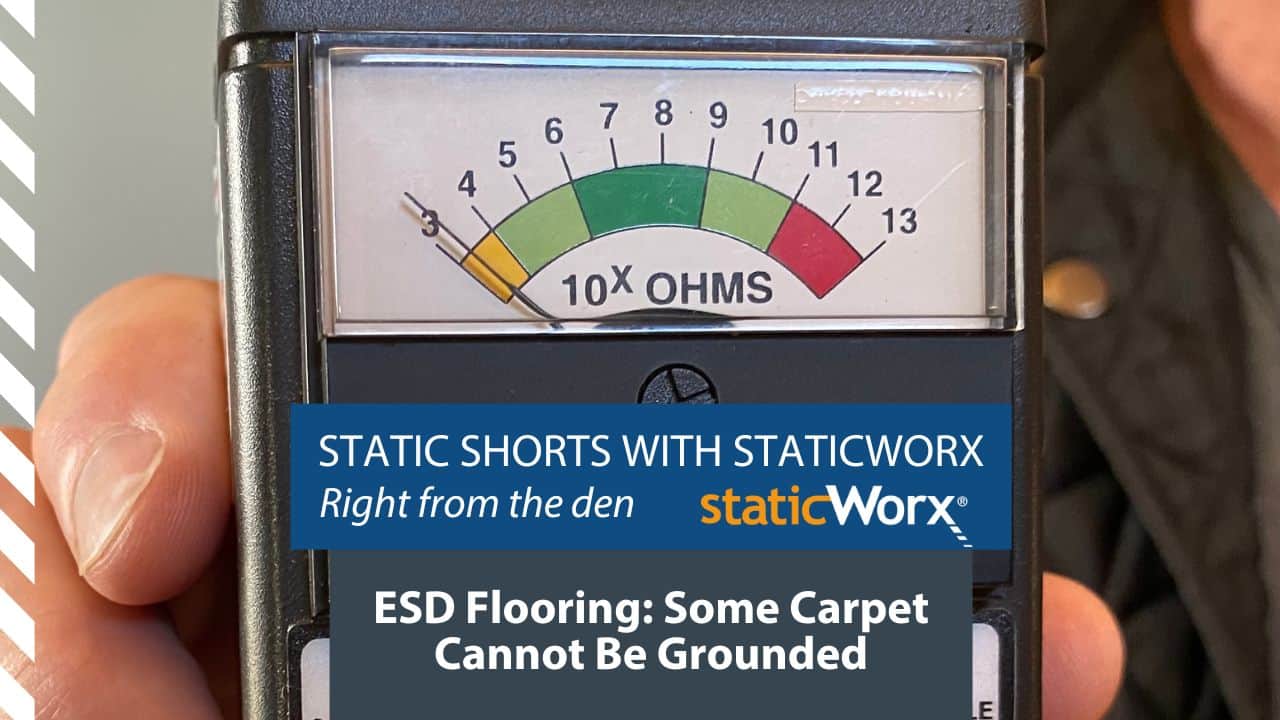
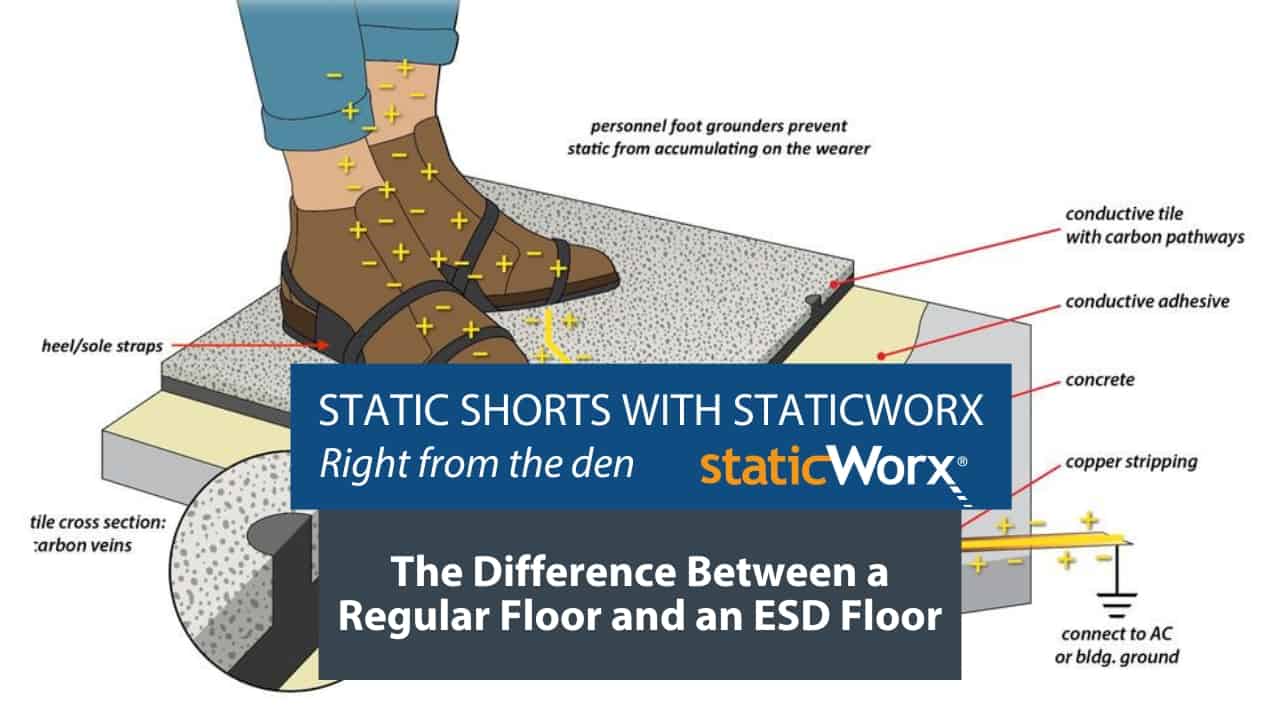
When we evaluate floors, what we care about is does the floor have a certain level of electrical conductivity that would allow a charge from your body or from an object that needs to be discharged; does the floor allow you to make contact with some charged object and for the floor to take that charge to ground; it’s actually the easiest metric to test. You can find out if a floor has conductivity with an ohm meter. Second property the floor has to have in order to quote “be an ESD floor” is it needs to prevent the generation of static electricity in the first place. And by the way, that means with all types of footwear. There are certain types of flooring that fall into this loose category of ESD flooring that prevent static electricity on people as long as they’re wearing static-control footwear.
Rick: Dave, could you explain the terms conductive versus dissipative that are often used when describing ESD flooring?
Dave: The only difference between conductive flooring and dissipative flooring is we categorize materials based on the electrical resistance of them. And at a certain number, the floor that was called conductive – when it has a little bit more resistance than [what is typically understood as] conductive flooring, there’s a line in the sand. The line is at 1 million ohms, we suddenly call it dissipative flooring. This doesn’t mean one works any better than the other. And in fact, even though conductive flooring discharges people faster, if a floor is too conductive it’s actually unsafe. One doesn’t necessarily work better than the other. They need to be evaluated for several properties. Those properties are usually in a specification sheet. You need to ask about those properties. If you don’t get a legitimate answer, move on.
We hope you learned something today. If you have questions about the podcast, give us a call at 617-923-2000. Thanks for listening!