The Problem: Every application for ESD flooring is different. Without detailed technical knowledge, architects can easily specify the wrong static-control floor.
The Impact: The wrong floor will perform poorly and could leave sensitive electronics without adequate static protection.
The Answer: Serve your clients better by learning how to specify the right static-control floor for their application.
In our Lunch & Learn workshop, we’ll discuss:
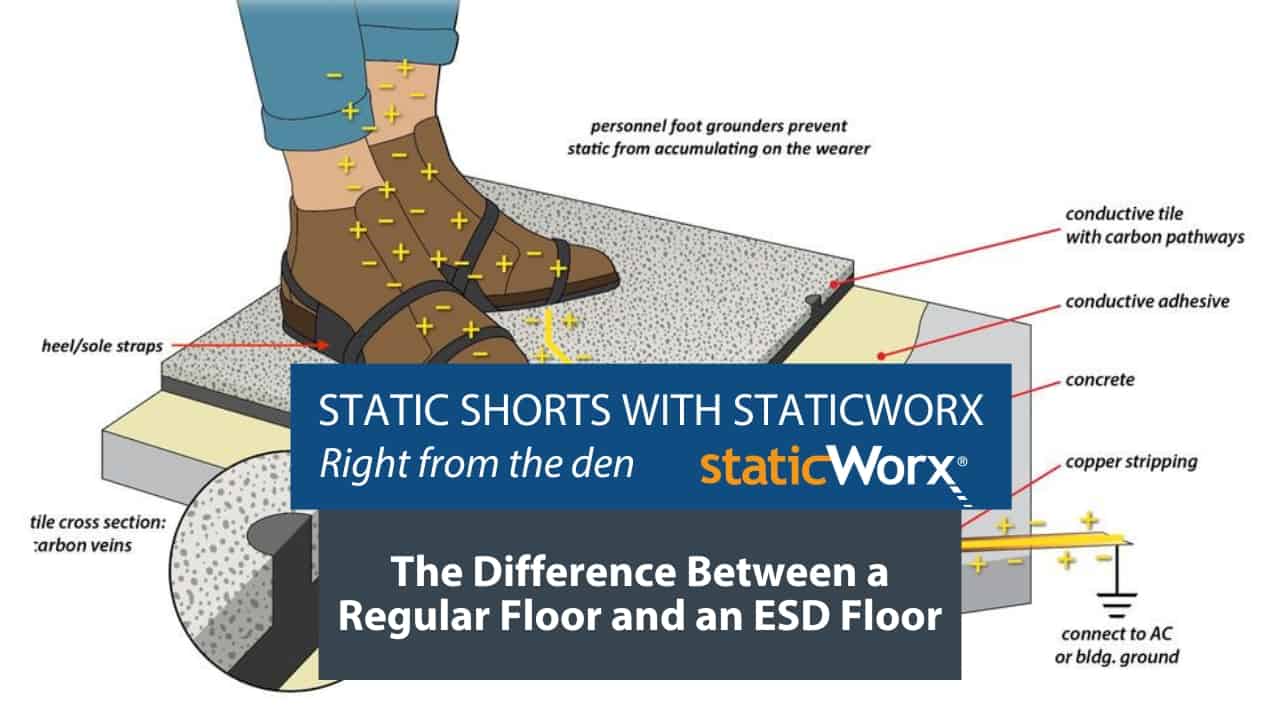
- how static-control flooring works;
- why every application is different;
- key industry terms;
- industry standards and tests.
Technical background not required. Our hands-on CEU eliminates confusion by breaking down complex technical information into easily understood components.
Learn more about our Lunch & Learn or book your workshop here.
For help or advice about choosing an ESD floor, call us on 617-923-2000, or email info@staticworx.com
Transcript
Antistatic Flooring – The Basics: Why Book Our ESD Workshop?

Antistatic Flooring – The Basics: Why Book Our ESD Workshop?
One of the biggest surprises for me coming from the static-control industry, getting involved in the construction industry with flooring, is that in over half the cases that I see where static-control flooring has been specified, they’ve actually specified the wrong floor. Not because that floor doesn’t have conductivity, not because that floor might not have properties in it that would be very appropriate in another application, but if you don’t know the standards that you’re trying to comply with, and you don’t understand the liabilities that are associated with those standards, you could be stepping in the wrong direction, no pun intended.