
Static Bursts (Ep #15): The Importance of Qualifying ESD Flooring

Listening Time: 3 minutes

Podcast

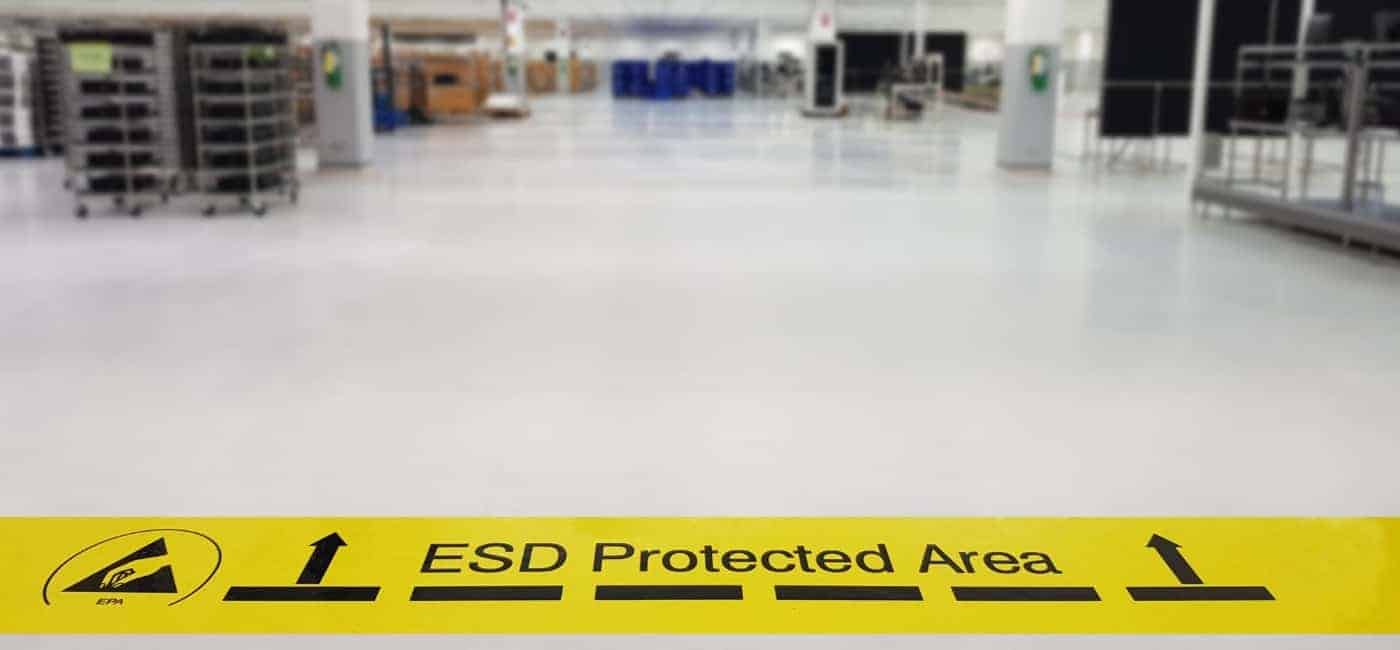
Properly qualifying an ESD floor requires more than testing for electrical resistance. We used to believe that the conductivity of a floor predicted its potential for static charge generation. We now know that resistance and charge generation are independent qualities: one does not relate to the other. A floor can be conductive and still generate static electricity. We also know that flooring materials perform differently with different types of footwear. In this episode, Dave discusses why it’s important to test the floor as part of an integrated ESD flooring/footwear system – and to test for both conductivity and charge generation.

The GIST: The Importance of Qualifying ESD Flooring

  • People believe – incorrectly – that qualifying an ESD floor requires only measuring electrical resistance.
  • The purpose of a static-control floor is to eliminate static when you walk.
  • If you accumulate static and you touch a device or system that’s sensitive to static, you will discharge to it [an potentially damage or destroy the device or system].
  • To test for charge generation, you must first determine the type of footwear that will be used.
  • Flooring materials react differently to different types of footwear.
  • ESD flooring materials must be tested for both resistance and charge generation – and must be tested as part of a flooring/footwear system.

“The same static-control floor will perform differently and sometimes tremendously out of specification just by substituting one type of static-control footwear for another.”

Transcript

Static Bursts (Ep #15): The Importance of Qualifying ESD Flooring

Toggle transcript

Rick: Welcome to Static Bursts – the info packed three-minute podcast from StaticWorx designed for a quick listen.

Dave, why is it so important to qualify an ESD floor in a controlled environment prior to specifying or selecting it for any given application?

Dave: There is a belief -and it’s a misconception – but there’s a belief that if you want to know if a static-control floor is capable of performing the function that you’re looking for, all you need to do is measure the resistance of it with an ohm meter. You couldn’t be any more wrong than using that as your sole method for qualifying the floor.

Rick: If the ANSI/ESD standard has been specifically calling for the measurement of charge generation properties since 2014, why is it still so often overlooked in the selection process?

Dave: So several years ago, the ESD Association, which has committees that write the ANSI specifications for test methods and for performance parameters, realized that people were just putting floors in based only on conductivity. Well, if you think about it carefully, why do you put a static-control floor in your building? You put it in your building, so that when you walk on it, you don’t generate static. And you don’t want to generate static because if you accumulate static, and you touch a device or system that’s sensitive to static, you will discharge to it. For five years now, there’s been a more rigid standard for how to evaluate a floor. And yet people do not know that what they’re actually doing is skipping the most important step in the process of selecting the floor in the first place.

Rick: What does it mean to be diligent in selecting an ESD floor to account for charge generation properties?

Dave: That means that the flooring has to be tested based on the type of footwear that will be used in the space. And by footwear, I’m not talking just about whatever shoes you put on in the morning when you’re going to work. Static-control footwear options exist in multiple forms. There are heel straps, there are sole straps, there are booties, there are ESD shoes. When you qualify a floor, if you’re actually diligent in trying to meet a standard, you’re not only supposed to test the floor with static-control footwear, you’re supposed to test it with the static-control footwear you plan to use in your building. The same static-control floor will perform differently and sometimes tremendously out of specification just by substituting one type of static-control footwear for another. And if you want to actually produce a product and have a legitimate static-control program, based on your ability to look at your customer in the eye, and say we’re doing the best week can, we actually have a quality ESD program. If you’re not requiring this type of testing, you’re only fooling yourself and you’re taking advantage of your customer.

I hope you learned something today. If you have questions about the podcast, give us a call at 617-923-2000 Thanks for listening.


Sign up for our newsletter and expert insights.

Related
Selecting ESD Flooring

Ammunitions and Explosives

The handling and manufacture of ammunition and explosives requires different static protection procedures than those for handling electronic devices. The Department of Defense (DoD) manual 4145.26-M, The Contractor’s Safety Manual for Ammunition and Explosives, deals with this kind of work. This document was modified on March 13, 2008, and a change incorporated on August 31,

Learn More
Selecting ESD Flooring

Exploring ESD Flooring Options for Electronics Manufacturing & Handling Applications

For electronics manufacturing and handling facilities, ESD standard S20.20 requires the use of ESD-protective footwear. Acceptable ESD footwear includes conductive heel straps, toe straps, sole straps and ESD shoes. The conductive elements in ESD-protective footwear bond with the conductive elements in the floor, creating a reliable ground connection and protecting the wearer against potential shocks

Learn More
Selecting ESD Flooring

Flooring for Electronics Manufacturing & Handling Applications

Electronics industry flooring applications—including electronics manufacturing facilities, microelectronics fabrication, circuit board assembly, box build, electronics test and repair, cleanrooms, labs and R&D facilities—have more stringent static-control requirements than do most other applications. Electronic equipment with highly sensitive microcircuits is particularly susceptible to damage caused by the sudden spike in electrical current that results from random

Learn More
Selecting ESD Flooring

ESD Flooring Choices

Realizing you might need ESD flooring is only the beginning. How can you be sure you’re choosing the right floor for your application and environment? On this page, you’ll find info on the different types of ESD flooring (also known as antistatic flooring or static-control flooring) along with our flooring selector chart to help you find the

Learn More
Selecting ESD Flooring

Best ESD Flooring Options for Cleanrooms

Cleanrooms are known for the extraordinary measures used to control particles to ultra-clean ISO standards. Ironically, the static-control flooring in cleanrooms doesn’t always meet industry standards and specifications. Making sense of electrical standards and specifications takes time. Selecting the right ESD flooring—also known as antistatic flooring or static-control flooring—for cleanroom applications requires detailed attention to a

Learn More
Selecting ESD Flooring

Choosing ESD Floors for Cleanrooms

Post Sections ESD requirements for cleanrooms differ from other flooring applications. We offer tips and relevant technical details to help you choose the right ESD floor. Need additional information about specific ESD products? Learn more about our ESD flooring products. Cleanroom environments are known for the extraordinary measures used to control particles to ultra-clean ISO standards.

Learn More
bg

Ready to Eliminate Static Risk?

When your facility’s protection depends on getting it right the first time, choose
the company with an unmatched track record. We’re standing by to assist you.