StaticWorx products are quality engineered to provide a long useful life and enhance the working environment. Carpet/carpet tile offers many advantages over other flooring systems, such as sound absorption, reduced fatigue, and lower maintenance costs.
From the start, the maintenance program should be considered part of the buying decision. If proper maintenance is neglected, the carpet’s appearance and performance will suffer, shortening the carpet’s useful life and raising long-term costs.
A comprehensive carpet care program consists of four elements:
- Reduction of soil entering the building
- Removal of dry soil
- Removal of spots and spills
- Cleaning by hot water extraction
The Importance of Planning
Carpet maintenance must be established as a scheduled program, rather than being a random series of reactions to soiling conditions and infrequent cleaning. Virtually every complaint of poor appearance, rapid soiling, pile crushing and many times poor performance has been shown to be related to a lack of planning and control for the maintenance program.
The most important consideration when planning a maintenance program is the budget. Like other expensive furnishings or equipment, advanced static controlled carpet represents a substantial investment for any facility and deserves adequate care to prolong its effective life. If the carpet maintenance budget is set unrealistically low, the carpet will need to be replaced prematurely.
Other items to consider are the amount of traffic and type of soiling, which will vary by area. Due to the higher traffic level, entrance lobbies, and hallways will need more care than offices. Production line areas and outside entrances will require more effort due to the more difficult soiling conditions.
Recommended Maintenance Frequency
Light Traffic: Private Offices & Cubicles, Computer Rooms and Test Areas
Medium Traffic: Shared Offices, Interior Hallways, Conference Rooms and Light Assembly
Heavy Traffic: Entrances, Elevators, Main Hallways, Break Rooms, Work/Copy Rooms, Mailrooms, Light Assembly and Manufacturing, Command Centers, Data Centers and Call Centers
Severe Conditions: Entries to Main Lobbies, Areas Surrounding Surface Mount, Wave Solder or Aqueous Cleaners
| Traffic Level | Vacuum | Pile Lift | Spot Clean | Hot Water Extraction |
|---|---|---|---|---|
| Light | Every 2-3 Days | As Needed | As Needed | Annually |
| Medium | Daily | Quarterly | As Needed | Annually |
| Heavy | Daily | Monthly | As Needed | Every 6 Months |
| Severe | Daily | Monthly | As Needed | Quarterly |
Reduction of Soiling
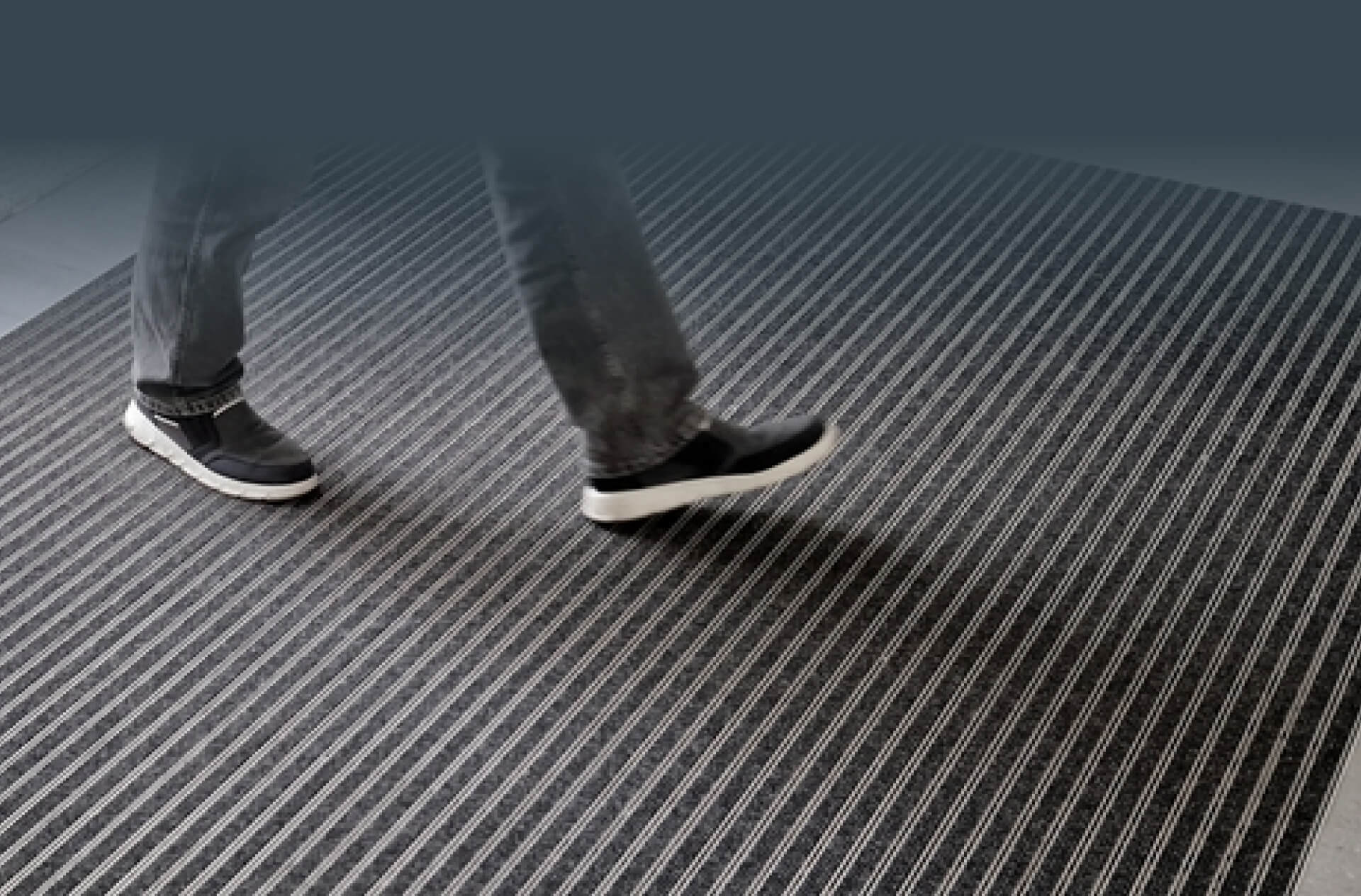
The use of walk-off mats at transition areas from the outside or hard surface to carpet is important. Walk-off mats can greatly reduce the amount of soil entering a facility by normal traffic. There are two types of mats which should be used: soil removal mats and water absorbent mats.
- Good soil removal mats have a coarse texture and are able to brush soil from shoes and hold large amounts in the pile.
- The water absorbent mat must be used inside, either full time or at least during wet weather. When both types of mats are used in combination, they should always be placed so that incoming traffic passes over the soil removal mat first, because the absorbent types have very little soil holding ability. For mats to continue to trap soil, they should be cleaned on a regular basis.
Removal of Dry Soil
Vacuuming is the most significant element in the maintenance of carpet and in the overall appearance of the facility. Research has shown that 85% of the soil tracked into a building is dry, and the other 15% is oily. Vacuums are designed to control this dry soil. Frequent vacuuming removes particulate soil from the surface before it works down in to the pile where it is more difficult to remove. Walking on the carpet accelerates the rate at which the particles settle deep into the pile. Areas with heavy traffic, such as entrances and major corridors, assembly or manufacturing, should be vacuumed at least once a day. Areas with less traffic, such as offices, computer rooms, engineering labs, should be vacuumed every other day depending upon conditions.
Vacuum Cleaner Recommendations
- Vacuums should have dual motors – one to drive the source of agitation or vibration which loosens the soil, and one to drive the vacuum fan which creates the suction that picks up the particles. This prevents the vacuum from losing efficiency as the beater bar/brush becomes slowed by excessive debris or as the bag fills. Dual motor vacuums also survive the demands of a commercial location and last longer than single motor vacuums.
- Bags that fill from the top are preferred over those that fill from the bottom. As the bag fills, it does not add to the load on the vacuum motor. Bags should be checked frequently and replaced when 1/2 to 2/3 full. When changing bags, also check the belt and replace if loose or worn.
Between cleanings, regular use of a pile lifter can remove deeply imbedded dry sand and soil, help stand up the pile and renew the appearance of the carpet in high traffic areas. A pile lifter is an upright two motor vacuum with a large, adjustable, gentle bristle brush with a motor, a high suction vacuum motor, and a sand trap. Using a pile lifter in traffic lanes just prior to cleaning will remove the deeply embedded soil and open up the pile so the hot water extraction can be more effective. Another good use of a pile lifter is for post-construction cleanup. Vacuum first to pick up the larger sized chunks of dried mud, dirt, and construction debris. Then use a pile lifter to remove the fine particulates, such as dry wall dust, which are deep in the pile. After using a pile lifter, the final step – cleaning by hot water extraction to remove the residual soil – will be less difficult.
Cleaning
Even with thorough vacuuming, cleaning is necessary to remove the 15% of soil which is the oily type material. In order to maintain a good appearance, the carpet must be cleaned on a periodic basis to prevent its becoming so dirty that it can no longer be cleaned satisfactorily. The frequency of cleaning must be adjusted to the rate at which soil accumulates; therefore, heavily trafficked areas typically require more frequent cleaning, as do areas with less traffic but more soil.
When the color of the carpet begins to look dull, it is time to clean the carpet. The traffic lanes will show this first. If the carpet is cleaned before it becomes excessively soiled, the cleaning will be a more successful and much easier task. This is especially important in places oily soil is prevalent, such as the areas near streets or asphalt parking lots, and those around certain messy electronic manufacturing operations, SMT lines and Cleaners.
Solder and production soil forms a sticky material similar to varnish which traps and holds dry soil and may become nearly impossible to remove as it ages. And remember, damp carpet cleans shoes and collects soil faster. The resulting black discoloration in the traffic lanes will require pre-treatment with a traffic lane cleaner to break down the soiling. It also requires the use of hot, not warm, water to effectively clean the carpet.
The Cleaning System
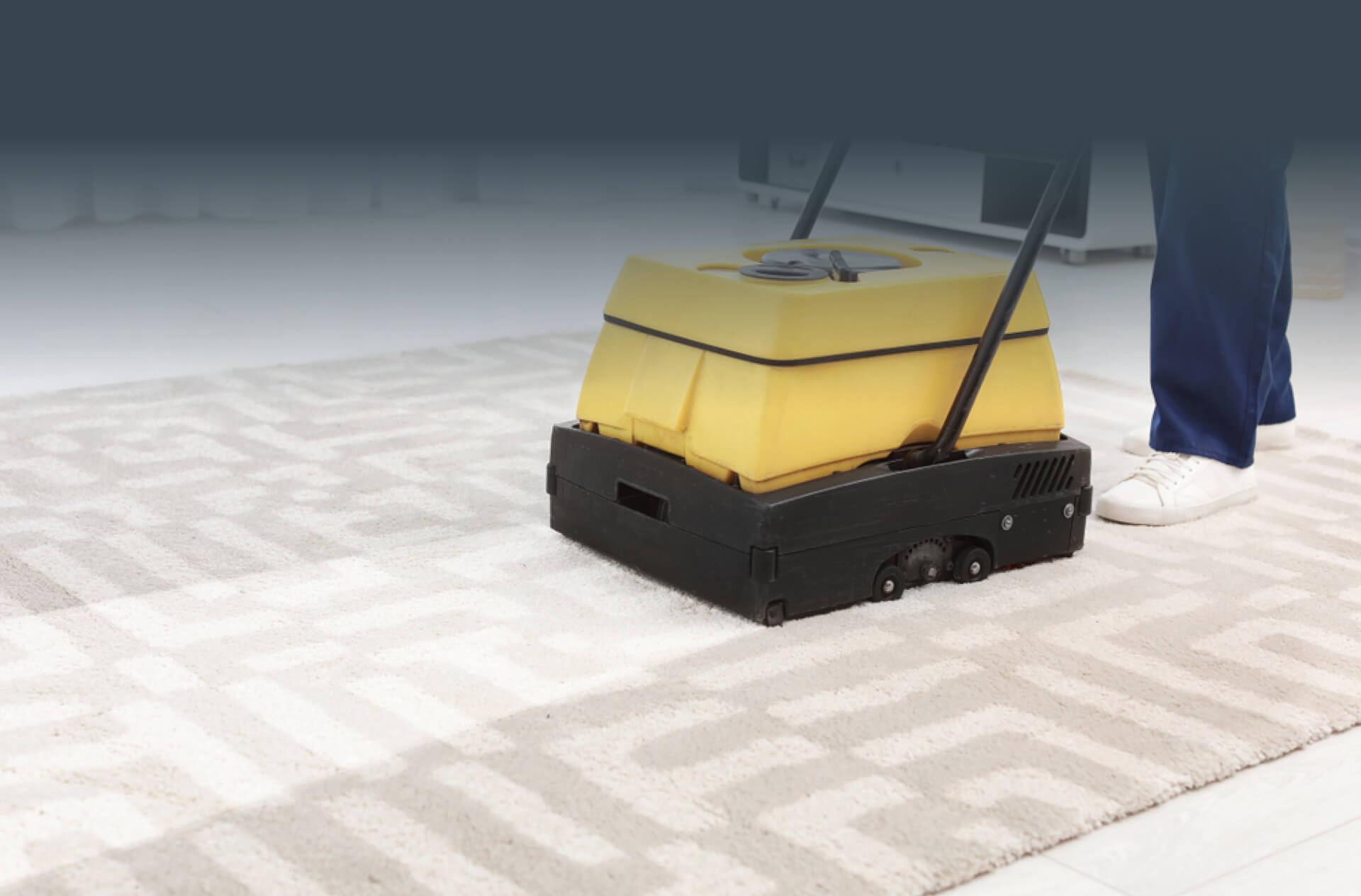
When choosing a proper cleaning system, it is necessary to consider how effectively it cleans and how well it enhances the appearance retention of the carpet texture without leaving a heavy residue. StaticWorx recommends the hot water extraction system, which research indicates provides the best capability for cleaning. This system is commonly referred to as “steam cleaning” although no steam is actually generated. The process consists of spraying a solution of water and cleaning agent into the pile and, using a powerful vacuum, recovering the used solution and soil into a holding tank. This can be best done from a truck-mounted unit outside the facility with only the hose and wand brought into the facility. It is important to deliver clean water at a minimum of 200°F to the carpet face.
Self-contained, walk-behind machines are another type of hot water extraction equipment commonly used. They apply the cleaning solution at a rate which is balanced with the recovery capability of the machine, resulting in a carpet that is only damp after cleaning. This feature prevents untrained users from overwetting the carpet to the point that drying time is unacceptable. This type of machine is employed largely by hospitals and schools with in-house maintenance staffs. One variation of this equipment continuously recycles the cleaning solution for multiple uses. StaticWorx does not recommend the use of the equipment because as the recycled solution is reused, the materials dissolved in it are distributed over the whole area.
To locate a nearby professional carpet cleaner which uses a hot water extraction system call the national referral service listed below:
- Institute of Inspection, Cleaning & Restoration Certification (IICRC) (WA) – 800-835-4624
- Steamaway International, 4550 Jackson St., Denver, CO 80126 800-447-8326
Recommendations for In-House Maintenance
If you decide that cleaning by in-house personnel is best, here are some guidelines to follow. For a good reference describing carpet cleaning and the hot water extraction method specifically, read the Carpet Cleaning Standard (S001-1991) by the IICRC.
- Before beginning steam cleaning, thoroughly vacuum the area to be cleaned to remove as much dry soil as possible. Use a pile lifter if necessary in high traffic or heavy soiled areas.
- Pretreat the heavily soiled areas and traffic lane and wait the recommended time before cleaning. Although it is advisable to minimize the use of solvents, many traffic lane cleaners do contain some solvents to help remove the stubborn oily dirt often found in traffic areas. A small area should be treated and the liquid extracted before the traffic lane cleaner dries.
- Use a detergent with a pH of less than 10, preferably near 9, and with a minimum of non-sticky residue. The attraction between the detergent and the particles of soil and oil is critical to the cleaning process. However, the detergent residue continues to attract these particles even after drying. Increasing the amount of detergent beyond the recommended level does not greatly increase cleaning performance, but makes the complete removal of detergent more difficult. Because build-up of detergent residue is the most common cause of accelerated resoiling complaints, do not use extra. StaticWorx does not recommend the use of cleaning agents with optical brighteners.
- Avoid overwetting the carpet. This is controlled by a combination of proper equipment and operator training.
- Do not use any silicone-based anti-soil treatments on carpet. The only anti-soil products approved for use as needed are formulated with either Dupont’s Teflon or 3M’s Scotchgard.
- Reduce drying time by using several fans or air movers to move air across the carpet, in combination with a dehumidifier or air conditioner to pull moisture out of the air. Carpet should be dry within twelve hours; even less is better.
Spot and Spill Removal
All maintenance procedures mentioned thus far have been planned; spot and stain removal is the reaction to an unplanned incident. Therefore, it is desirable to have the needed materials handy by planning ahead of time. Professional carpet cleaning companies have spot removal kits available in convenient carrying cases that contain all the necessary materials.
General Instructions
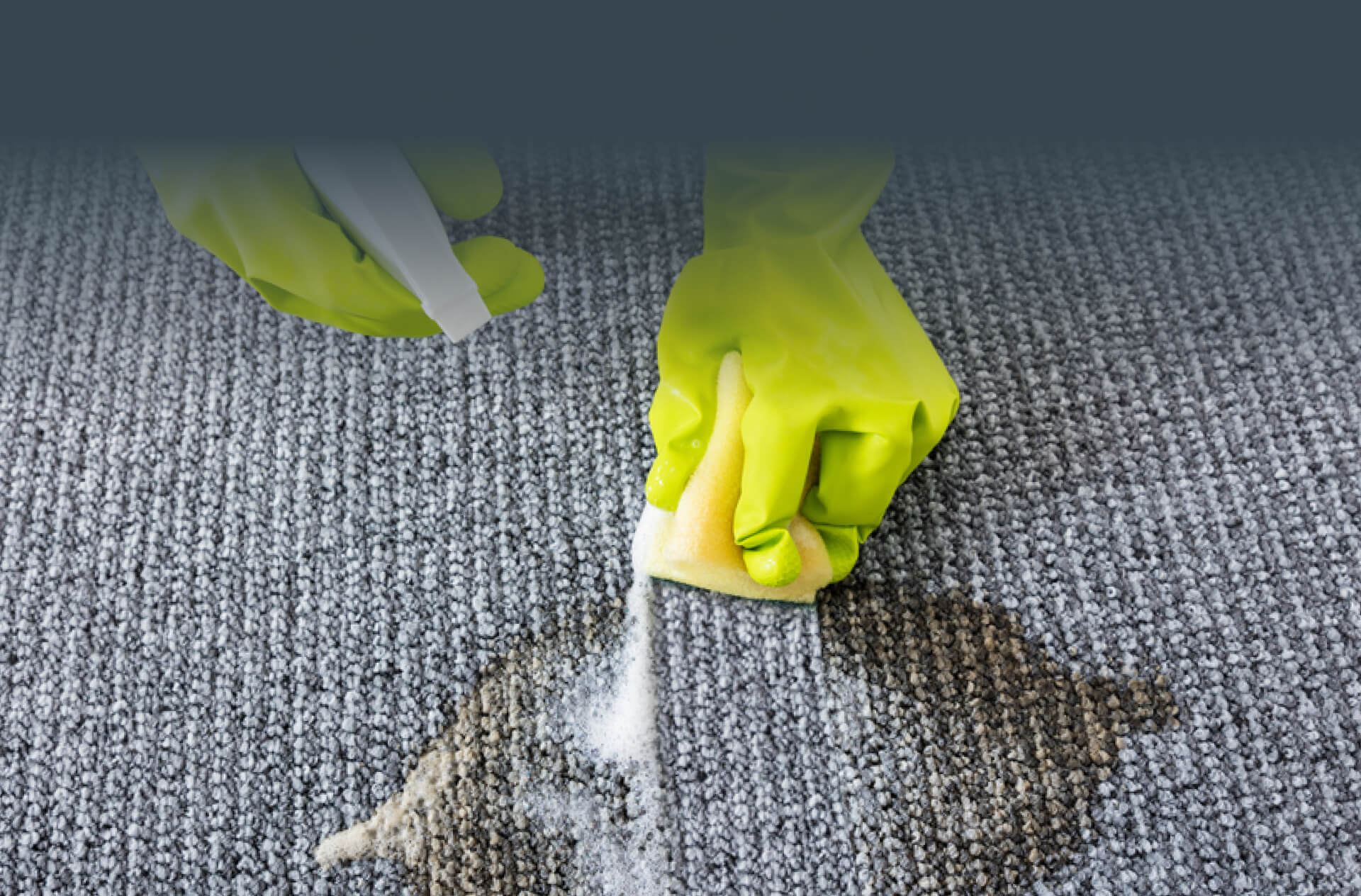
Remove as much of food spills as possible by scraping gently with a spoon or dull knife. Absorb wet spills as quickly as possible by blotting with white paper or cloth towels. Always blot, never scrub or rub abrasively, as a fuzzy area may result. When blotting, work from the outer edge in toward the center of the spot to avoid spreading the spill and enlarging the problem. Always follow spot removal with a water rinse to remove the sticky residue from the spotter; the residue can cause rapid resoiling. There are spotting extractors that work well for the rinse-and-extract method. Always draw out the remaining moisture with several layers of white towels weighted down on the spot.
Removal Procedures
- WATER SOLUBLE STAINS – Absorb as much as possible with white towels. Blot the affected area with more towels dampened with cool water until no more color transfers to the towels. If any of the stain remains, use a detergent solution of 1/2 teaspoon (no more) of CLEAR, NON-BLEACH liquid hand dish washing detergent to a quart of water in a clean spray bottle OR use a general purpose spotter with a pH less than 10. Spray lightly onto the spot and blot repeatedly with white towels. Rinse thoroughly by spraying with clean water, and then blot or extract. Do not use too much detergent because the residue will contribute to rapid resoiling.
- As in A, but BEFORE using the detergent, apply a solution of household ammonia (one tablespoon ammonia to one cup water) to a white towel and blot onto spot OR use an alkaline spotter rather than the detergent.
- GREASE – For oily or greasy spots, blot with white towels to remove excess. Apply a solvent (designed for grease removal) to an absorbent towel and continue blotting. Use sparingly and do not pour or spray on the carpet.
DO NOT USE FLAMMABLE SOLVENTS. Follow up with “A” procedure.
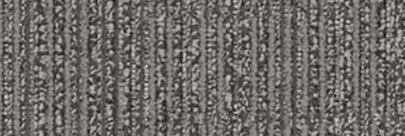
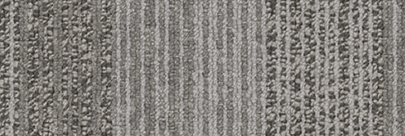
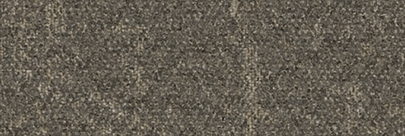
Explore Our ShadowFX Collections
ESD Carpet Tile and Broadloom Cleaning GuidelinesFrequently Asked Questions
How often should ShadowFX carpet be cleaned?
Cleaning frequency depends on traffic level:
- Light traffic (offices, computer rooms): vacuum every 2–3 days, hot water extraction annually
- Medium traffic (hallways, shared offices): vacuum daily, hot water extraction annually
- Heavy traffic (entrances, data centers): vacuum daily, pile lift monthly, hot water extraction every 6 months
- Severe conditions (SMT lines, main lobbies): vacuum daily, pile lift monthly, hot water extraction quarterly
What is the best cleaning method for ESD carpet tiles?
Hot water extraction (steam cleaning without actual steam) is recommended. It removes both dry and oily soils without leaving residue, preserving appearance and static-dissipative performance.
How can I reduce soil entering the building?
Use walk-off mats at entrances: coarse-textured mats remove soil from shoes, and water-absorbent mats trap moisture. Place the soil-removal mat first, followed by the absorbent mat, and clean mats regularly.
Can ShadowFX carpet tiles handle spills and stains?
Yes. Spot cleaning should be done immediately: blot, never scrub. Water-soluble stains can be cleaned with mild detergent or ammonia solutions; grease requires a solvent designed for grease removal. Avoid flammable solvents.
Do regular vacuums work for ESD carpet?
For best results, use dual-motor vacuums with top-fill bags. In high-traffic or heavily soiled areas, a pile lifter can remove deeply embedded dirt, lift the pile, and prepare the carpet for hot water extraction.
Why is proper maintenance important for ESD performance?
Dirt and residue can act as insulators, preventing static from dissipating. Regular cleaning ensures the carpet maintains its static-dissipative properties, appearance, and long-term durability.
What Clients are Saying

Just a quick note to let you know that the carpet tile installation started on Tuesday and everything is going silky smooth. Carpet looks great. Install is fast and easy. The system is working as it should – NICE!!
“[ShadowFX carpet] was installed during a two-week installation window at a military base in Florida. The specifications for this RSS required ESD carpet and the product from StaticWorx integrated perfectly!”

Ready to Eliminate Static Risk?
When your facility’s protection depends on getting it right the first time, choose
the company with an unmatched track record. We’re standing by to assist you.
Static-Control Education at Your Fingertips
Explore the StaticWorx Knowledge Center for technical articles, videos, and guides to help you specify, install, and maintain ESD flooring with confidence.