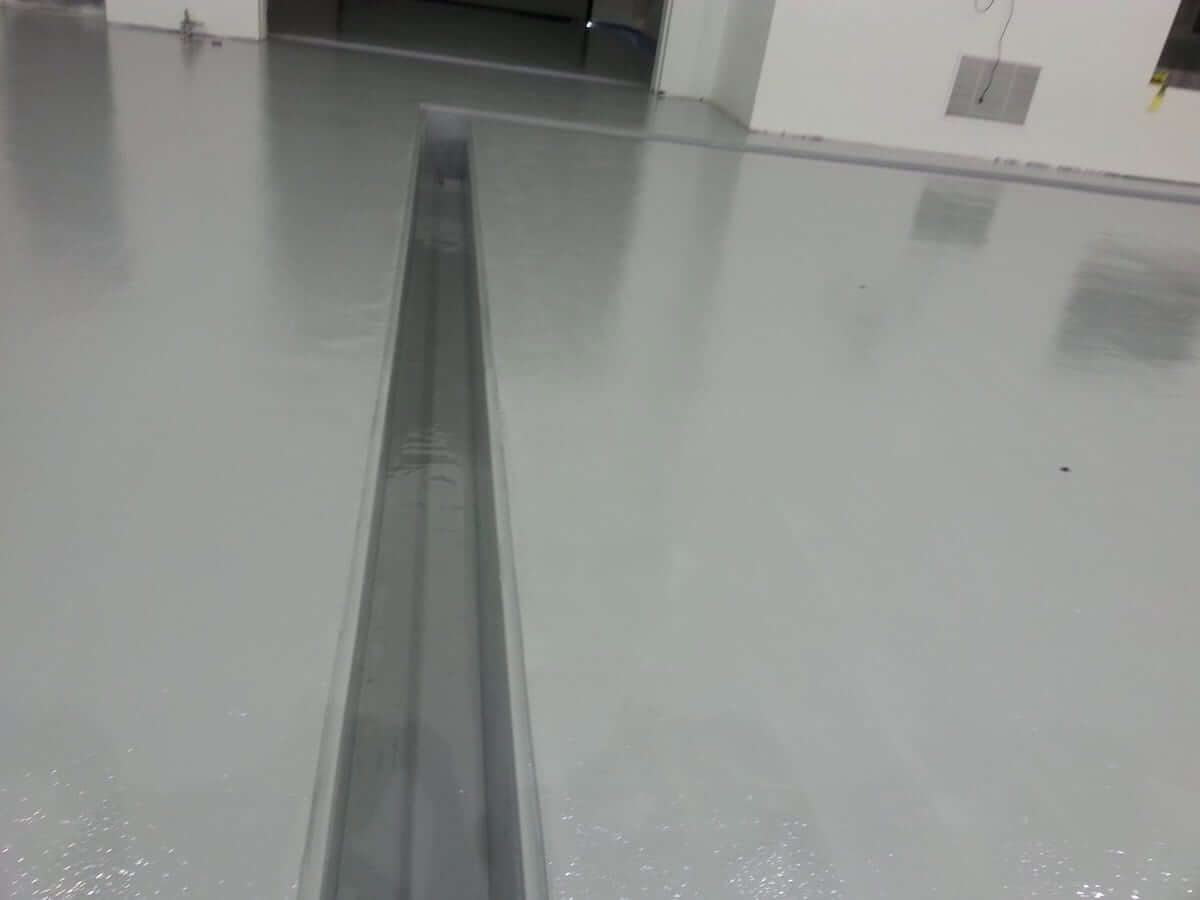
Electrostatic discharge (ESD) is a serious concern in many industries, particularly those that involve the manufacturing and/or handling of electronic components or sensitive equipment. ESD is typically caused by the zap that occurs when a person carrying a static charge on their body touches sensitive electronics. ESD can damage or destroy electronic components, leading to costly repairs, downtime, and lost productivity.
ESD floors are designed to prevent the buildup of static electricity and to dissipate charges from the shoes of people walking on the floor to earth ground. To ensure that an ESD floor is functioning properly, it is important to test it regularly using appropriate methods.
The following test methods ensure that your ESD floor is functioning properly and providing adequate protection against electrostatic discharge.
Electrical Resistance Test
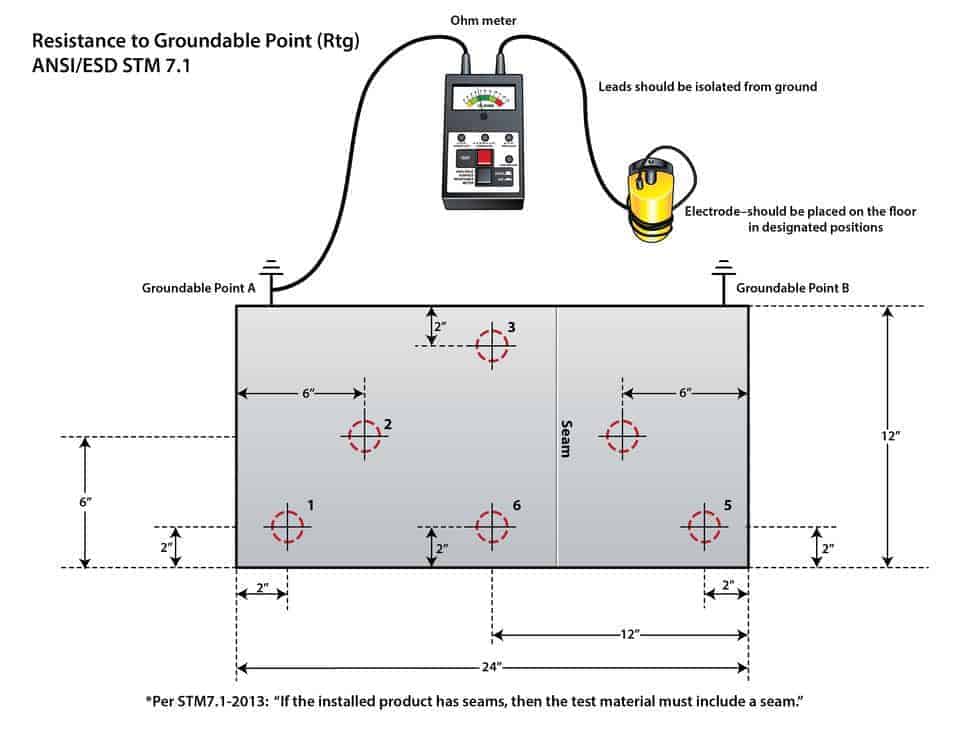
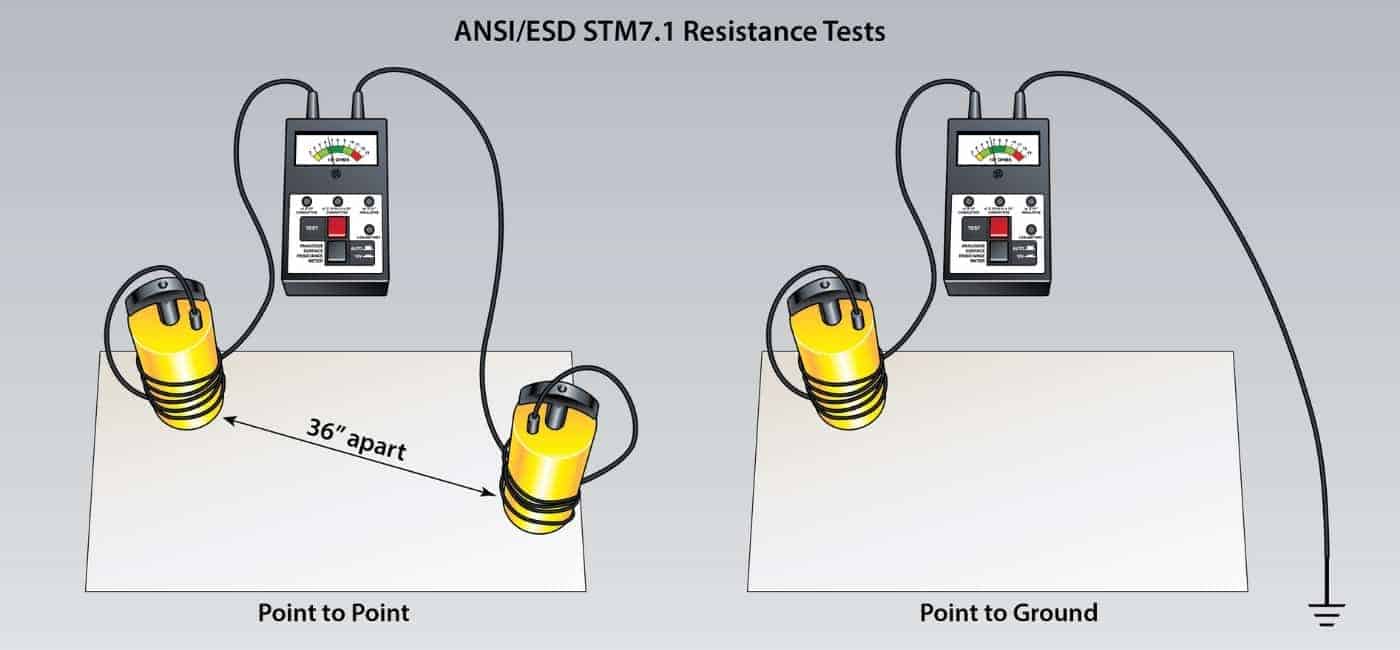
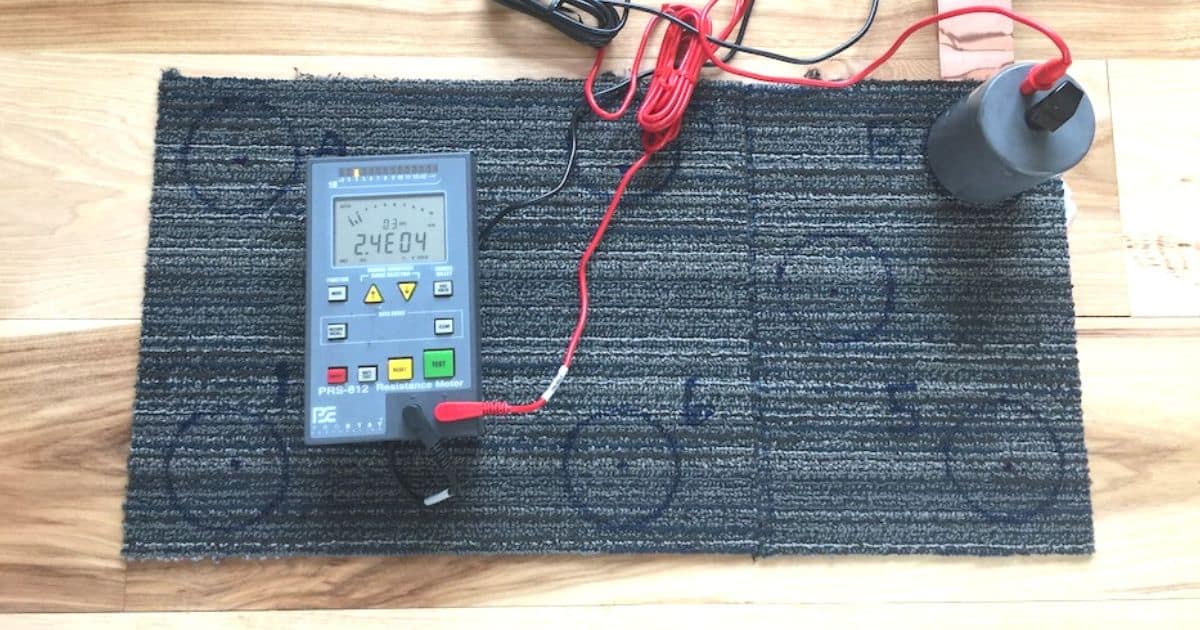
The electrical resistance test is the most common method of testing an ESD floor. This test method, which follows procedures outlined in industry standard ANSI/ESD STM 7.1, measures the electrical resistance of the floor. Resistance in ohms should fall within a specific range based on the ESD specification appropriate to the industry.
- For electronics manufacturing, the floor should measure < 1.0 x 10E9 ohms
- For communications facilities, PSAPs, flight towers and other end-user environments, the floor should measure > 1.0 x 10E6 and < 1.0 x 10E9.
Resistance tests are performed by placing one electrode on the floor and measuring the resistance from the probe to ground.
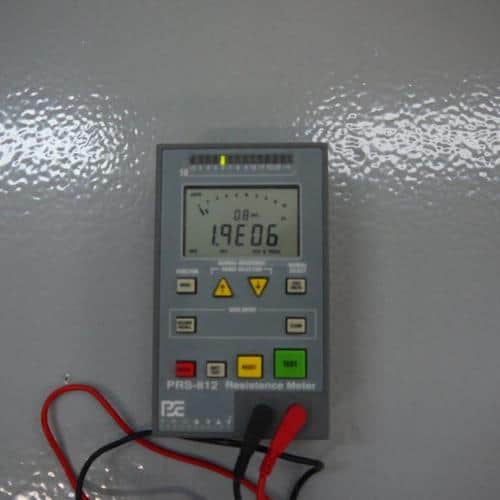
Resistance tests are quick and easy to perform. The key advantage of the test is that it provides a reliable indicator of the conductivity of the ESD floor and tells you whether or not the floor can transport a static charge to ground. It is important to note that the surface resistance test does not test the antistatic – or charge generation – properties of the floor. And it does not take into account the effects of environmental factors such as temperature and humidity, which can affect the conductivity of the ESD floor.
Walking Body Voltage Test
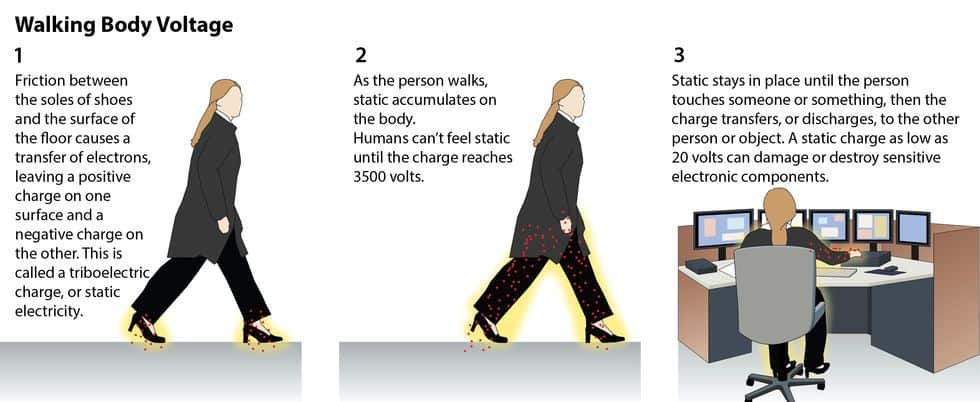
The walking test is a more comprehensive way to test an ESD floor, as it simulates the movement of people on the floor. This test involves walking on the floor with special shoes with electrodes on the bottom. The shoes are connected to a charge plate meter that measures the electrical resistance, in volts, between the shoes and the floor.
- For electronics manufacturing and handling facilities, the floor should generate < 100V
- For end-user environments, the floor should measure < 500V.
The walking body voltage test measures the static electricity generated on shoe soles when a person walks on the floor. This test should always be performed with the test subject, in subsequent tests, wearing every type of shoes that will be allowed on the floor.
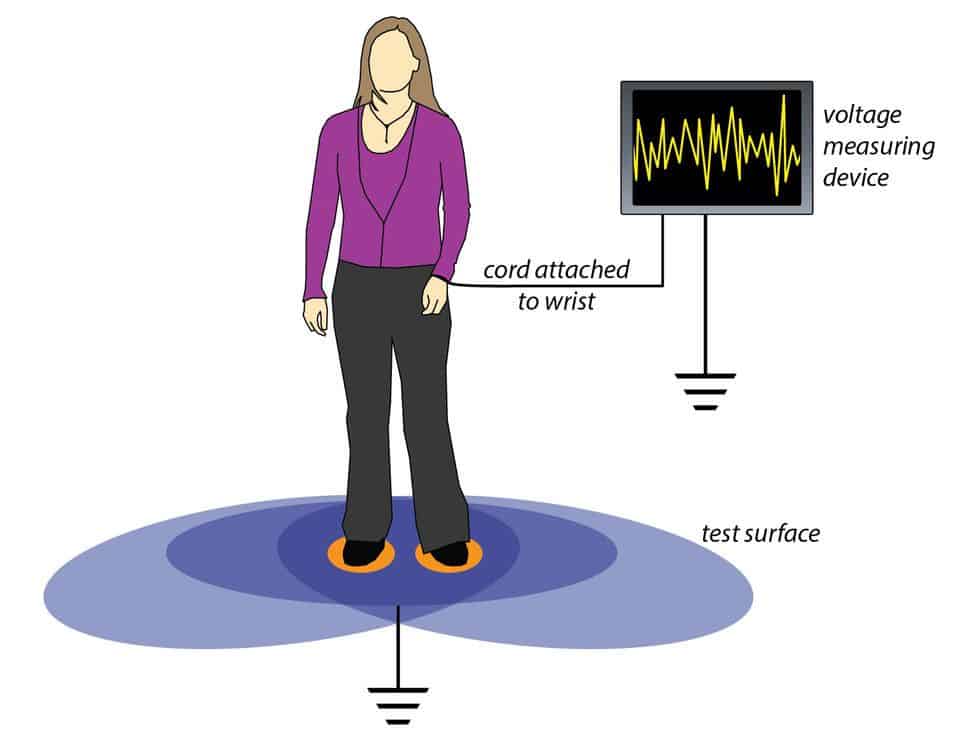
The body voltage test is a real-world test that takes into account the effects of environmental factors such as temperature and humidity, as well as the various types of (regular or ESD-preventive) shoes that will be permitted to be worn on the floor. It is more time-consuming than resistance testing and requires more expensive equipment.
One of the key advantages of the walking test is that it measures body voltage generation, a very important factor in preventing random ESD events, and provides a realistic indication of the performance of the ESD floor in real-world conditions. It can also help to identify any areas of the facility that may be more susceptible to static discharge due to environmental factors, such as low RH, or other issues.
Static Control Audit
A static-control audit looks at the floor as part of a system and is a comprehensive evaluation of the entire ESD control program. This type of extensive ESD audit is typically performed by an independent third-party consultant and provides a thorough evaluation of the ESD control program, including the effectiveness of the ESD floor.
A static control audit typically involves a detailed inspection of the ESD floor, including a review of the design, installation, and maintenance of the floor. The audit may also include resistance testing and walking body voltage tests, as well as an evaluation of the effectiveness of the overall ESD control program.
An ESD audit can help to identify any issues with the ESD system or areas of concern that may not be apparent through other testing methods. Due to the nature of the testing, it is more time-consuming and can be more expensive than other test methods.
There are several ways to test an ESD floor to ensure that it is providing adequate protection against electrostatic discharge.
- The resistance test is a simple, easy way to test an ESD floor and shows that the floor can transport a static charge to ground.
- The walking test measures static generation and provides a more realistic indication of the performance of the floor in real-world conditions.
- A static-control audit is the most comprehensive way to test an ESD floor and can help to identify any issues or areas of concern that may affect the performance of the ESD floor or compromise its integrity.
Read
ESD Flooring Qualification Phase: Resistance Testing
Listen
Why Resistance Tests Alone Are Not Enough to Properly Qualify an ESD Floor
Watch
Measuring Walking Body Voltage (Test Method: ANSI/ESD STM97.2)