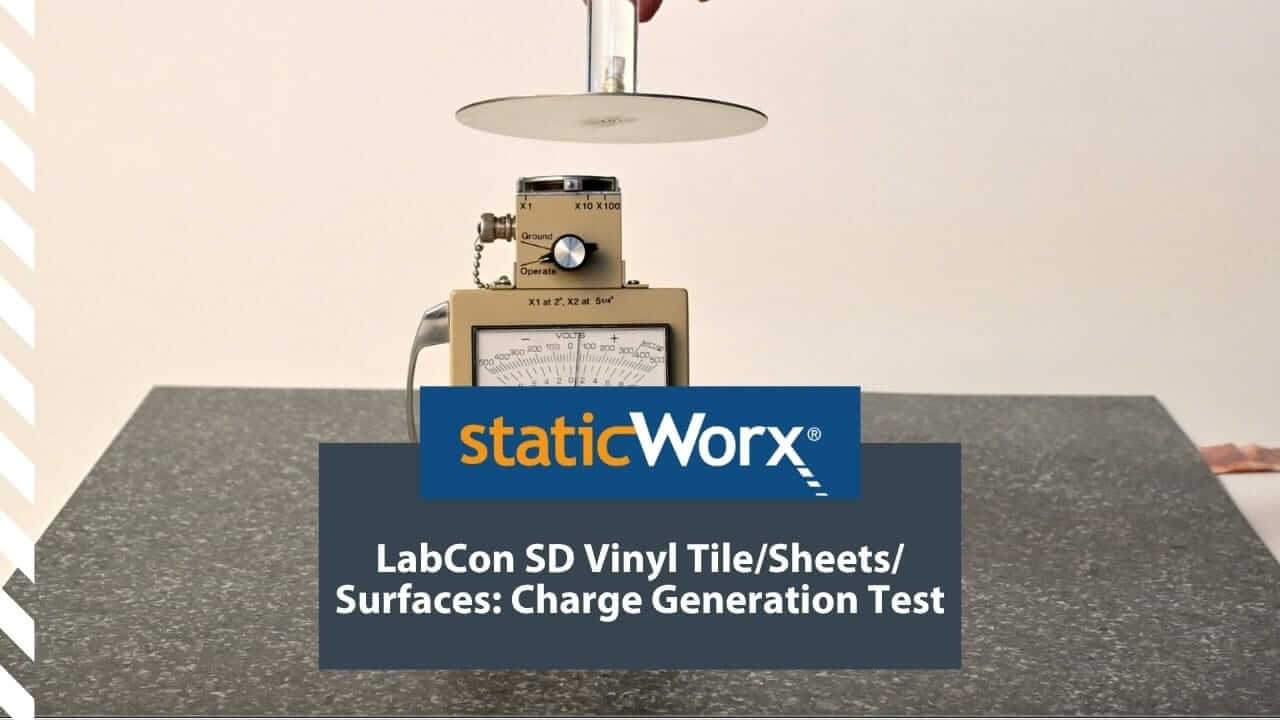
This short video shows a charge decay test performed on a LabCon static-dissipative (SD) tile. The charge decay test shows the speed at which a material dissipates electrostatic charges (eSD). With a metal plate, we touch a piece of plastic bubble wrap. The needle moves to the far side of the monitor, showing a high static charge on the bubble wrap. When we touch the charged plate to the LabCon tile, the charge immediately dissipates; on the monitor we see that static is gone. This test shows that LabCon SD material rapidly decays or discharges electrostatic charges. Visit us to learn more about LabCon SD Flooring

To learn more about StaticWorx ESD flooring options, call: 617-923-2000 Or visit our website
Sign up for our newsletter and expert insights.

Related
Testing

The Mock-Up That Actually Predicts Performance

Mock-ups are intended to predict real performance — but in most projects, they don’t. Traditional mock-ups focus on appearance instead of the forces that actually cause flooring failure: moisture, adhesive behavior, rolling loads, point loads, chemicals, humidity swings, and electrical performance.

Learn More
Testing

3 Best Ways to Test an ESD Floor to Ensure Reliability

Electrostatic discharge (ESD) is a serious concern in many industries, particularly those that involve the manufacturing and/or handling of electronic components or sensitive equipment. ESD is typically caused by the zap that occurs when a person carrying a static charge on their body touches sensitive electronics. ESD can damage or destroy electronic components, leading to

Learn More
Testing

5 Reasons You Should Never Qualify a Floor Based on Conductive or Dissipative

Conductive and Static-dissipative are descriptive terms. These terms describe electrical resistance categories with wide variation, and NO industry flooring standards are based solely on these descriptions. End-user applications like PSAPs, critical call centers, and FAA flight towers require the use of floors measuring above 10E6 (1.0 x 10⁶), which fall into the dissipative range. But

Learn More
Testing

Why Savvy Buyers Qualify Their ESD Floor – and Why You Should Too

You’re constructing a new facility, covering an old floor as part of a renovation project, or repurposing a workspace, and need to install a floor with ESD protection. You’re smart; you’ve done the research. To comply with the personnel grounding parameters in the 2014 version of ANSI/ESD S20.20, the ESD standard for electronics manufacturing and

Learn More
ESD Basics Testing

ESD Flooring Qualification Phase: Resistance Testing

You finally received your new portable ohm meter with the five-pound probe and someone showed you how to use it. Just drop the two five-pound probes on the floor, connect leads to the meter and hit the test button. That’s all you need to do. Right? Not even close. Let’s start with your mission. What

Learn More
bg

Ready to Eliminate Static Risk?

When your facility’s protection depends on getting it right the first time, choose
the company with an unmatched track record. We’re standing by to assist you.