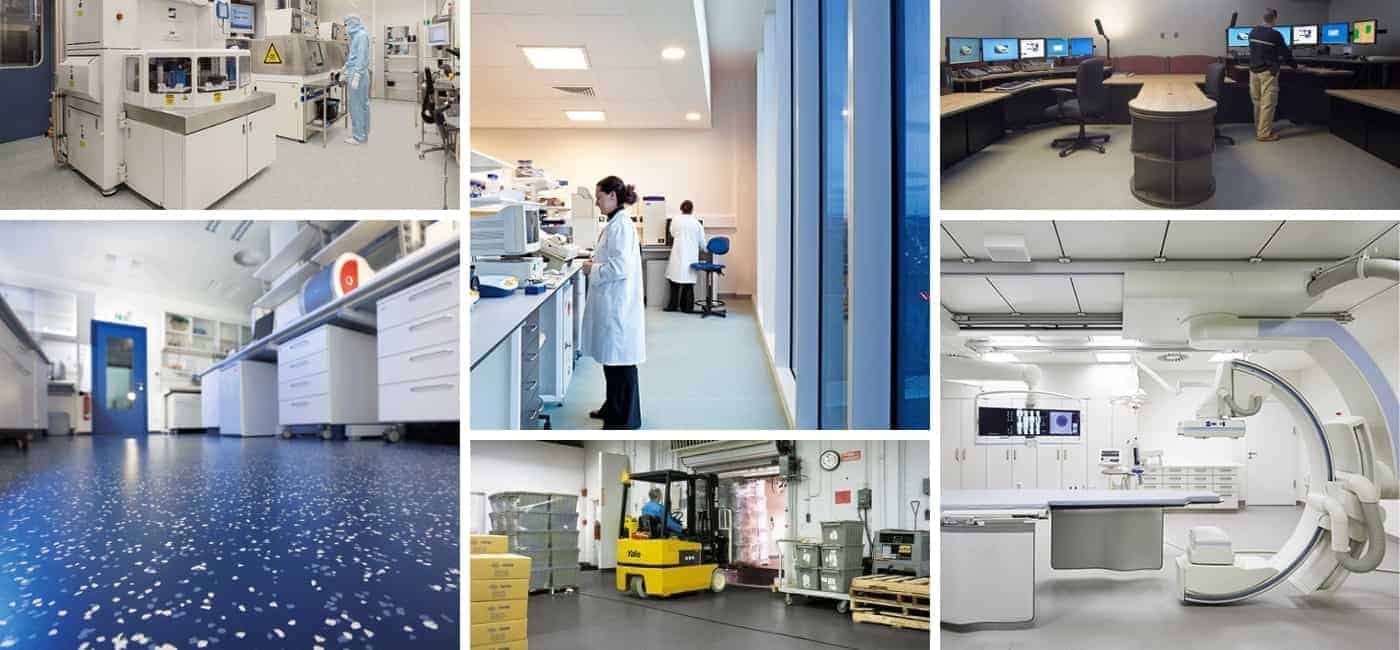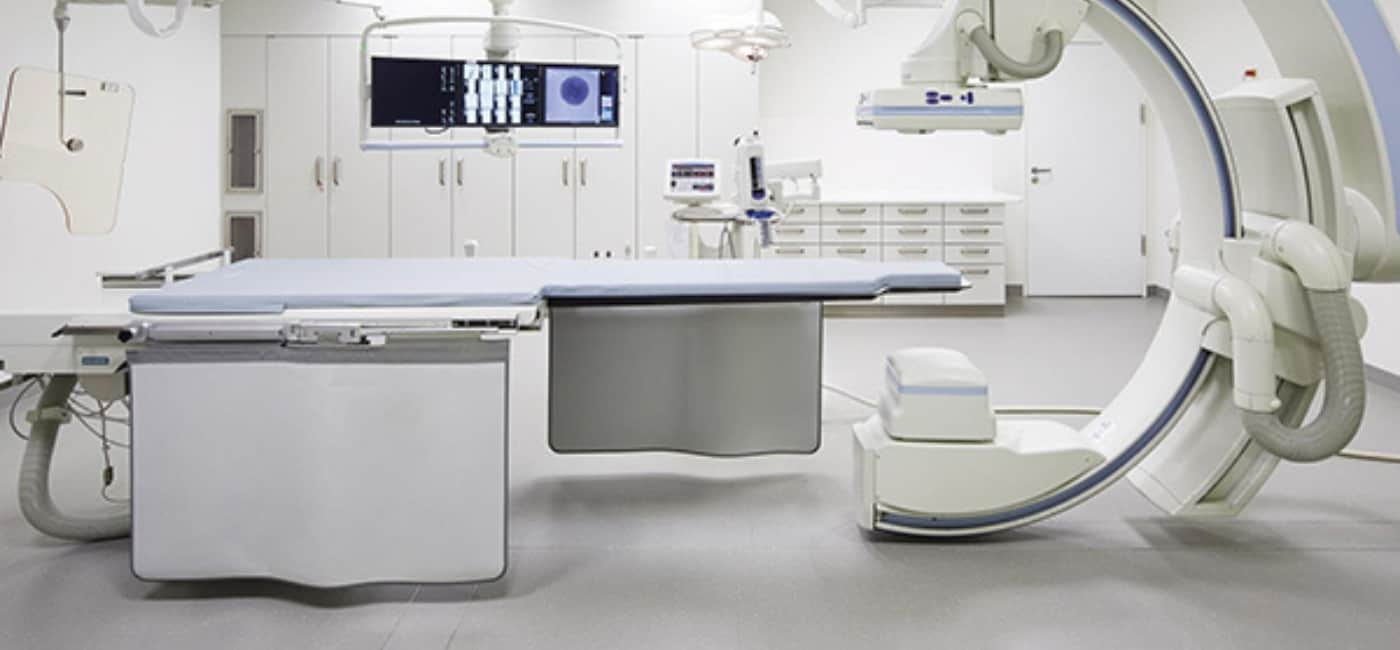
To Ensure Performance, ESD Flooring Must Be Evaluated as a System
Because it integrates with both the building and personnel, ESD flooring, for any application, should never be evaluated as a standalone product. Neglecting to consider variables can result in a failed installation or a flooring choice that does not live up to expectations.
To ensure proper electrical performance as well as making sure that the floor meets all your objectives, ESD flooring—also known as antistatic flooring or static-control flooring—must always be evaluated as a system. An ESD flooring system consists of flooring material, installation, footwear, fixtures and seating, with attention to how the system interacts with all components.
Eclipse EC Rubber, Best-In-Class for Cleanroom Installations
Eclipse EC (electrically conductive) rubber has long been recognized by contamination control engineers as the best-in-class ESD floor for cleanrooms. And it checks every box on our wish list for lab and cleanroom flooring. Eclipse rubber offers a unique combination of conductivity and inherently low charge generation, with minimal environmental impact, no plasticizers or PVC and no evidence of outgassing, making it ideal for space-grade applications.
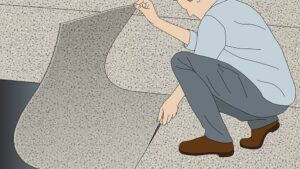
Installed with RI 2.0 conductive dry adhesive, Eclipse ESD rubber (also known as antistatic or static-control rubber) offers a seamless, flash-coved installation. With RI 2.0 adhesive, Eclipse rubber can be installed rapidly, 24/7, in occupied spaces without concern of VOC content and with no mixing equipment, trowels or messy wet adhesives.
Both Eclipse tiles and roll goods work as a floor with integral flash cove. Seams can be welded, creating a seamless installation, for a particle-free lab/cleanroom environment – on the flooring surface, as well as between seams and wall coving. Installed with RI 2.0 dry adhesive, there are no messy adhesives to deal with, allowing Eclipse rubber to be installed 24/7 with minimal downtime. And the new floor can be used or walked on immediately after installation, minimizing costly production losses.
Learn More About StaticWorx Eclipse EC Rubber
The Crucial Step For Avoiding ESD Flooring Failure: Proper Installation
To avoid failed installations, the installation method should be as variable-free as possible. For preventing contamination, flooring in a lab or cleanroom space should be seamless. The floor should also be flash-coved with rounded corners to eliminate angular surfaces that collect contaminants.
People sometimes try to dance around these and other installation issues with quick-fix solutions, such as injection-molded click-together floors. Molded puzzle-piece flooring may have cracks or crevices or be prone to plasticizer migration and outgassing, contaminating the cleanroom.
RI 2.0 conductive dry adhesive is an ideal adhesion method for ESD flooring installations in labs and cleanrooms. RI 2.0 adhesive addresses all major concerns for cleanroom flooring. RI 2.0 adhesive is quick and easy to install, with no VOCs and no outgassing. With no messy wet adhesives to deal with, RI 2.0 dry adhesive allows for 24/7 installation in occupied spaces with minimal downtime. And seam-welding produces a clean, monolithic surface that’s contaminant- and particulate-free throughout the installation.
With RI 2.0 conductive dry adhesive, Eclipse EC rubber can be installed quickly and easily, 24/7, in occupied spaces. No outgassing. No messy adhesives. No wait to use the floor.
Benefits of Eclipse EC Rubber Installed with RI 2.0 Dry Adhesive
- Ideal for labs and cleanrooms
- Seamless installation
- Dirt & particle free
- No messy adhesives
- Rapid 24/7 installation
- Can be installed in occupied spaces
- Minimal downtime
- Can be used immediately
- Eclipse rubber is PVC free
- No outgassing
Learn More About RI 2.0 Dry Adhesive
Footwear in the Cleanroom or Lab
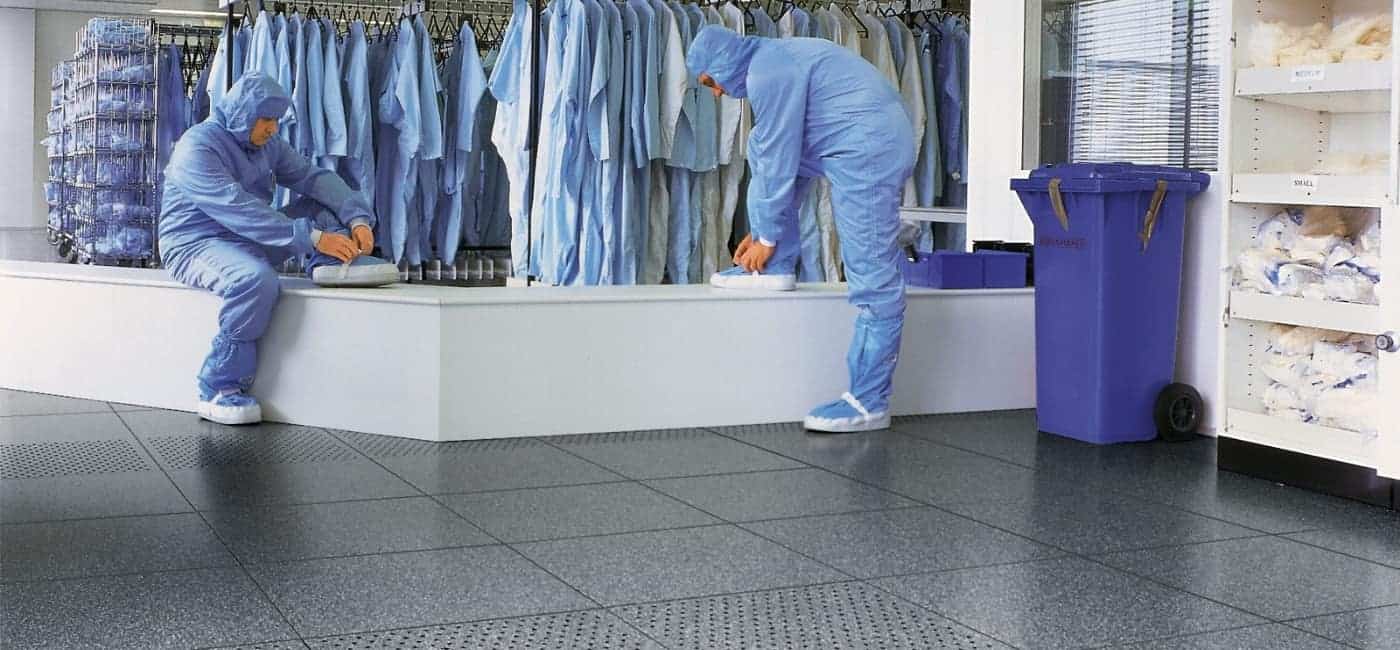
When specifying ESD flooring for a cleanroom, specifiers should consider the type of footwear people will use in the space. Following ESD-industry standard ANSI/ESD S20.20, most electronics manufacturing and handling facilities mandate the use of static-protective footwear. This is not always the case in cleanrooms or labs.
Some ESD floors, such as certain vinyl and epoxies, consisting of charge-generating base materials, do not perform properly unless every person in the space wears special ESD footwear, whether heel straps, toe straps, sole straps or ESD shoes. Eclipse rubber is the only resilient flooring product proven to be low charge generating even with regular (non-ESD) footwear.
The Importance of the Right Type of Seating
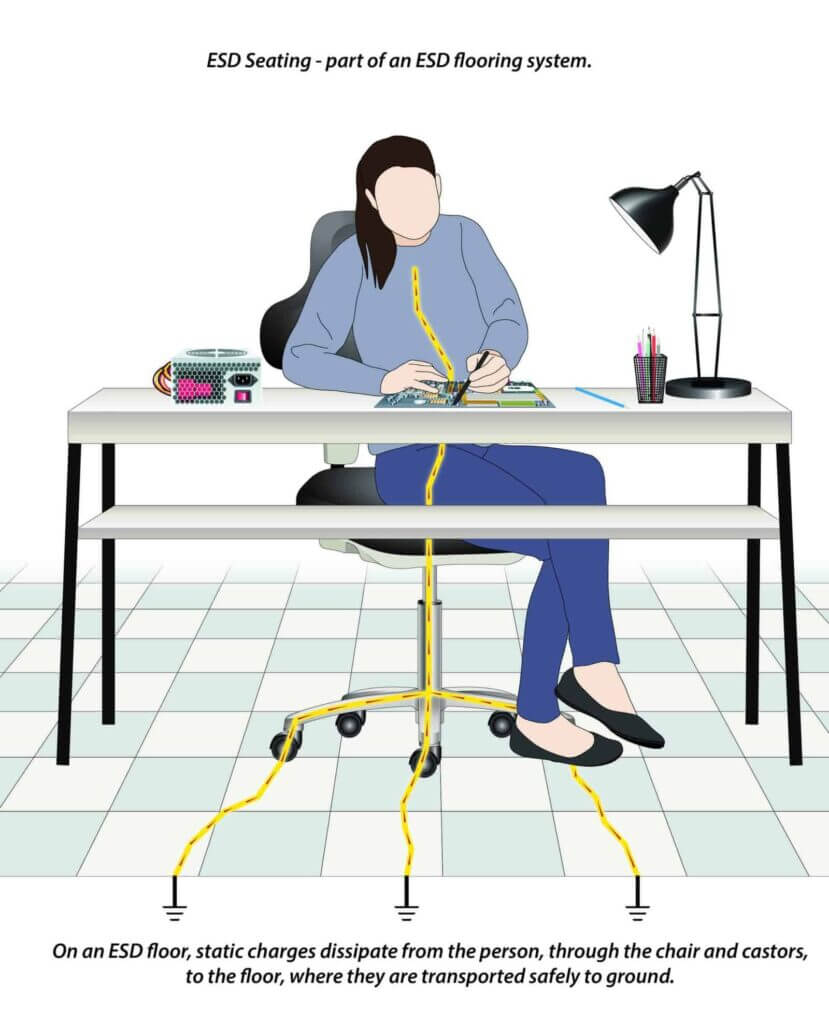
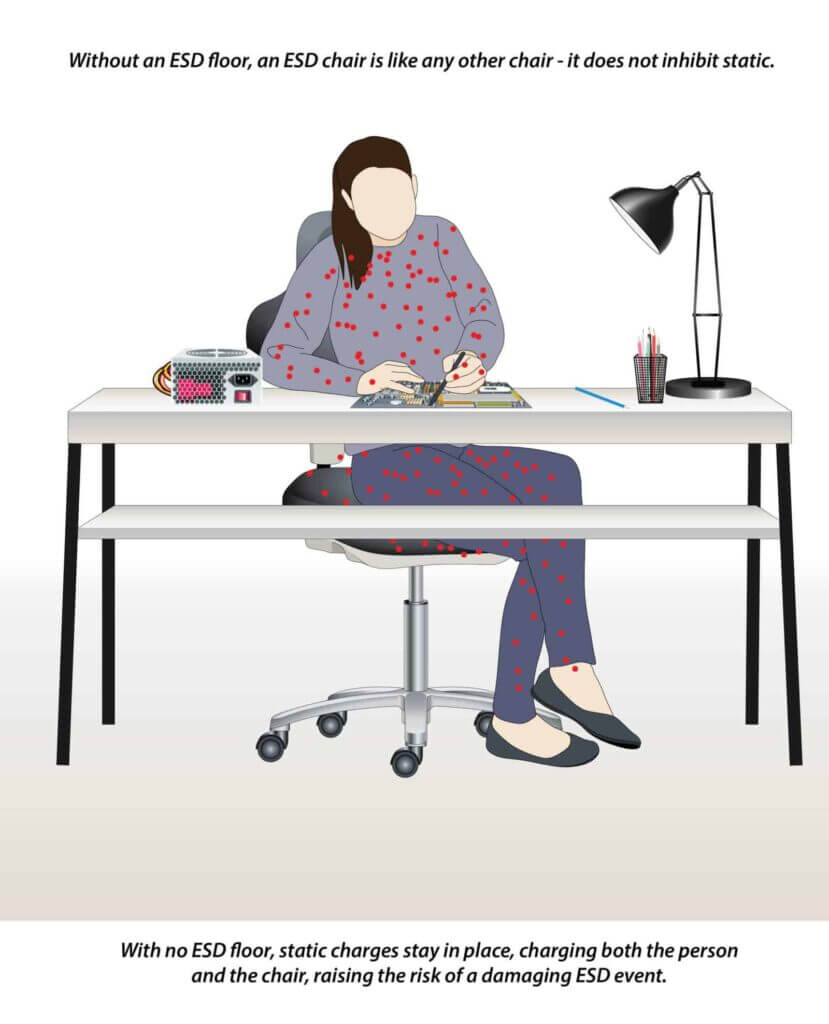
Specifiers should also consider the comfort and ESD performance of the seating they choose.
A system is only ever as good as its weakest link. Researchers have found that the weakest link and greatest source of static does not come from the floor itself. It comes from a person using the wrong type of seating.
Research by the American Society of Heating, Refrigerating and Air-Conditioning Engineers (ASHRAE) illustrates the importance of incorporating grounded chairs with a properly functioning ESD floor. ASHRAE research found that a person sitting in a standard non-ESD chair, even positioned on an ESD floor, can generate over 5000 volts of static electricity. The right combination of ESD flooring and seating will drop that number to less than 20 volts.
Source: Determination of the Effect of Humidity on the Probability of ESD Failure or Upset in Data Centers, Moradian et al, 2014
StaticWorx Bolt ESD chairs, the defacto standard in European labs and cleanrooms, offer superior comfort with the conductivity necessary to complete the flooring, footwear, seating chain.
Learn More About Bolt ESD Seating
Once installed, the system – flooring, installation method, footwear, seating — should meet management objectives, as well as satisfying ESD requirements, and integrate smoothly with every process in the room.
Read: ESD Compliance in a Server Room (In Compliance Magazine)
Read: The Best ESD Floors For Cleanrooms/Labs Prevent Static Generation
Read: Cleanrooms and Labs: Why You Need an ESD Floor that Prevents Static