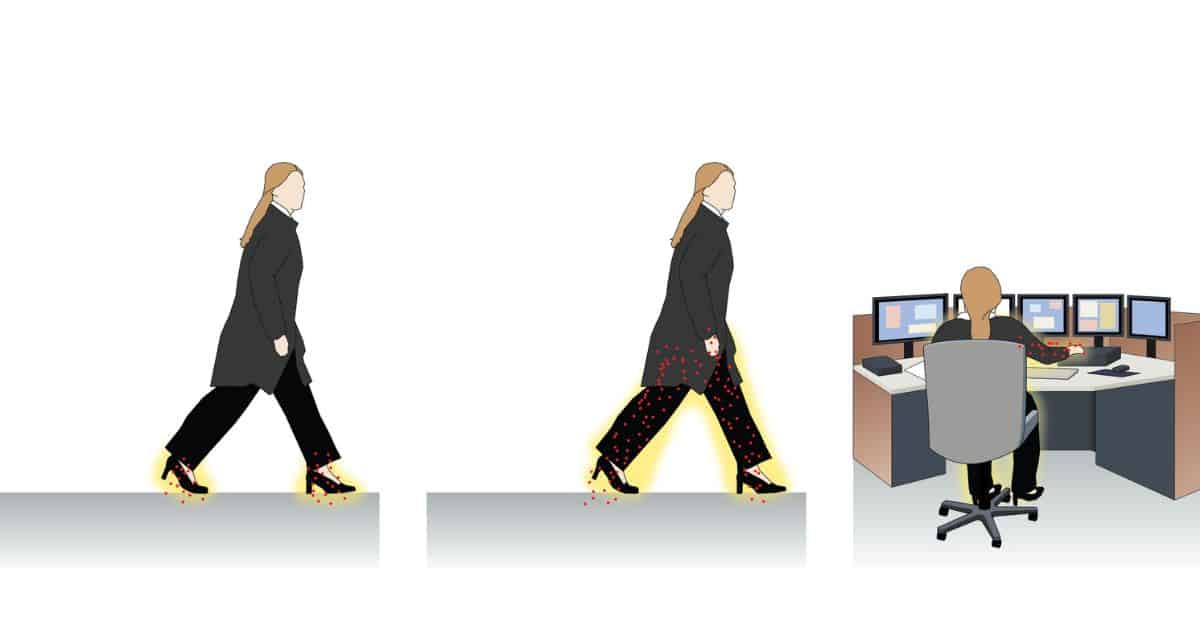
Voltage suppression occurs when an ESD-protective material, such as a static-dissipative table covering, suppresses static charges rather than dissipating charges to ground. For instance, an ESD laminate with a buried conductive layer will suppress the electrostatic field from a charged object, but is incapable of discharging static even when the charged object touches its surface.
The voltage suppression test determines whether a work surface actually bleeds off the static from a charged object placed on its surface or only suppresses the electrostatic field. If the surface bleeds off the charge, when the object is lifted its voltage will measure zero. If the surface only suppresses the charge, the voltage will remain on the object when it is lifted from the surface, making it a potential ESD threat.
Note: voltage suppression is a serious deficiency of many static-dissipative table covering materials.