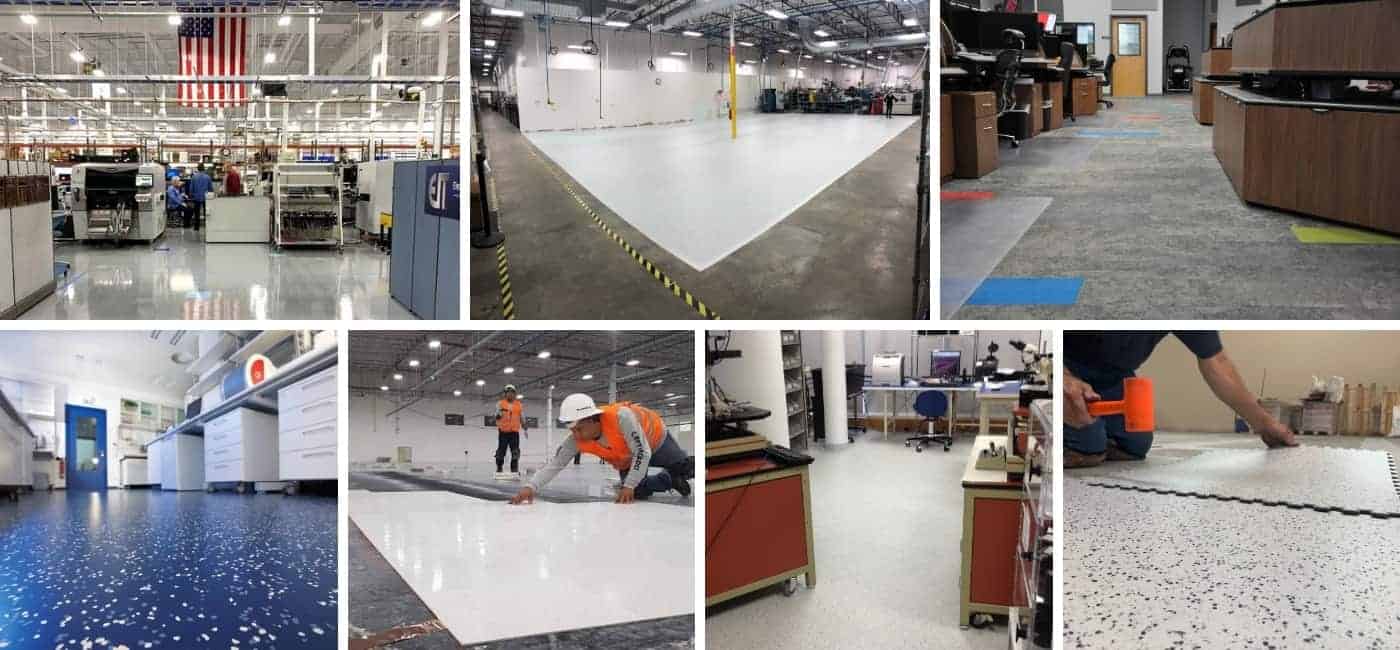
Contractors, architects, and facilities managers often ask if it’s possible to install ESD flooring in SCIFs or Sensitive Compartmented Information Facilities. SCIFs are lined with industrial foil, easily scratched by metal trowels. With StaticWorx glue-free, floating flooring installations, it’s not only possible to put ESD flooring in SCIFs – we do it all the time! – it’s optimal. Glue-free floors like our GroundLock Extreme interlocking tile, ShadowFX carpet tiles installed with TacTiles connectors, or Eclipse EC (electrically conductive) rubber, AmeriWorx ESD vinyl tile and LabCon ESD sheets, are easy to install with no messy adhesives and no downtime! To learn more, give us a call: 617-923-2000
To learn more about StaticWorx ESD flooring options, call: 617-923-2000 Or visit our website
Transcript
ESD Flooring in SCIFs and other Portable Spaces

ESD Flooring in SCIFs and other Portable Spaces
Hi, I’m Dave from StaticWorx.
I’m going to tell you about putting ESD flooring in SCIFs.
What is a SCIF? Sensitive compartmented information facility. You see them on TV all the time. TV shows like “Seal Team.”
The way a SCIF is different than a standard space is they use foil on the floor, walls, and ceiling. That prevents radio signals from getting inside or outside. So you might say that they’re the opposite of an echo chamber.
So when we get calls about flooring for SCIFs, the very first question is always, “Can I actually install flooring on top of the foil that they use?”
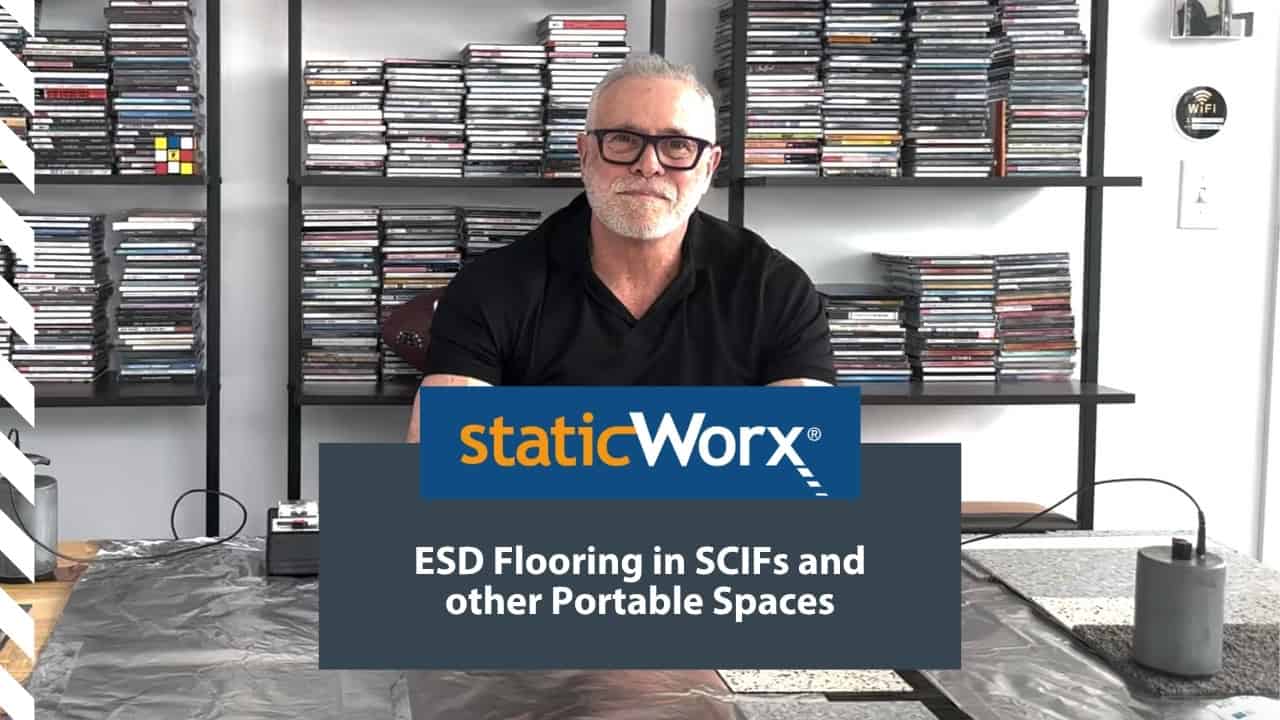
So what I’ve done is a little mockup here. This is the same kind of aluminum foil that you would use at home if you were cooking and this foil in SCIFs is a little bit thicker. The reason I get this question is, when you think about a floor being installed, they use trowels and these blades have sharp teeth and that would damage the foil. But you don’t need to use a trowel because you don’t need to use wet adhesive.
So what we do when we are addressing a SCIF is we use our static-dissipative carpet tiles (ShadowFX static-dissipative carpet tiles). If you look closely, there’s a little piece of plastic that’s holding these guys together. It’s called a TacTile.
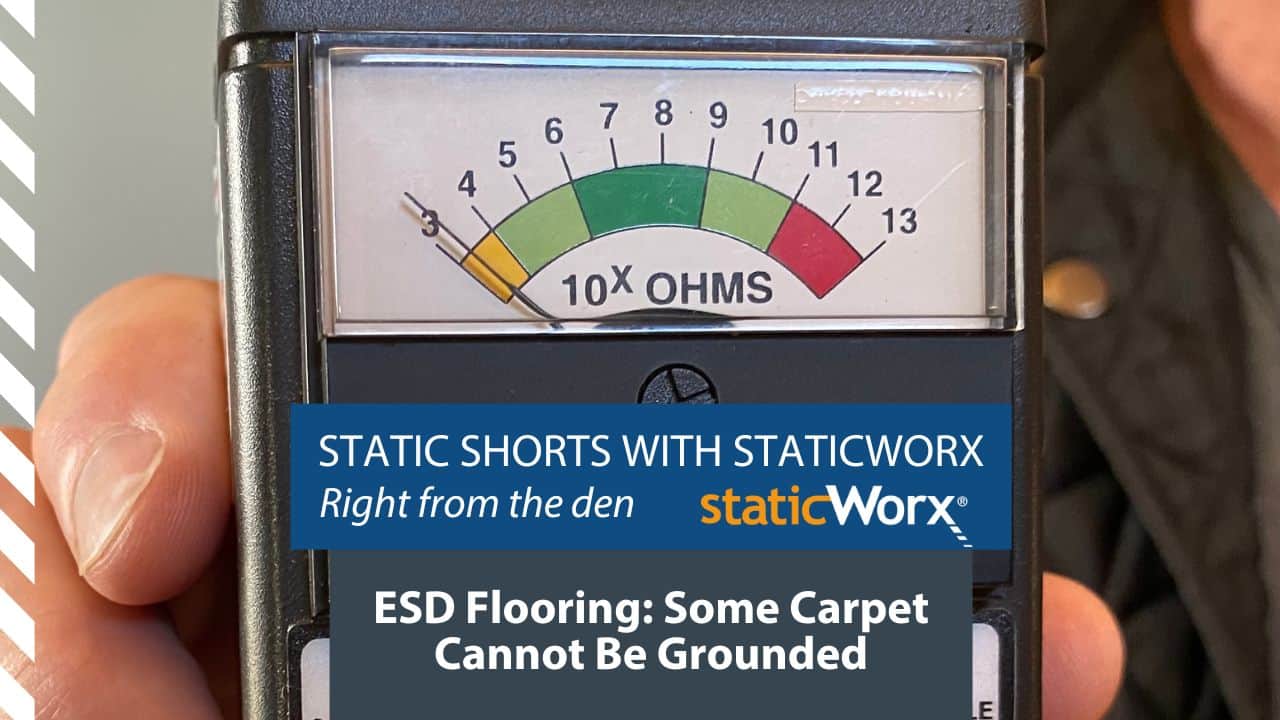
We place the tiles on the floor, obviously they’d be full size, they’re locked together with these TacTiles, and just by touching the foil, the carpet becomes grounded. I’ll show you that. I have an ohmmeter and I press the button on here. If you look really closely at the darkest green area, that’s what’s called the static-dissipative range. And this carpet, without any special adhesive, just sitting on the foil that would be in any SCIF, the resistance between this probe and ground complies with any specification you would need to write for the static-dissipative range, but it doesn’t stop there.
We have another solution that doesn’t require a trowel. This is a special adhesive tape that has a conductive backing (RI 2.0 conductive adhesive tape). That can be applied to the foil.
And we can put our rubber down, like I’ve done here, our rubber flooring (Eclipse EC Rubber).
We can install our LacCon vinyl flooring with that adhesive (LabCon static-dissipative vinyl flooring), we can install our vinyl tile (AmeriWorx conductive or static-dissipative vinyl tile), and I think I saved the most important one for last.
We can install our interlocking tiles (GroundLock Extreme interlocking tile). These are big 25 inch by 25 inch tiles that lock together with these dovetails.
So you’ve got multiple solutions that will not compromise the integrity of the foil, that will meet the static-dissipative range, like I’ve shown you here. And the only thing you need to do after the installation is do the same test and we provide the equipment to do that.
So that’s SCIFs, I think it’s pretty self-explanatory, not a lot of effort to making the floor comply with ESD standards.
Thank you.