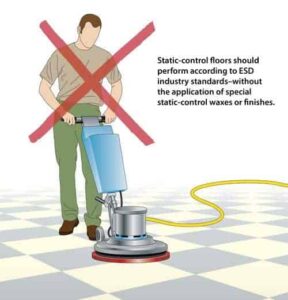
Static-dissipative tile (SDT) cannot get rid of static unless it is polished periodically with special static-dissipative polish or wax. Because performance relies on topical antistats, the surface must be rejuvenated through the life of the floor and the floor must be routinely tested to ensure compliance with ESD standards.
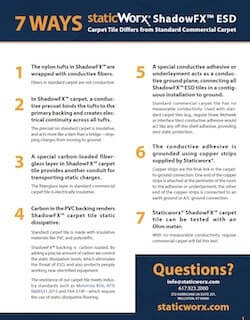
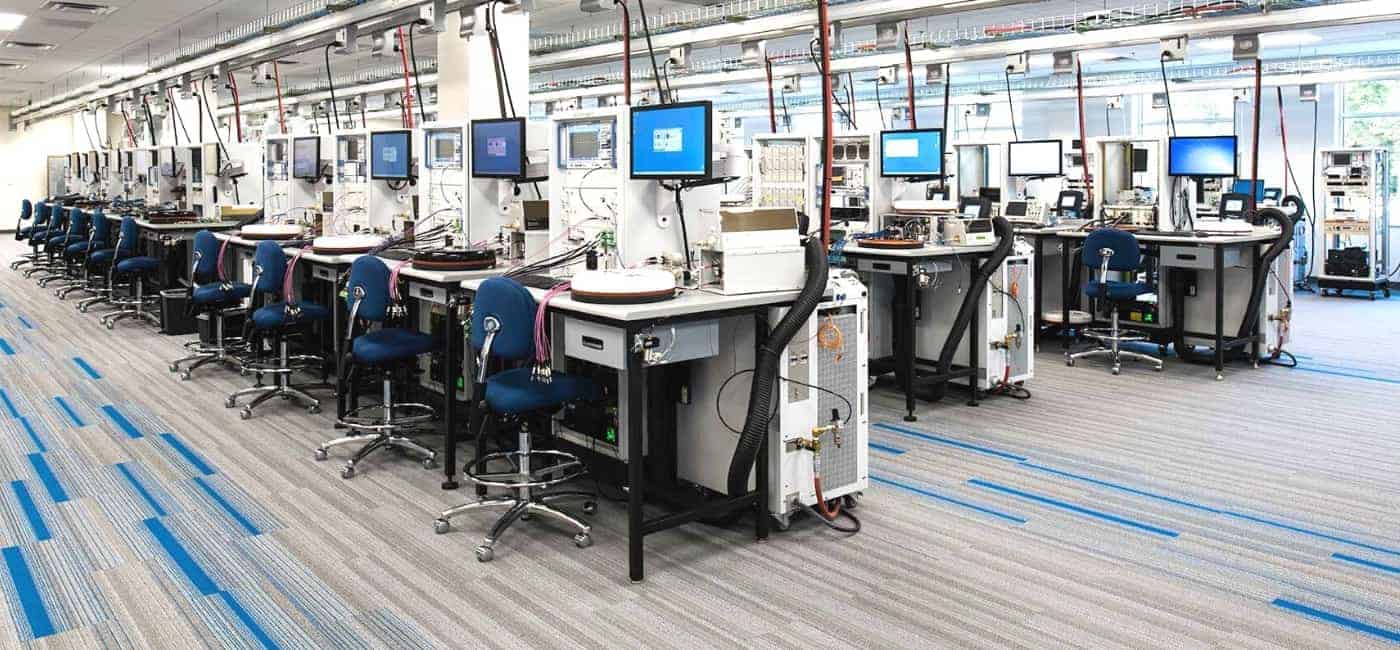
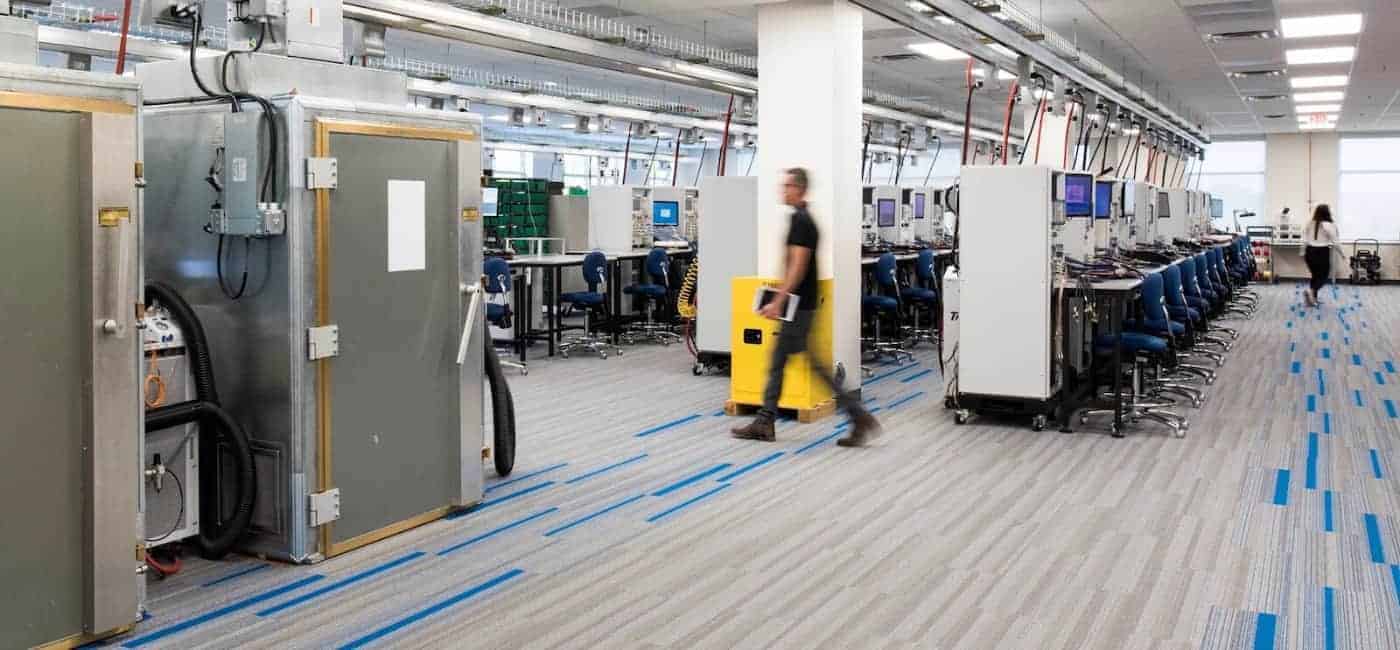
ShadowFX Static-dissipative (SD) carpet is intrinsically static-dissipative. This means you never need to apply waxes, polishes or sprays or use any chemicals at all to enhance or rejuvenate the electrical performance of the floor.
SDT hard surface flooring requires permanent adhesive. Installing a floor with permanent adhesive requires emptying the room, then waiting for the adhesive to dry before opening to traffic.
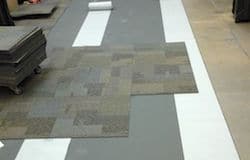
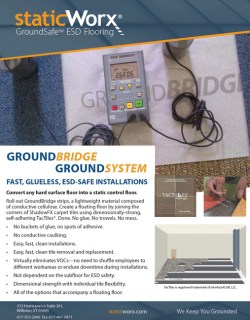
ShadowFX SD carpet tiles can be installed with releasable conductive adhesive or glue-free, using StaticWorx GroundBridge conductive underlayment and joining tiles with TacTile connectors, allowing for fast, easy installation—even in 24/7 occupied spaces—with no downtime.
Hard surface flooring requires a perfectly smooth low-vapor concrete substrate. Prior to installation, the subfloor must be tested for vapor emissions, moisture must be mitigated, and the concrete must be prepped and resurfaced if necessary.
SD carpet tiles require minimal floor preparation. They can even be installed over old floors.
SDT hard surface flooring materials are more expensive than carpet tile. Because floor prep is much more involved, labor costs are higher. And installation takes longer, with more downtime.
The material investment for SD carpet is lower than SDT vinyl. And less labor with little to no downtime translates to lower installation costs.
Hard surface SDT tiles are made with an insulative polymer that actually generates static. SDT vinyl tiles will not get rid of static unless everyone in the space wears special ESD footwear.
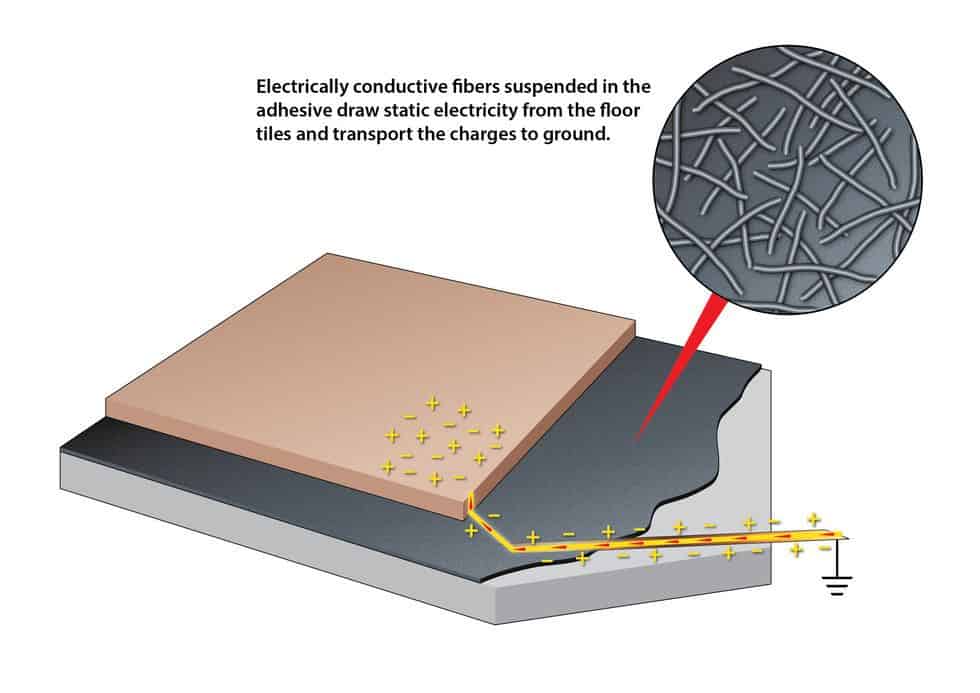
Like brushes in a copying machine, carpet fibers sweep static from shoe soles as people walk. Conductive fibers draw charges downward, to an underlying ground plane and transport them safely and effectively to ground—whether people wear ESD-control footwear or regular street shoes.
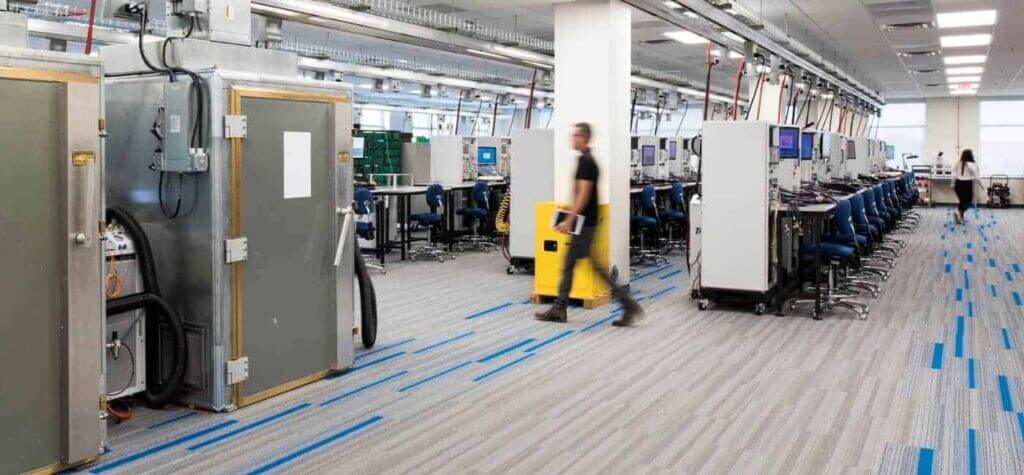
Hard-surface SDT is noisier, harder on the back and feet, and less ergonomic than SD carpet tiles.
ShadowFX SD carpet provides sound attenuation, anti-fatigue properties, and slip resistance for a quieter, more pleasant work environment.
SDT vinyl gains its static-control properties from wax, polish or topical anti-stats, which lose effectiveness at low humidity.
SD carpet tile meets all ESD standards regardless of humidity (even in dry spaces).
SD Carpet is quieter than hard surface floors and, because it’s soft on the feet, more ergonomic than SDT.
Using the concept of biomimicry, ShadowFX carpet brings the natural world inside, promoting a sense of calmness and well-being in stressful environments.
The manufacturing process of SDT (vinyl) limits styles and colors, allowing for fewer design options and less creative flexibility when designing new or renovating existing spaces.
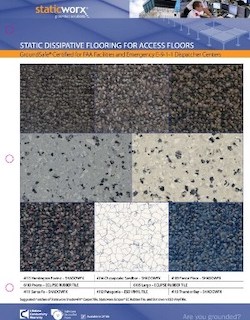
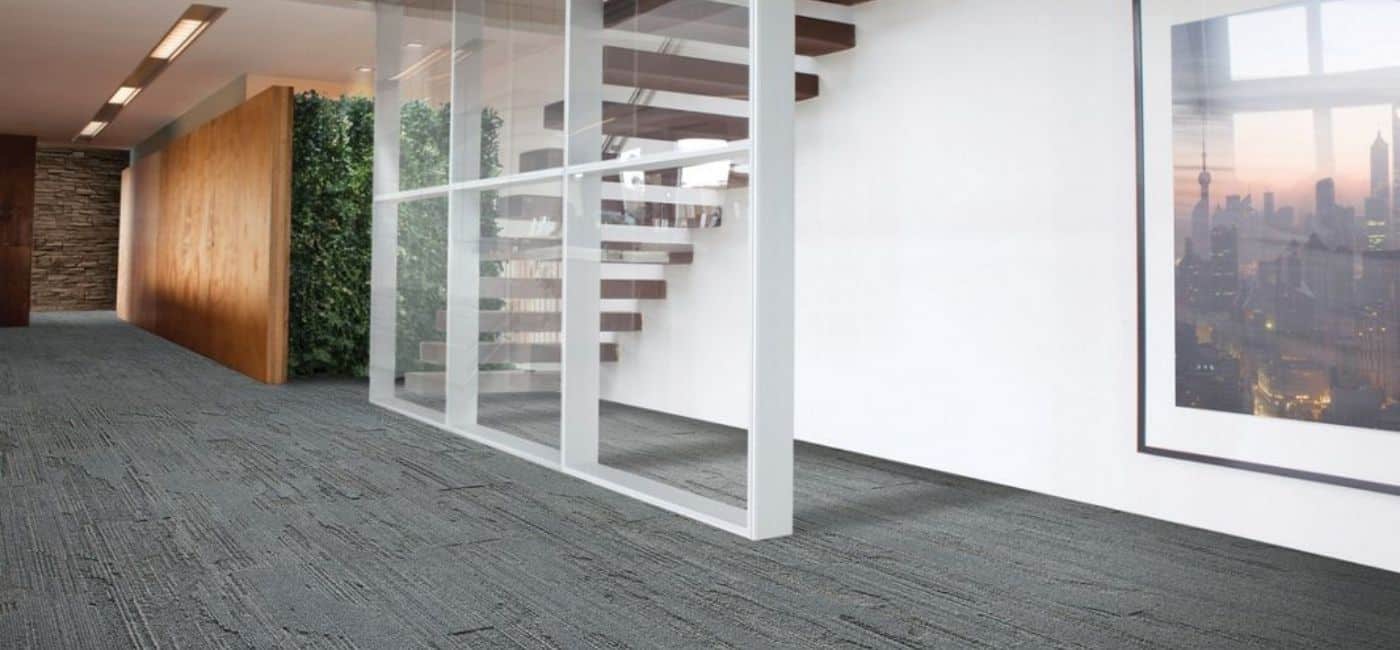
StaticWorx ShadowFX carpet tile is available in over 50 colors—in patterns inspired by nature.
To maintain its static-dissipative properties, SDT vinyl floors require costly maintenance procedures, which includes stripping and periodic application of 3 to 5 coats of special polish or wax.
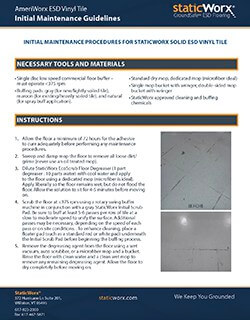
ShadowFX SD carpet tiles are permanently antistatic—and require the identical low-cost care you’d do for any commercial-grade carpet tile.
ShadowFX ESD carpet tile is made in a sustainable factory using recycled materials. 100% carbon neutral over the life of the carpet.