For humans to perceive an ESD event (static discharge), the charge must be at least 3000 volts. Yet a discharge of only 20 volts can damage or destroy the micro-circuits inside today’s high-speed electronic components.
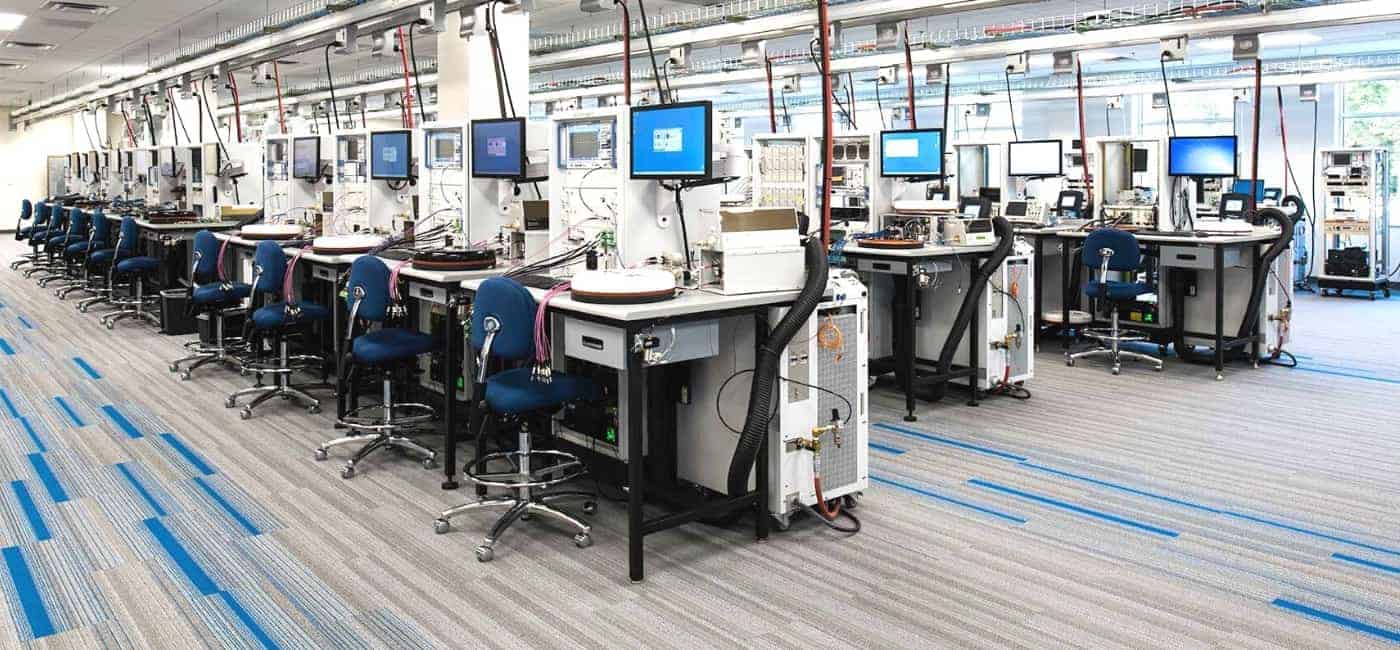
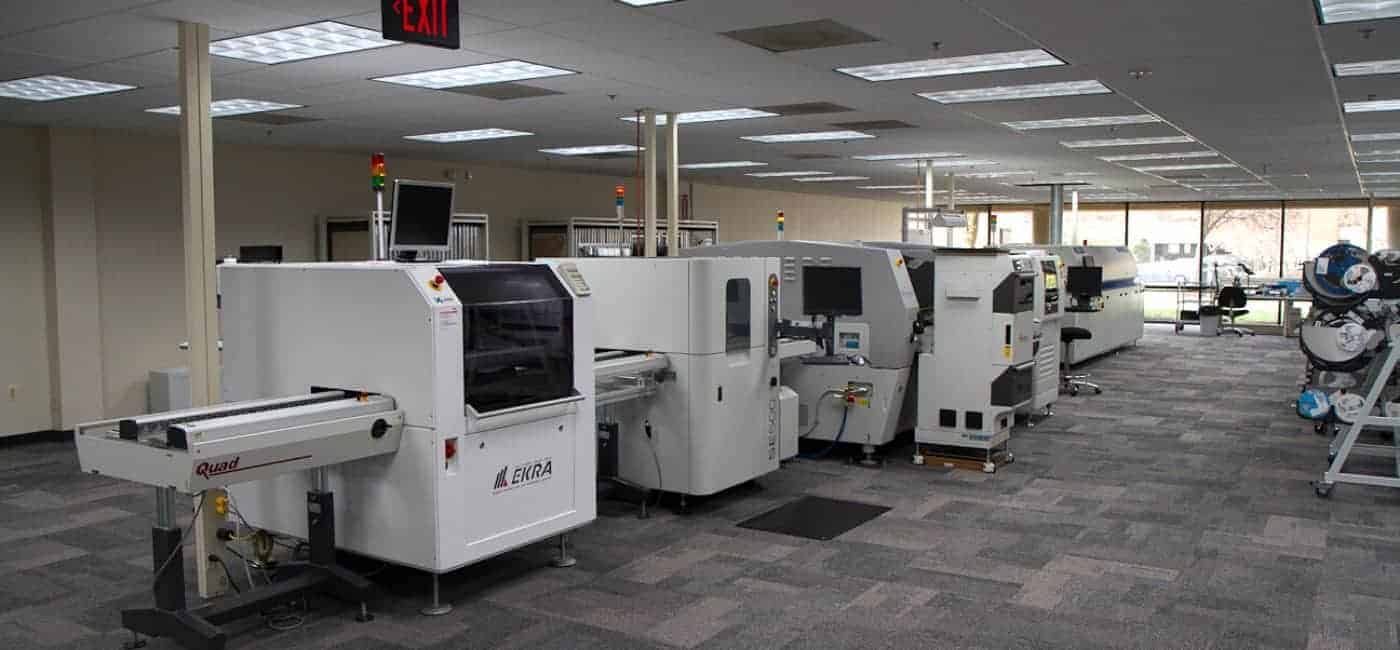
Protecting sensitive electronics requires a much greater reduction in static than the anti-static treatments in commercial carpets provide. This is true whether components are used or housed in an electronics manufacturing or handling facility, data or critical call center, 9-1-1 dispatch operation, or flight control tower – or any space where damage to electronic equipment can compromise the core mission.
With StaticWorx ShadowFX™ ESD carpet tile—also known as antistatic or static-control carpet tile—electrically conductive carbon elements are introduced during the manufacturing process. This inherent conductivity prevents static charges from accumulating on people by bleeding static from the walking surface and dissipating – or transporting – charges to ground.
ShadowFX ESD carpet tile is made in a sustainable factory using recycled materials. 100% carbon neutral over the life of the carpet.
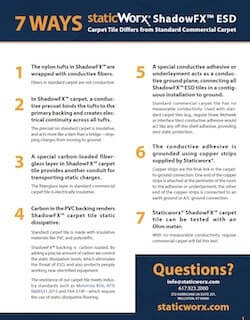
1. The Nylon Tufts in ShadowFX Carpet Tile are Wrapped with Conductive Fibers.
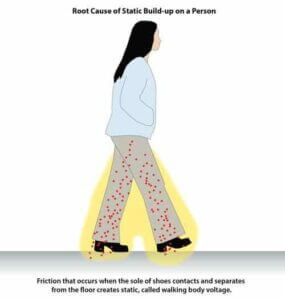
When people walk across a floor the contact and separation between the soles of their shoes and the surface of the floor generates static. This static charge stays in place, accumulating on their body, until they touch someone or something. Then the charge jumps from their body to the other person or object. This transfer of minute, imperceptible static charges can damage or destroy the high-speed micro-electronic circuitry inside electronic systems or components.
The fibers in commercial carpet are treated with an anti-stat that wears off over time.
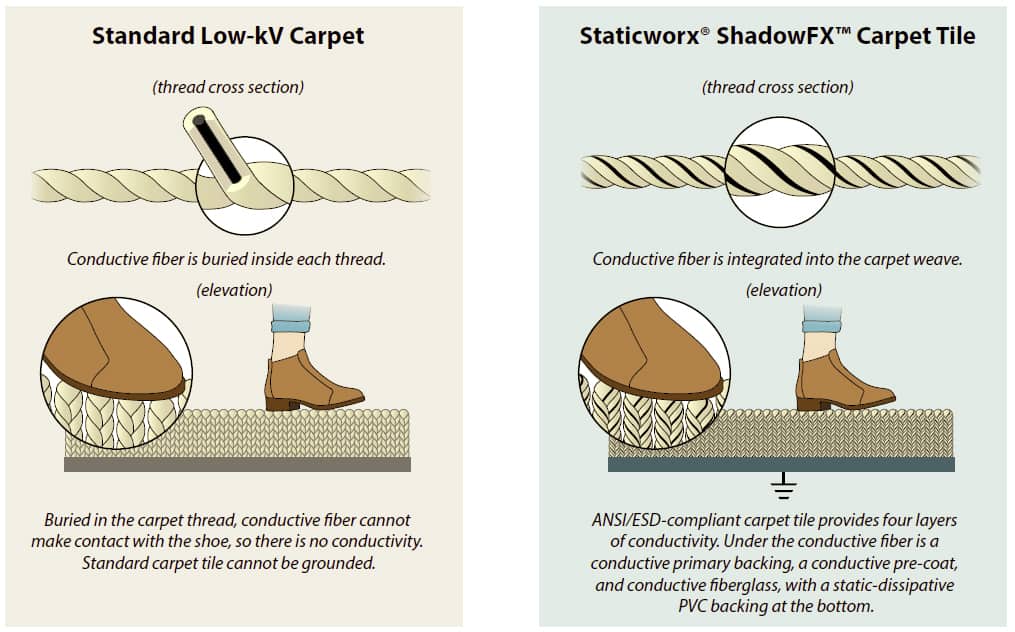
Commercial carpet is treated with an anti-stat, allowing the yarn fibers to retain a small amount of moisture. This helps prevent static from building on the carpet, so we don’t feel a static shock when we walk on the floor. Because there is no measurable conductivity, regular carpet cannot be grounded.
Over time, anti-static treatments wear off. As the anti-stat is invisible—and there is no path to ground and no measurable conductivity—there’s no way to know when the anti-stat is no longer effective.
StaticWorx ESD carpet tiles sweep static from shoe soles and provide a verifiable path to ground, eliminating static at the source and providing permanent static protection.
The nylon fiber tufts in StaticWorx ShadowFX ESD carpet are wrapped with electrically conductive fibers. When people walk on our ESD carpet, the conductive fibers wrapped around the yarn tufts make contact with the soles of their shoes. Like brushes inside a copier—which sweep static away from paper as it moves through the machine—the conductive helix fibers woven into the carpet brush or sweep static away from the soles of shoes and discharge it through the conductive layers in the carpet tile, across the adhesive or conductive underlayment, to ground.
The conductive fibers in StaticWorx ESD carpet also provide excellent electrical contact with conductive castors and drag chains on carts and chairs.
2. Our Conductive Precoat Binds the Yarn Tufts to the Primary Backing and Provides Electrical Continuity Across All Tufts.
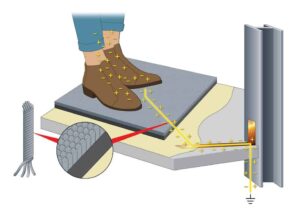
The underside of the ShadowFX carpet tile backing is pre-coated with a conductive, carbon-loaded material. This conductive coating draws static charges downward, from the walking surface through the thickness of the tile. From there, static charges move across the underlying conductive ground plane for transport to ground.
The backing on standard commercial carpet is insulative, and acts more like a dam than a bridge – stopping static charges from moving to ground.
3. We Use a Special Carbon Loaded Fiberglass Layer in Place of Standard Fiberglass.
This carbon-loaded fiberglass layer provides another conduit for transporting static charges through the thickness of the tile. From the conductive fibers on the surface, static charges flow downward, through the carbon-loaded fiberglass into the backing and from there toward ground.
4. Carbon in the PVC Backing Renders ShadowFX Carpet Tile Static Dissipative.
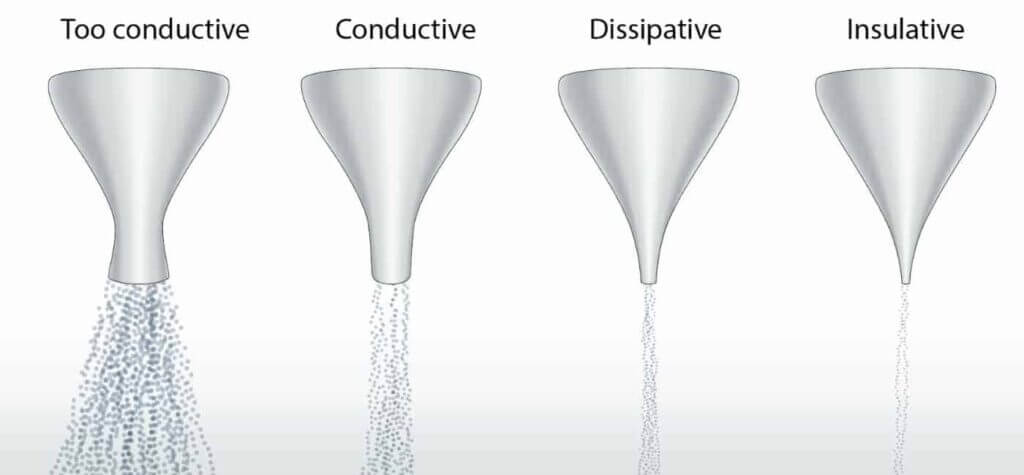
Standard commercial carpet tile is backed with insulative material like PVC and polyolefin. PVC is an insulative material, meaning it cannot conduct electricity – or static charges.
Most ESD carpet tile with a carbon (as opposed to PVC) backing, on the other hand, is electrically conductive.
While standard commercial carpet has no conductivity and cannot eliminate static charges at all, ESD carpet with a carbon backing is the opposite. It can be too conductive – meaning it bleeds charges too quickly; under the right circumstances, it could pose a safety risk.
By adding a precise amount of carbon to our backing, we control the rate at which charges move across the floor (or the rate of static dissipation). With our static-dissipative ShadowFX carpet, charges move at just the right speed – neither so slowly that they fail to eliminate static charges nor too quickly, potentially posing a safety risk to people working on the floor.
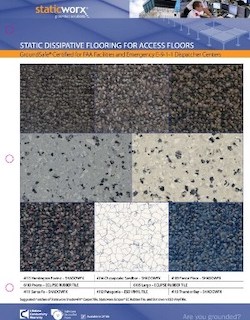
In end-user spaces such as telecom, 9-1-1 dispatch, critical call centers, flight towers, etc., where people do not wear static-protective footwear with a built-in electrical resistor, conductive floors are prohibited. To protect personnel working with or near electrified equipment, standards such as Motorola R56, ATIS 0600321 and FAA 019f require the use of static-dissipative flooring.
All style collections in our ShadowFX line are static dissipative (not conductive).
5. ShadowFX Tiles are Secured Using Special Conductive Adhesive or can be Free-floating with a Conductive Underlayment.
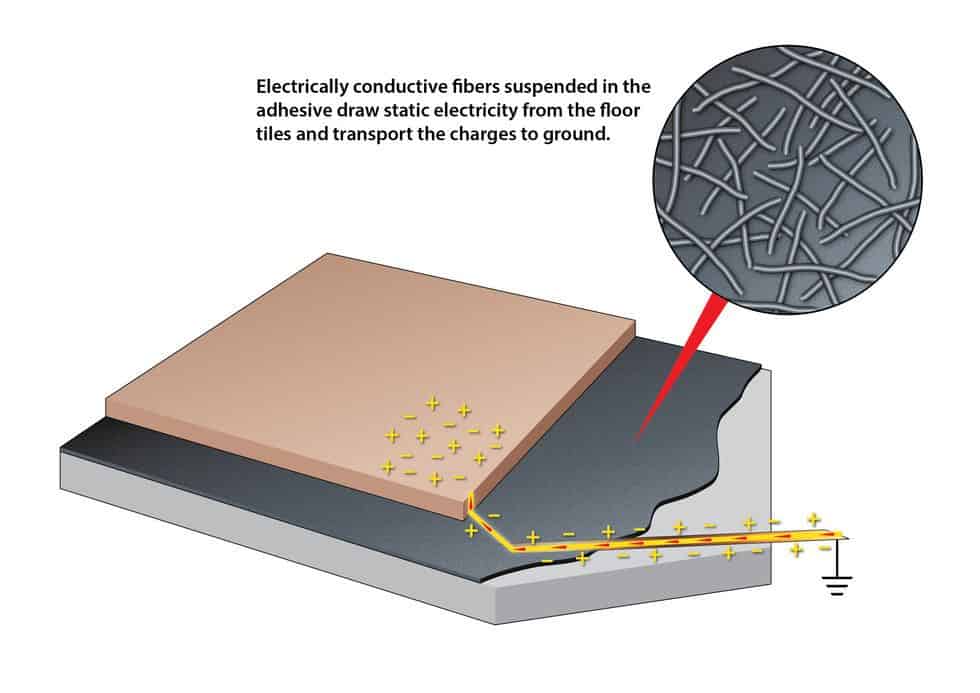
The conductive adhesive or underlayment below StaticWorx ShadowFX carpet tile acts as a conductive ground plane, connecting all ESD tiles in a contiguous installation to ground.
To transport static through the carpet tile to the adhesive or underlayment, the tile must have inherent conductivity. Standard commercial carpet tile has no measurable conductivity. With no conductivity, standard carpet tile cannot transport static charges to the adhesive.
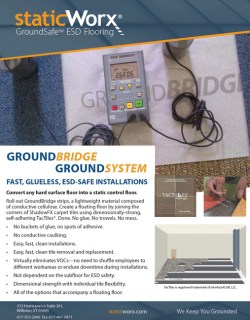
If you were to use conductive adhesive with standard carpet tiles (e.g., regular Shaw, Mohawk or Interface tiles) it would act like any off-the-shelf adhesive, providing zero static protection. The same principle would apply to a conductive underlayment like StaticWorx GroundBridge.
To prevent the minute, undetectable ESD events that can easily damage electronic equipment, the floor must transport static from its surface to ground.
6. The Conductive Adhesive or Underlayment is Grounded Using Copper Strips Supplied by StaticWorx.
Copper strips are the final link in the carpet-to-ground connection.
From the underlying conductive ground plane (conductive adhesive or underlayment) static is transported to copper strips placed around the perimeter of the room. These copper strips are attached to an earth ground or A/C ground connection.
7. StaticWorx Carpet Tile can be Tested with an Ohm Meter.
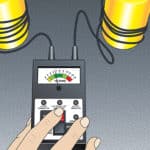
With no measurable conductivity, regular commercial carpet will fail this test.