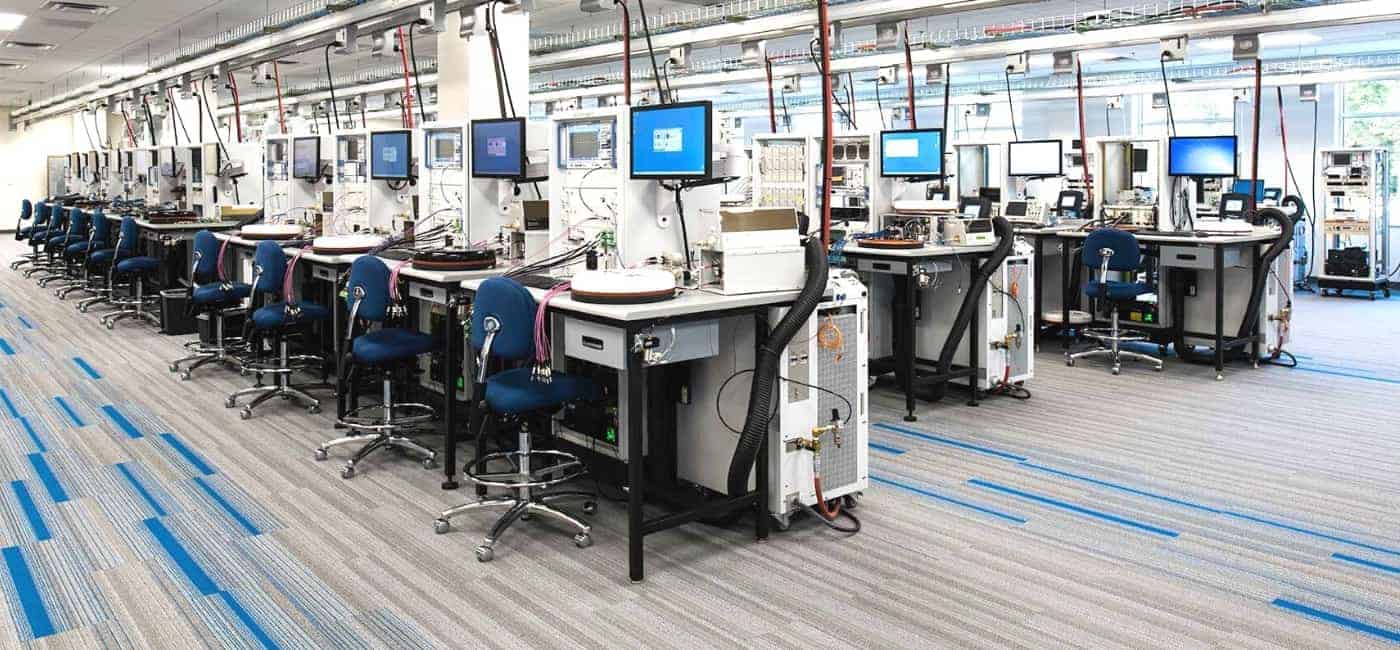
It’s not your job to understand conductivity. It’s ours. Why too much conductivity is bad.
ESD stands for electrostatic discharge. The shock you feel when you slide across a car seat on a cold, dry day then touch the door handle is a common, usually harmless ESD event. In workplaces that manufacture, handle or use sensitive electronic devices, ESD is a destructive and invisible force.
ESD events can damage electronic parts during the manufacturing process. ESD can also affect the performance of operational electronic systems like communication equipment in 9-1-1 call centers, servers, data storage systems, and even navigation equipment in flight control operations. At the networked office level, ESD can cause communication errors, equipment freeze-ups and system crashes.
Most ESD events go unnoticed. Like the common cold, ESD is an invisible problem: there is rarely a spark associated with most ESD events in the workplace. We discover that electronic systems have been affected only after we notice the symptoms.
When investigating an ESD event, we start by performing a series of tests to determine whether the flooring and seating in the workspace can generate a static charge on a person sufficient to cause a discharge. To do this, we use an instrument called an electrostatic field meter. This instrument measures the accumulation of static on people and furniture.

Since people walking on floors cause most static problems, we usually measure the static charge on people while they’re sitting and as they move throughout the space. If we observe a quick accumulation of static, we know that the floor is a likely culprit.
Typical Electrostatic Voltages measured on a charged person at 20% Relative Humidity:
- Sliding across a foam seat cushion – 10-14 kV
- Walking across a vinyl floor – 8-12 kV
- Walking across nylon carpet – 3-15 kV
- Walking across computer grade carpet – <3.5 kV
- Walking across StaticWorx static-dissipative carpet – <0.4 kV
Electronic parts – like the small assemblies inside disc drives – can be damaged by static discharges as low as 5 to 10 volts. Several hundred to a couple thousand volts of static can affect electronic systems.
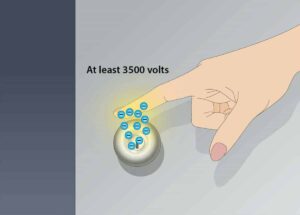
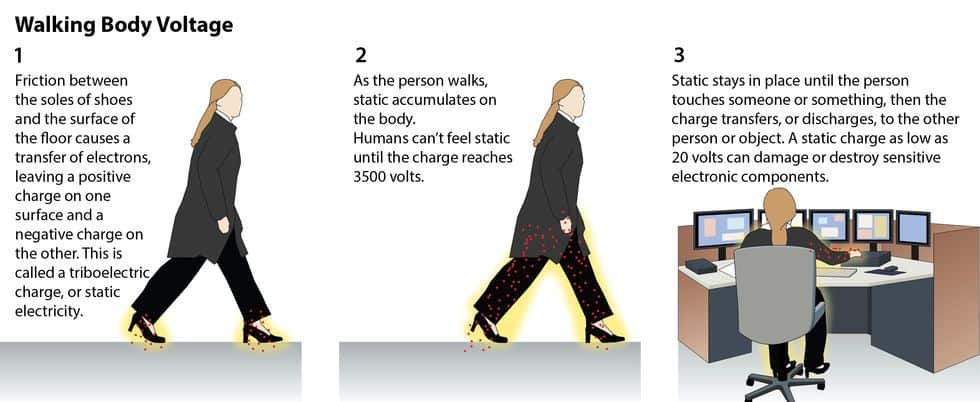
To put the numbers in perspective, human beings cannot even feel a static discharge until the voltage levels reach 3500 volts (3.5 kV.)
To protect electronic equipment from damage due to random static discharge, ESD-control floors like static-dissipative carpet should prevent static charges from exceeding 400 volts for end-user spaces (e.g. call centers and flight towers), 100 volts in electronics manufacturing and handling facilities (EPAs) and 10 volts in Class-0 environments.
Static electricity builds on people as they walk or move around the enviroment and discharges to people or equipment they touch. When a charged person touches an electronic component, static jumps from the person to the equipment. Electronics perceive these electrostatic charges as electrical signals to perform unintended functions. ESD triggered signals are random and many are undiagnosed.
A few real-life examples of ESD events are:
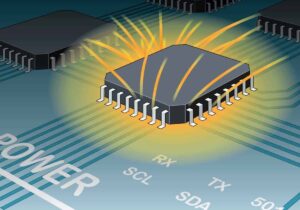
- Static can cause computers in gaming area control rooms to lose data, change the odds or even shut down.
- In a flight-control tower, a static discharge between a person sitting in a chair and their console could interrupt data transmission or scramble signals.
- A computer could freeze or suffer internal damage when a charged person pushes a flash drive into a USB port.
- In an E-9-1-1 center (PSAP), a random static discharge can cause lost or dropped calls, mixed signals, or incorrect dispatch information.
- In an electronics manufacturing or handling facility, a simple touch from a charged person can damage a component – that damage may be detected in the manufacturing plant or may not be detected until the component fails in the field.
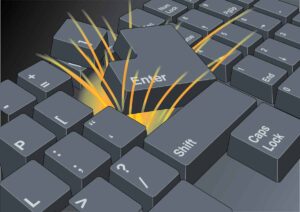
In critical operations, which must function continually without disruption, electronic parts cannot be exposed to static charges. Electrical resistance – a floor’s ability to promote or resist the flow of electricity – is unrelated to and has no effect on static charge generation. Depending upon the flooring material and type of shoes people wear in the space, a conductive or dissipative ESD floor can generate significant static charges.
To prevent static events, the ESD floor needs to be conductive or dissipative and antistatic – i.e, prevent static from accumulating on workers and visitors – and must be static-free regardless of the kinds of shoes people are wearing.
Some ESD flooring products (some vinyl and epoxy materials in particular) are intended for use in combination with special ESD footwear and don’t have the ability to prevent static on ordinary street shoes. In fact, without the use of special ESD-protective footwear, because of their static-generating base materials, these floors can actually generate static on people as they walk. ESD carpet and rubber, on the other hand, can be manufactured with special static-dissipative ESD preventive properties that allow people to generate little to no static regardless of the type of shoes they are wearing.
Architects need to understand how to write a specification that will ensure the correct floors are installed and certified for use.
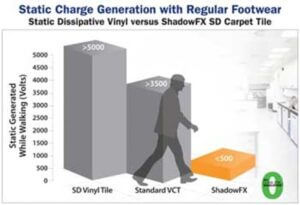
A proper static control floor needs to eliminate static and needs to do it safely. Our article The Need for Due Diligence in Specifying ESD Flooring provides a good starting place for anyone tasked with specifying effective antistatic flooring solutions that also meet the professional standard of care through compliance with electrical safety standards for installation around operational electrical equipment.
Conventional anti-static carpet is designed to prevent static shocks. Because it has no inherent conductivity, it cannot be grounded and therefore cannot dissipate – or transport – static charges to ground. Humans can’t feel static shocks until the voltage exceeds 3 kV (3000 volts). A 1000 to 3500 volt discharge – common with conventional antistatic carpeting – could harm electronic equipment without anyone knowing it occurred.
ESD is an invisible problem requiring a preemptive approach. When people walk on carpet in a critical operational environment, the floor needs to dissipate static charges to ground. The floor must also prevent static generation in the first place.
StaticWorx ShadowFX static-dissipative (SD) carpet, designed to enhance the comfort of people in the space, improves the performance of electronic equipment by keeping static charges below .4 kV (400 volts).
Please note: Static electricity is generated from sources other than the carpeted floor, such as clothing, the interaction of clothing and seat fabrics, plastic, etc.
Conventional anti-static carpet ensures ONLY that the carpet itself does not generate harmful static charges – in other words, that people do not get a shock when they touch someone or something after walking on the floor.
We use a unit of measure called the Ohm to describe a material’s ability to conduct or resist the flow of electricity. Electrical Resistance or Resistive Properties are a material’s ability to transport an electrical charge to ground. Ground points can be an AC electrical outlet box, an I beam in the building infrastructure or a dedicated rod driven into the earth. Grounding a floor – also called earthing – requires connecting the antistatic floor to a point in an electrical circuit or building infrastructure that has zero electrical potential. An ESD Ground provides a path for the dissipation of unwanted static electricity charges.
A Conductor is a material with low electrical resistance that rapidly removes an electrical charge to ground. Examples of conductors are water, copper, aluminum and carbon. Some ESD floors are conductive. These floors are usually used in special controlled areas for explosives handling or in ESD-protected areas in electronics manufacturing facilities.
Due to electrical safety risks and compliance with industry-specific grounding standards, conductive flooring is never recommended for schools, networked offices, E-9-1-1 call centers, flight towers or public-access environments. Conductive flooring is usually described as having an ohms resistance between 25,000 ohms and one million ohms. This is sometimes expressed in scientific notation as 2.5 X 10E4 – 1.0 X 10E6.
Static Dissipative refers to the ability of a material to dissipate static charges to ground at a controlled and safe rate. By definition, static dissipative flooring has an electrical resistance range, measured in ohms, of between 1,000,000 ohms and 1,000,000,000 ohms. 1.0 x 10 E6, (1 million ohms), to a maximum of 1.0 x 10 E9, (1 billion ohms).
Today, industry safety standards and most computer manuals recommend static-dissipative flooring – i.e. with resistance measuring below 1.0 x 10E6 – for end-user spaces such as critical call centers, PSAPs, flight towers, banks, government offices, and other facilities whose core mission relies on sophisticated or high-speed electronics.
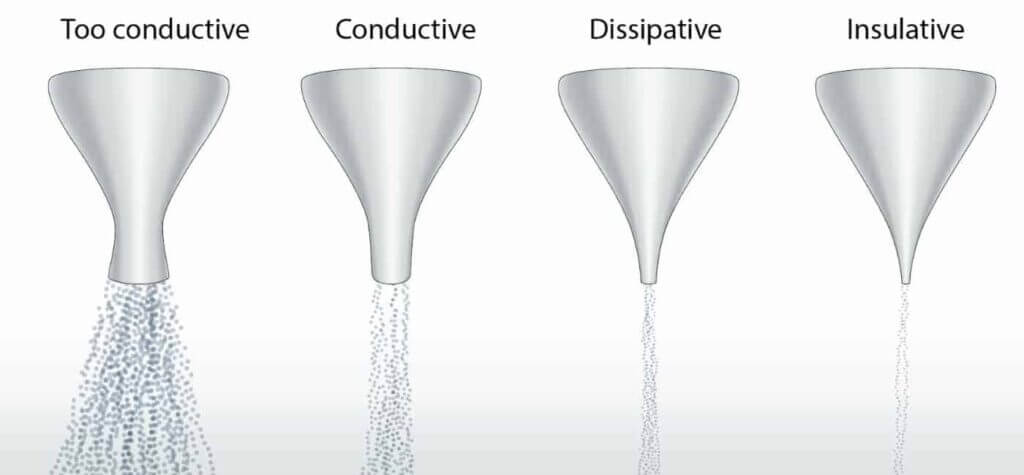
Anti-Static refers to a material’s ability to suppress or prevent charge generation and static from building on people and equipment. Some materials marketed as antistatic are not capable of decaying a static charge fast enough to prevent unwanted ESD events from occurring. Antistatic – also known as computer grade or low kV – carpet, for example, is sprayed with a topical antistat that wears off over time. This type of carpet cannot be grounded. To eliminate static properly, anti-static carpet should be manufactured using yarns with carbon fibers. We call this type of carpet ESD carpet.
An Insulator is a material with an electrical resistance that prohibits a material from conducting a charge to ground. Examples of insulators are latex gloves, PVC shoe soles (on athletic shoes, for example), balloons, residential carpet, ceramic tile and VCT flooring. A practical example of an insulator is the extruded plastic casing around common electrical wires (which prevents electrocution by keeping electricity from leaking out of the wire), or a commercial carpet tile with a low 3.5 kV rating.
The lower the electrical resistance, the more rapidly a material can conduct an electrical charge. Because conductive materials offer a very low level of electrical resistance, they attract and decay electricity much more rapidly than static dissipative materials. A rapid decay of electricity can create a safety hazard if the grounded carpet is installed in spaces where people work near electrical appliances operating at 120, 220 and 440 volts.
Research has shown that there is no performance advantage to an ESD carpet with high conductivity versus static-dissipative carpet. A risk-benefit analysis suggests that conductive carpet should not be installed in end-user spaces when there is a static-dissipative alternative available.
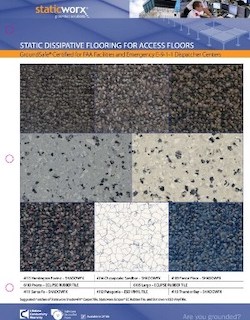
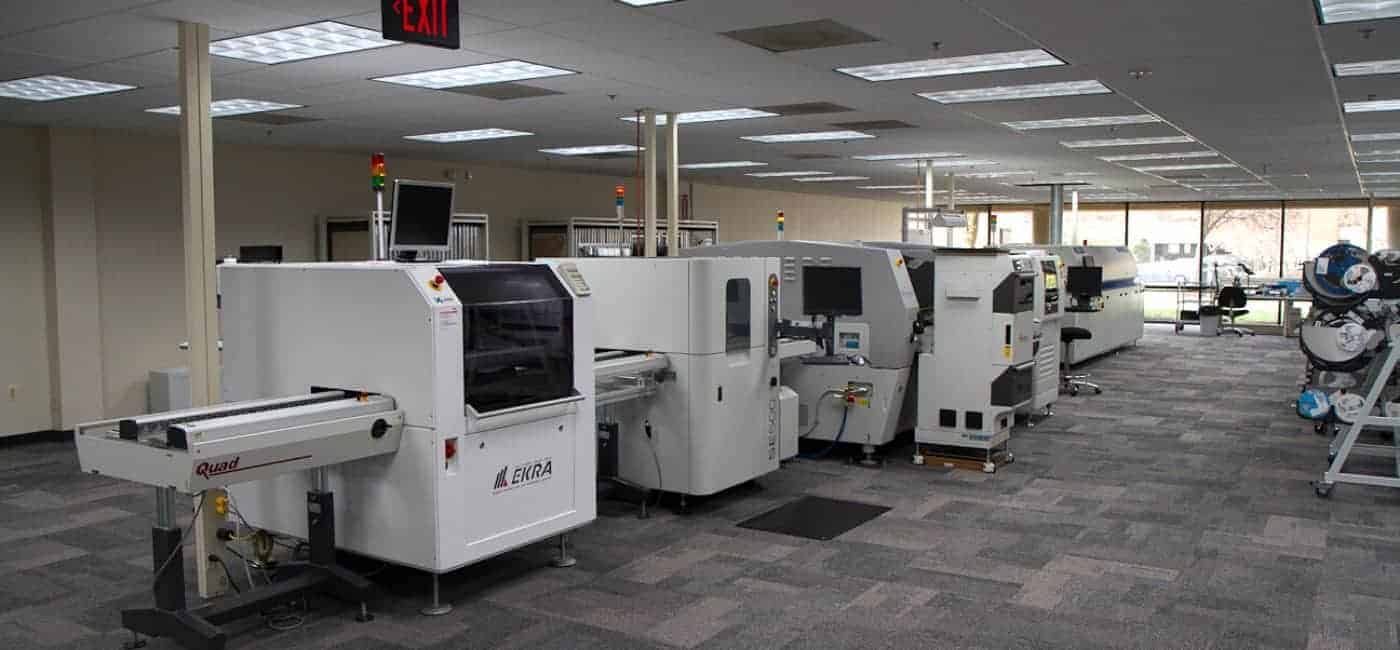
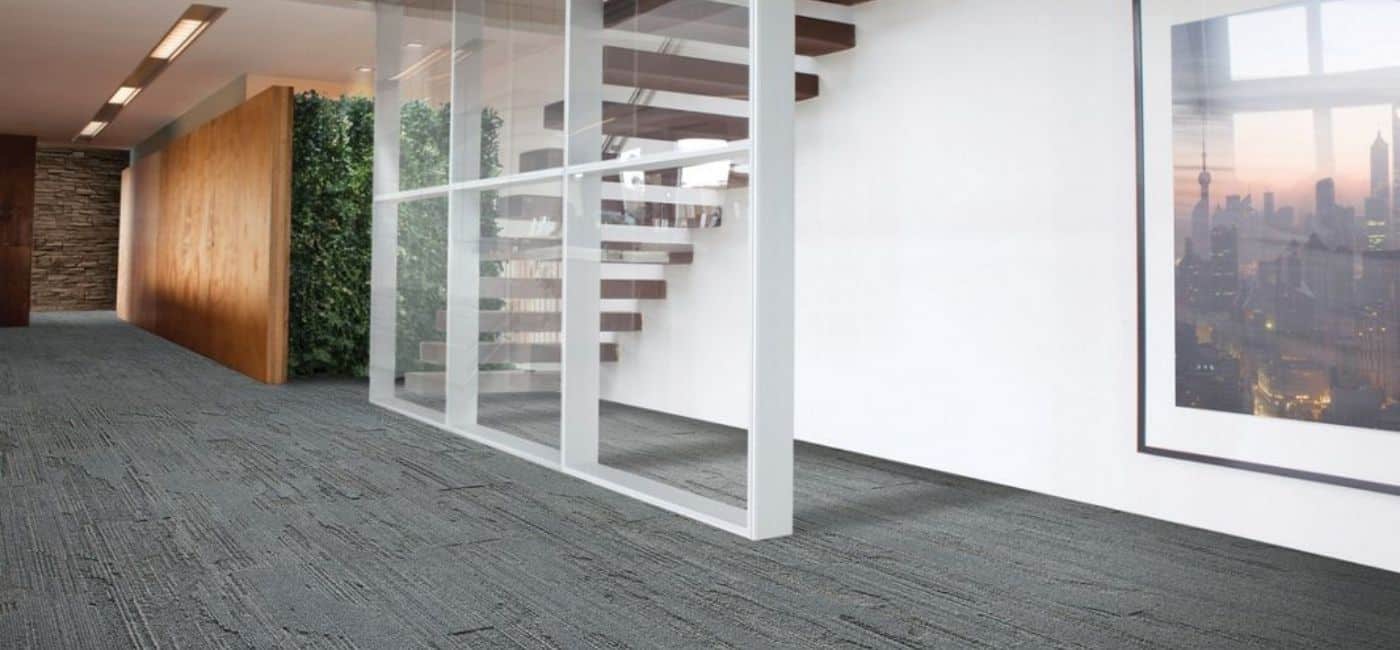
ShadowFX ESD Carpet tile is designed to be static dissipative. Static-dissipative carpet removes static charges at a measured rate, before charges can accumulate, keeping the environment safe from costly static interference. StaticWorx ShadowFX carpet prevents static interruptions in end-user spaces as well as in electronics manufacturing and handling environments (EPAs).
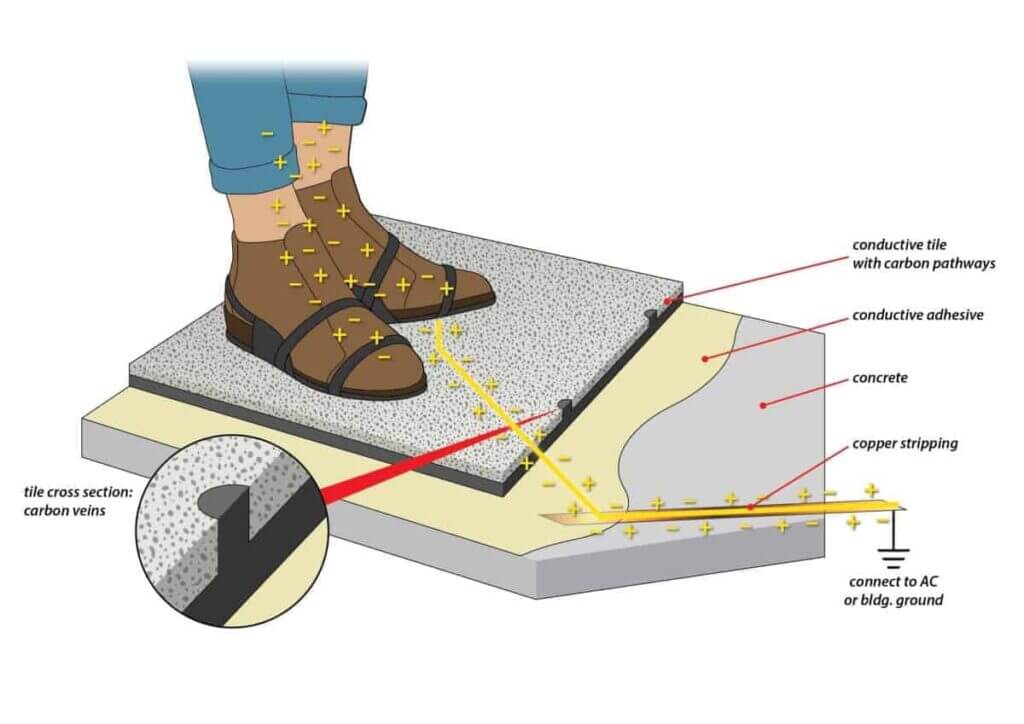
How ShadowFX Carpet Works
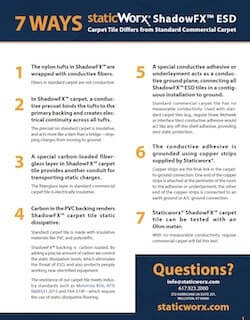
ShadowFX ESD carpet contains electrically engineered static-dissipative fibers, which inhabit static from generating on carpet while simulatenously dissipating static charges safely to a ground source. These dissipative fibers link to a carbon pre-coat and our static dissipative backing. Static moves from there to an underlying conductive ground place to an earth ground.
24/7 Installation With No Downtime
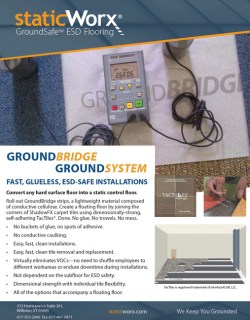
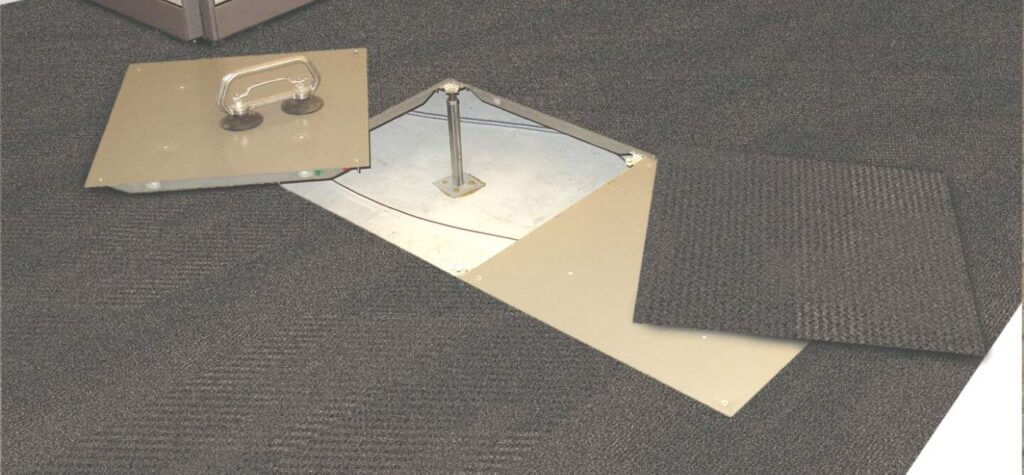
ShadowFX carpet tile can be installed with or without adhesives, making installation possible 24/7 without disruption or downtime. Our adhesive-free installation method (floating floor) is ideal for installation over raised access flooring panels.
Whenever you select floor finishes for a facility that relies on the uninterrupted performance of computers or other sophisticated electronic equipment, you should consider using some form of static-preventive flooring. Most computer-reliant end-user environments require a floor that is capable of preventing static on people wearing ordinary everyday shoes (as opposed to special static-preventive footwear).
This greatly limits the options, since most ESD flooring materials require the use of static-control shoes or ESD heel straps. Any type of static control vinyl, high pressure laminate and resinous flooring, for instance, will actually create static on people wearing standard footwear.
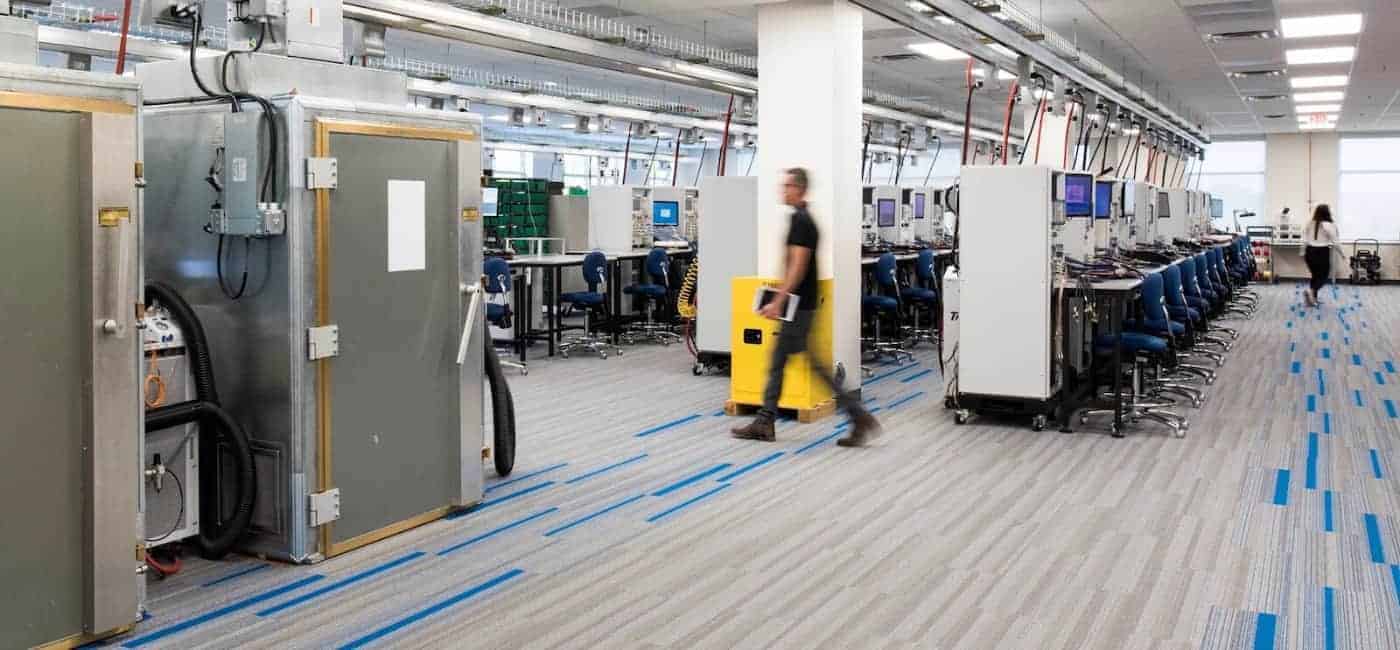
The only effective options for preventing static on ordinary footwear are either ESD rubber or ESD carpet tile. Carpet tiles are the quietest, most compatible (for sound attenuation and ergonomics) and least expensive form of ESD flooring for most environments. These factors make ShadowFX static-dissipative carpet an ideal option for networked offices, server rooms, control rooms, telecom rooms, switch and router facilities, 9-1-1 and standard call centers, flight towers and spaces using FAA flight equipment, data storage centers, financial areas, trading floors, NOCs, disaster recovery centers, media, communications, radar, medical monitoring, labs, tech spaces, networked classrooms as well as gaming and entertainment floors.
StaticWorx warranties that ShadowFX ESD carpet tile, installed and maintained as recommended by StaticWorx, will not generate above .4kV volts of static electricity, measured according to AATCC #134. The carpet face will have a minimum resistance of 1.0 x 10E6 ohms and maximum resistance of 1.0 x 10E8 ohms, measured according to ANSI/ESD S7.1-2013. ShadowFX carpet tile will provide a system resistance that complies with ANSI/ESD S97.1 test limits for meeting ANSI/ESD S20.20 (< 1.0 x 10E9).
ShadowFX carpet tile meets the following standards for a grounded flooring installation:
- ANSI/ESD S20.20: Electronics manufacturing and handling in EPAs
- FAA STD 019f: Flight control towers and facilities using FAA equipment
- Motorola R56: Public safety and telecommunications
- ATIS.0600321 Electrical protection for network-operator environments
- IBM Data Center Recommendations: resistance range for data center operations
ShadowFX ESD carpet tile is made in a sustainable factory using recycled materials. 100% carbon neutral over the life of the carpet.