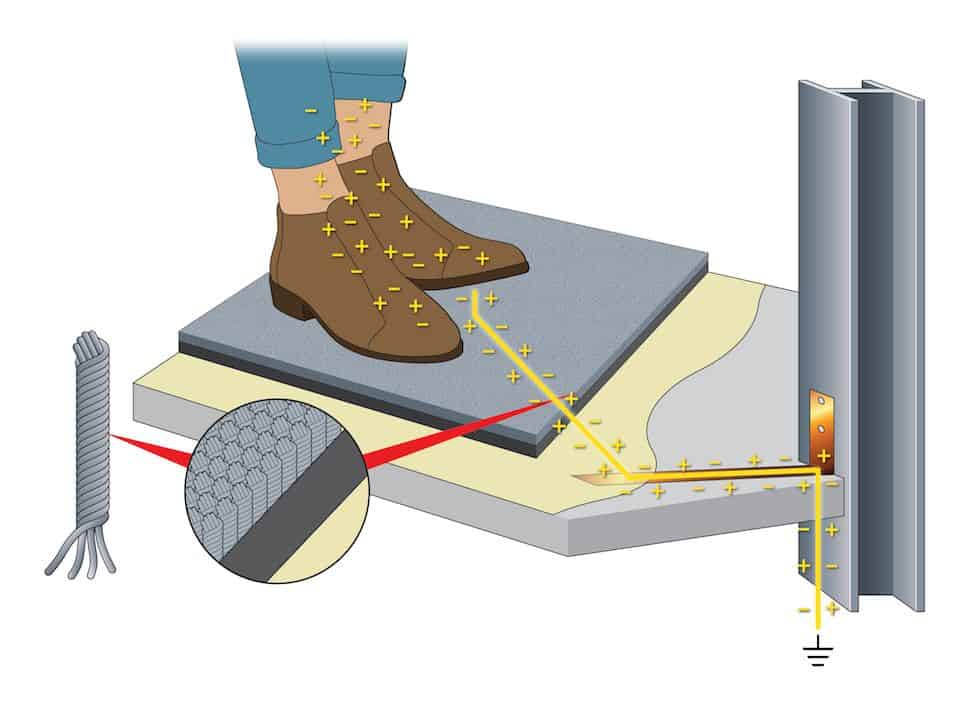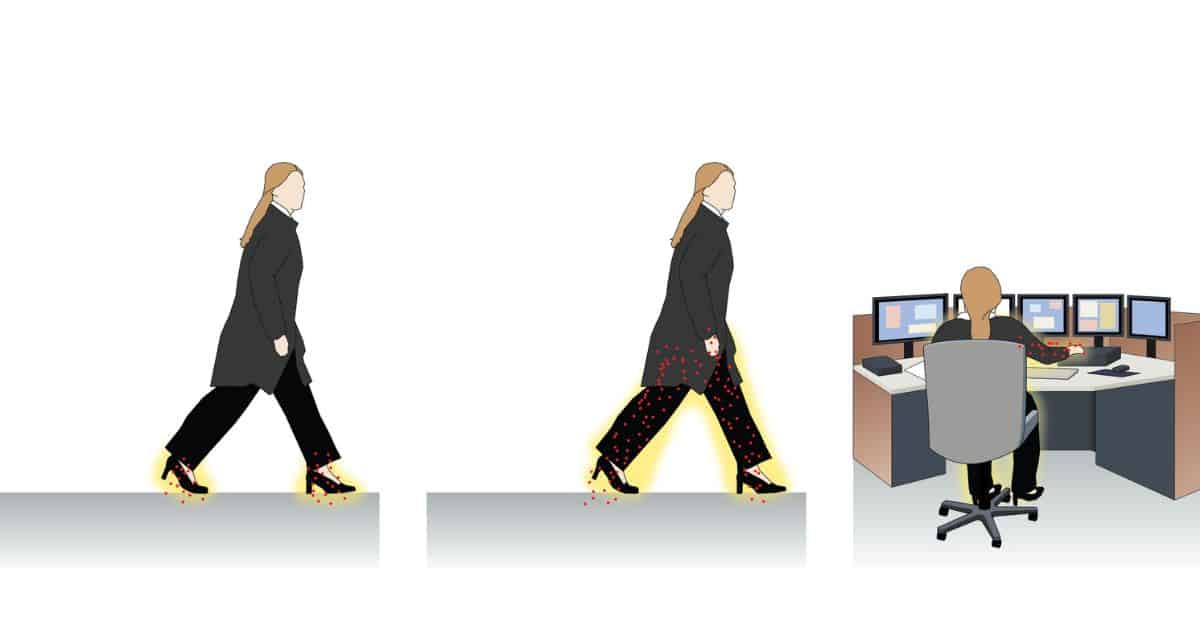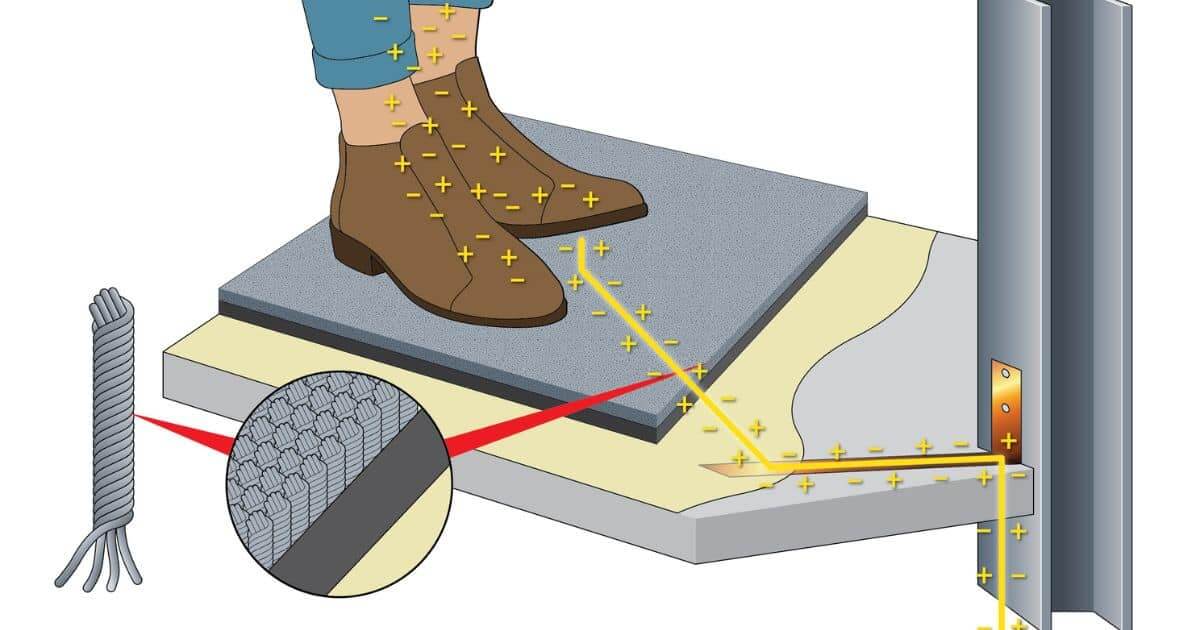
The electrical link between a static-dissipative and conductive material and the earth.
Electrical conduit is an example of path to ground; the neutral or “green wire” is attached to the conduit and discharges electricity safely to the earth through the metal housing and pipes encapsulating the “hot wires.”
Functioning conductive or dissipative flooring materials must have some form of external (or exposed) conductivity in order to attach or connect to a path to ground. Static-dissipative carpet, for example, finds a path to ground from: 1) exposed conductive fibers; 2) its dissipative backing; 3) conductive adhesive; 4) copper grounding strips attached to conduit or building steel.
A breach or omission in any of these four mechanisms will result in an open circuit on the flooring surface, with no path to ground.