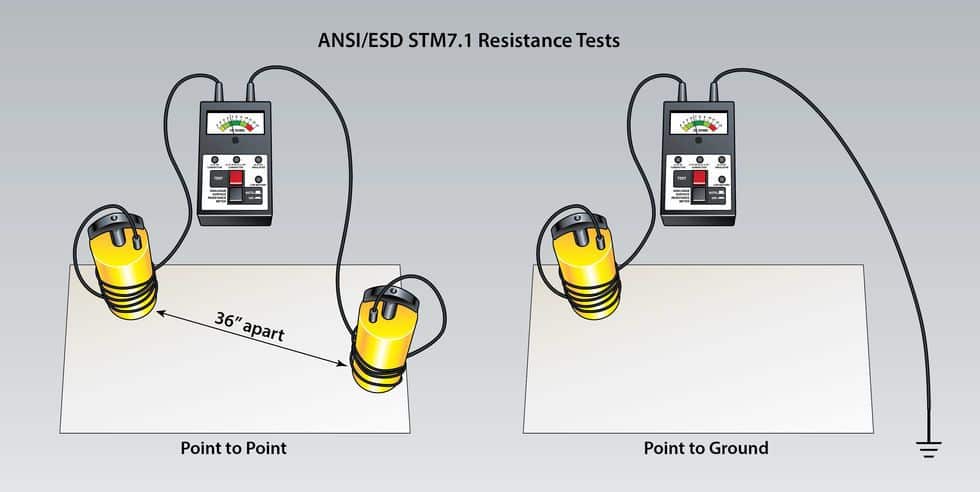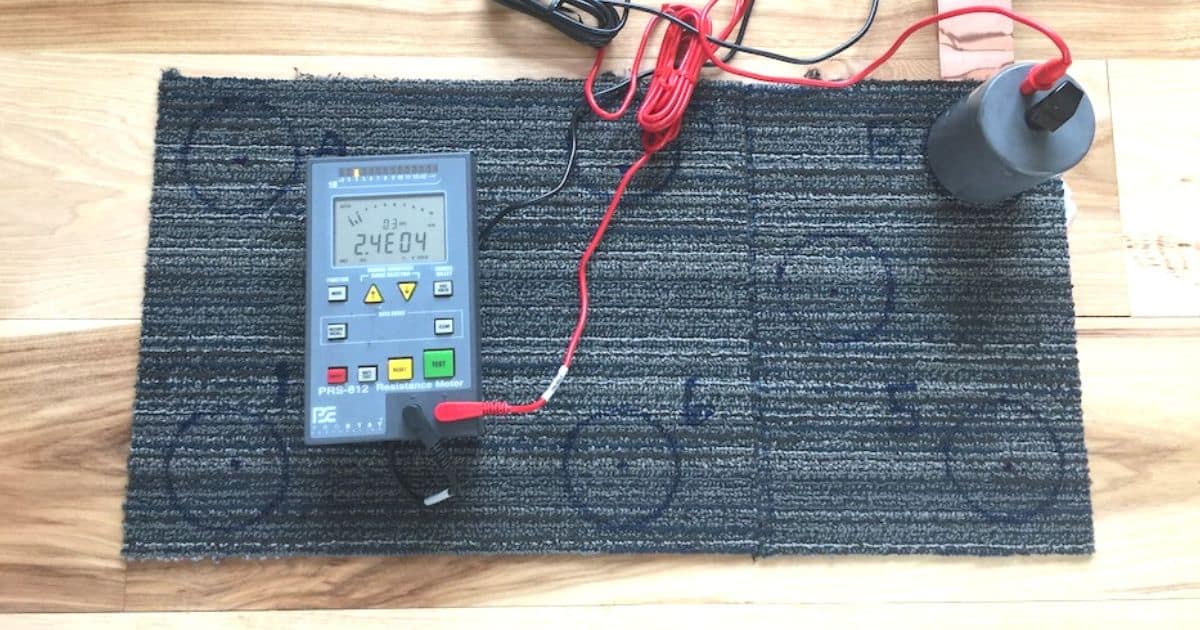
The ratio of applied voltage to the current flowing between two electrodes in contact with the surface of a material.
Surface resistance tests measure the capacity of a material to resist the flow of electricity. To test surface resistance, an ohmmeter applies a current through a material, measures the voltage, and displays the resistance in ohms.
Resistance measurements depend on a number of factors, including ambient temperature and humidity; the most important factor is the resistivity of the material. Results can also vary according to the size of the material under test, as well as the shape of the electrodes and where the electrodes are placed.
Note: Not to be confused with Surface Resistivity.