

Dave: Welcome to Static Bursts, an info-packed three-minute podcast from Staticworx, designed for a quick listen. I’m your host, Dave Long, founder and president of Staticworx.
Rick: Dave, could you give our listeners some advice on writing a specification document for static-control flooring?
Dave: When you write a specification, you should always be looking at what is the international or North American Standard for what you’re writing that specification around. You shouldn’t be taking information off of some marketing brochure or rely on the sales lingo that’s used to describe static control floors – literature that is written to help you figure out which one of their products might be more suitable.
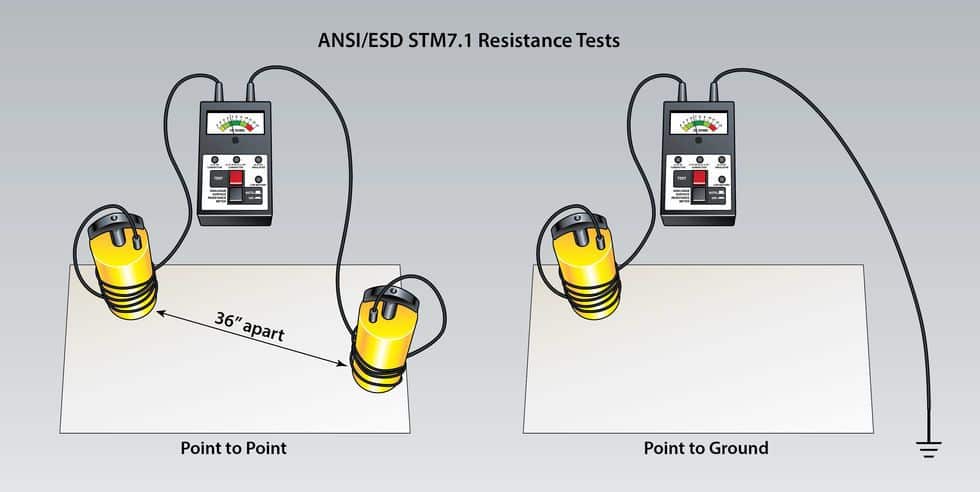
So what I’m actually saying is, if there’s an ASTM or an ANSI standard available to describe the electrical properties of a static-control floor, that’s what you should be talking about. So specifications should actually be citing standards organizations; they shouldn’t be citing manufacturers, talking in house lingo. Anytime you write a specification, you should be requiring that lab tests are done using the appropriate resistance test method. It’s called ANSI/ESD STM7.1. You should ask for lab tests that give you the data that was obtained in the lab – hopefully an independent lab because a lot of sales people, and honestly, even flooring manufacturers, don’t have a conditioned lab to do these tests. If they do, that’s fine. But you should be taking that information and putting it into your specification based on the standards I talked about a few minutes ago.
Rick: So anyone specifying static control flooring should refer to the applicable standards documents for their industry and obtain lab testing to confirm that any potential flooring materials are in compliance with those standards.
Should additional testing be done after the floor has been installed?
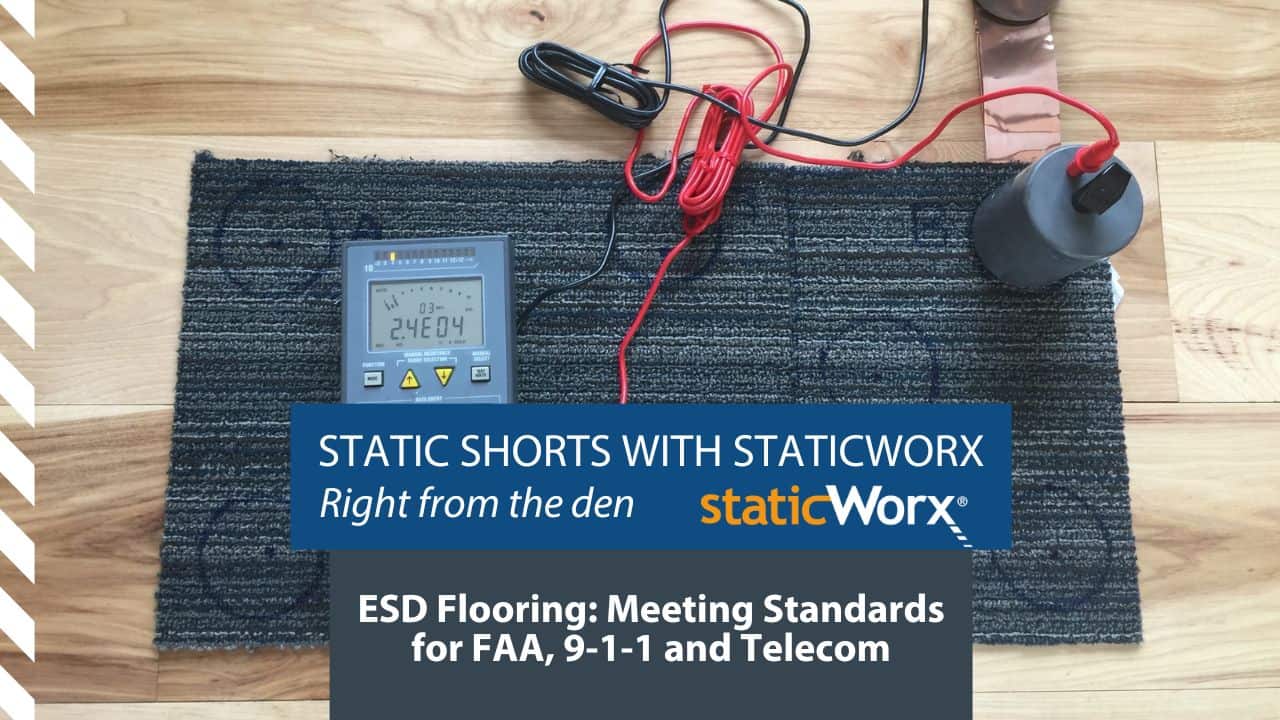
Dave: If I were writing a spec for a 911 call center, for example, I would actually put in my specification that, upon completion of the flooring installation, the manufacturer or the manufacturer’s representative shall test the floor using an ohm meter per ANSI/ESD STM7.1. And those tests results should be provided in writing. And this should be a commentary on whether or not they met the Motorola R56 standard (for the telecommunications industry).
If it’s a flight tower, resistance readings should meet standard FAA 019f.
If it’s a manufacturing area, the finished installation parameters should match the test data that was provided originally, and should meet ANSI S20.20.
Once again, if you go back to standards organizations and meet the standards for your industry, you’re home free because you’re dealing with objective information that can be validated. There are meters sold on the market that do tests per those standards. And it [following industry standards and testing materials] just keeps everybody on the straight and narrow.
We hope you learned something today. If you have questions about the podcast, give us a call at 617-923-2000. Thanks for listening!