Can I use ShadowFX ESD carpet tile on stairs?
Yes, but, achieving electrical continuity over stair treads and risers requires a special strategy. For most stair installations we provide a self-adhesive copper tape that is adhered over each tread and down each riser with no breaks. The tape is either electrically bonded to the main ESD floor—also known as an antistatic or static-control floor—or grounded separately to an approved ESD ground like an AC outlet. Conductive adhesive is spread over the tape and then the flooring is installed on top of the adhesive. Because the tape is contiguous from the top step to the bottom, all treads and risers are electrically connected to the same ground connection. This can be verified using an ohm meter with ESD flooring test probes.
Can ShadowFX be installed as a floating floor?
Yes, StaticWorx has developed a simple process that allows any of our ESD carpet options to be installed with no adhesive. This makes it easy to install ShadowFX in leased spaces and then remove the tiles and reinstall them at a new location. Contact Staticworx to learn more about TacTiles and GroundBridge.

Can ShadowFX carpet be installed one-to-one over raised floors?
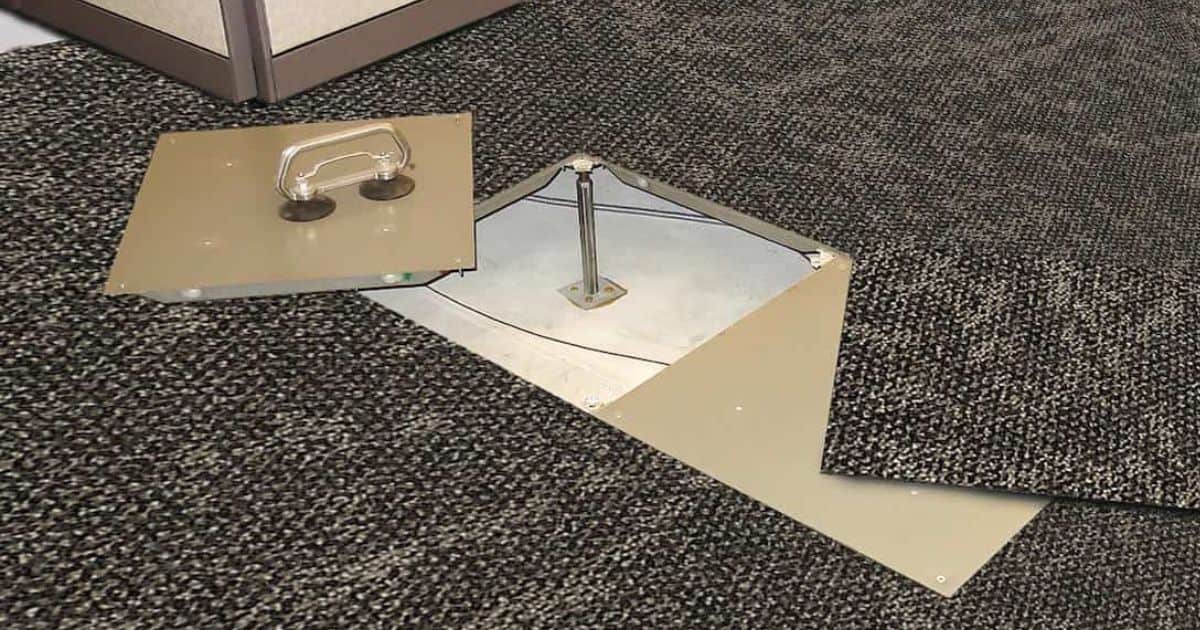
Yes, ShadowFX can be installed using the Tate PosiTile® positioners for use over Tate ConCore® panels. The PosiTile system is created by ultrasonically welding four positioning buttons on the bottom of each ShadowFX carpet tile at the Tate factory.
ShadowFX can also be installed one-to-one over Global IFS TecCrete concrete panels using the CarpetLok™ system. CarpetLok positioning devices are installed by the Global IFS access floor contractor during construction of the floor.
Do I need a special adhesive?
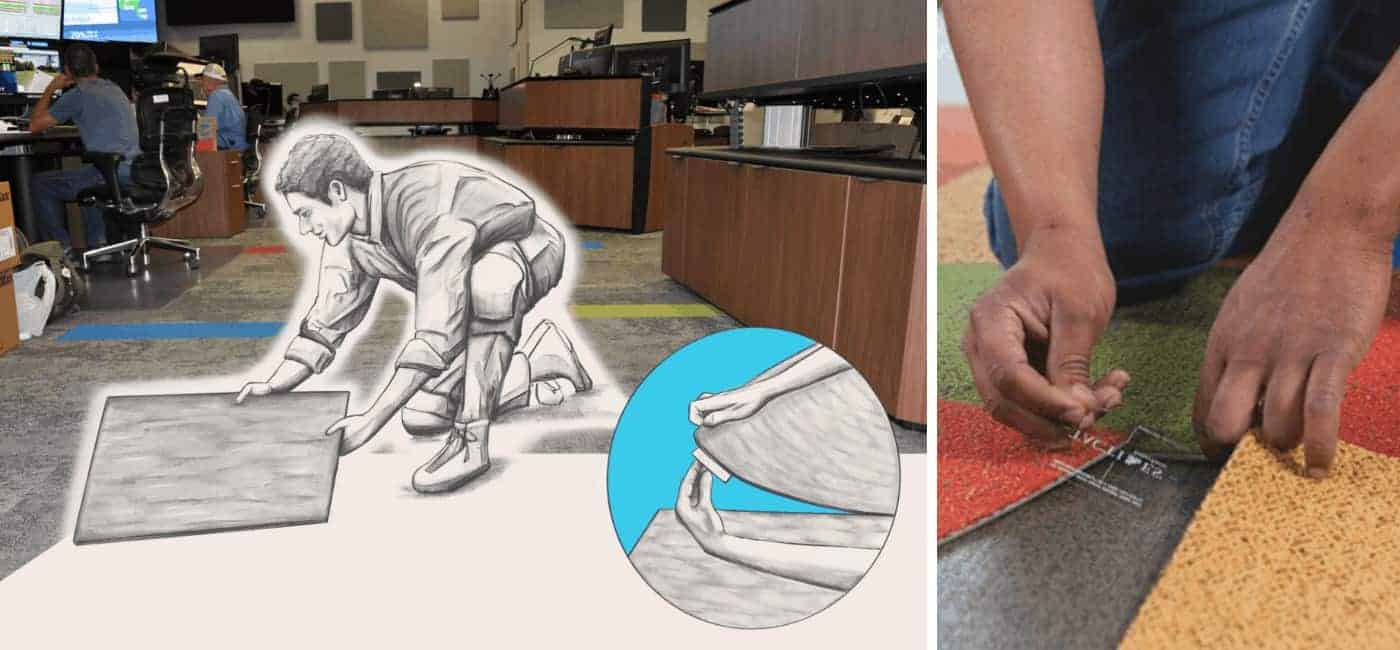
ShadowFX carpet requires the use of either releasable conductive adhesive or TacTiles adhesive strips with a GroundBridge underlayment. Either option is stocked and shipped from our warehouse.
Do I need copper wire under all the carpet tiles?
No. You do not need to install a copper grid system under ShadowFX ESD carpet tile. Copper strips are installed at the perimeters of the room. ShadowFX installations require only one 24-inch copper strip per 1000 sq. ft. carpet.
Do you have authorized ShadowFX installers?
StaticWorx works with hundreds of flooring installers across all of North America. Contact your StaticWorx representative for a list of professional installers.
Does ShadowFX cost more to install than regular carpet?
No. Installation and labor costs should be about the same. ShadowFX carpet tile can be installed using conductive adhesive or glue free with easy-peel TacTile® corner connectors. The only additional cost is for copper strips to ground the installation. Copper strips cost $6 per strip and only 1 strip is required per 1000 sq.ft. installation.
How do I know if my ESD carpet works? It looks like regular carpet.
The only way to know if a static-dissipative ESD carpet is doing its job is by testing the floor with an ohmmeter. StaticWorx created the GroundSafe® program to help clients get their floor tested and certified at no cost at the completion of the installation. All you need to do is write the following into the specification:
Upon project completion, the flooring manufacturer or their representative shall measure the resistance of the finished floor with a calibrated ohm meter and provide certification in writing that the floor measures in the static dissipative range (1.0 x 10E6 – < 1.0 x 10E9) per either the ASTM F150 test method or the ANSI/ESD STM7.1.
How does ShadowFX carpet tile get installed?
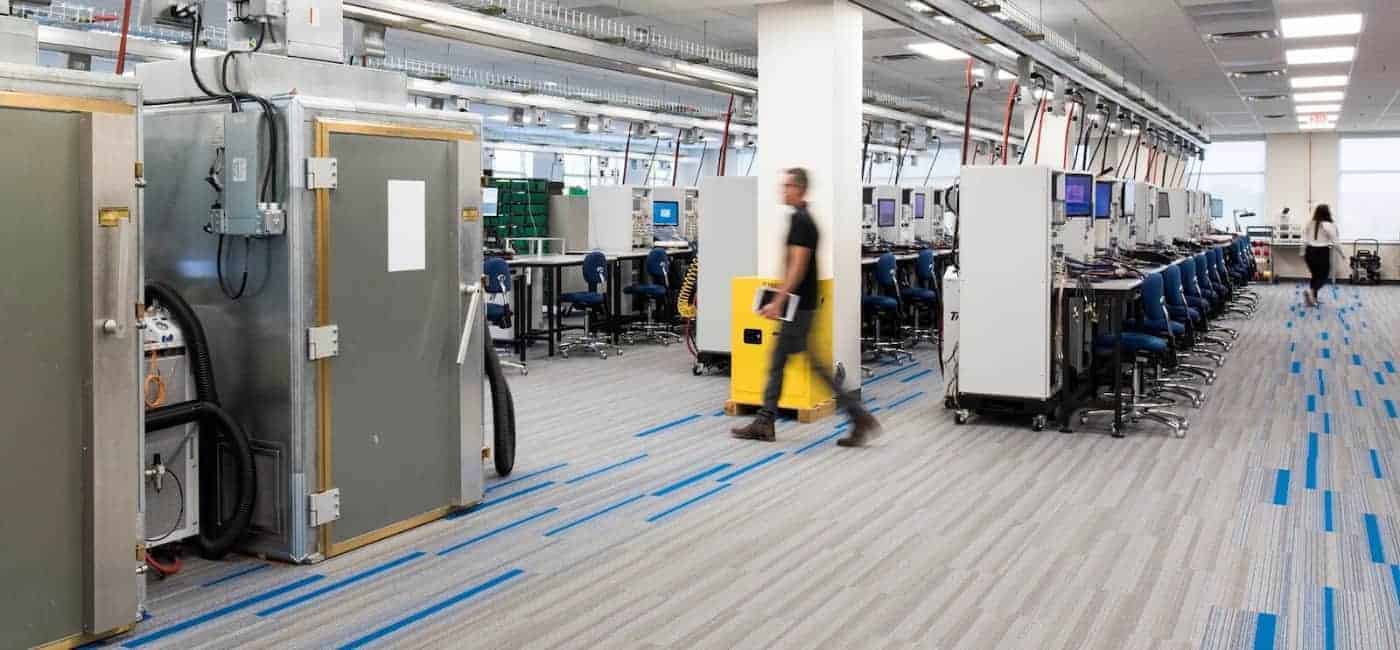
ShadowFX carpet is installed like any carpet installation, except that you must use conductive rather than regular adhesive. It can also be installed using TacTile® adhesive strips, which attach tiles to one another at all four corners, with GroundBridge conductive underlayment. Copper ground strips are laid at the perimeter of the room, over the adhesive or GroundBridge, and attached to an outlet or other earth ground. One 24” copper strip is required per 1000 sq.ft. installation.
How is ShadowFX installed over the FreeAxez GRIDD® flooring system?
ShadowFX over GRIDD makes for an easy installation. There is no need for conductive adhesive. Simply attach all corners of ShadowFX to each other using TacTile connectors. The combination of the metal in the floor and the dissipative backing in the tiles provides the static-dissipative ground path needed to meet both ANSI and ASTM resistance properties for a static-dissipative floor.
Is ShadowFX carpet tile compatible with raised access panels?
Yes. ShadowFX carpet tile comes in standard 19 cm x 19 cm or 2’ x 2’ for installation over any raised access and/or low profile cable management floor. ShadowFX with TacTile connectors offers the easiest, least expensive installation method for tile placement over any raised floor system. Simply lock the bottom corners of tiles together with TacTile connectors. When you need access to the space under the panels simply pull the tile corners apart and remove the panel. In most cases you can reuse the same TacTiles when you put the tile back in place.
What colors/styles does it come in?
All our available colors can be seen on each individual style page. ShadowFX ESD carpet tile is available in the following collections: Chenille Warp, Cubic, Fields & Stone, Furrows II, Parks, Patterns, Peaks, Solids, Treez, Vermont Planx, Vermont Slate.
What levels of protection do you have?
There are no industry-recognized “levels” of static control. The term “levels” is used for marketing purposes because it is easy to understand and remember. “Levels” are not recognized in ASTM or ANSI formats and are not used in CSI specifications. ESD flooring is rated by range of conductivity, measured in ohms.
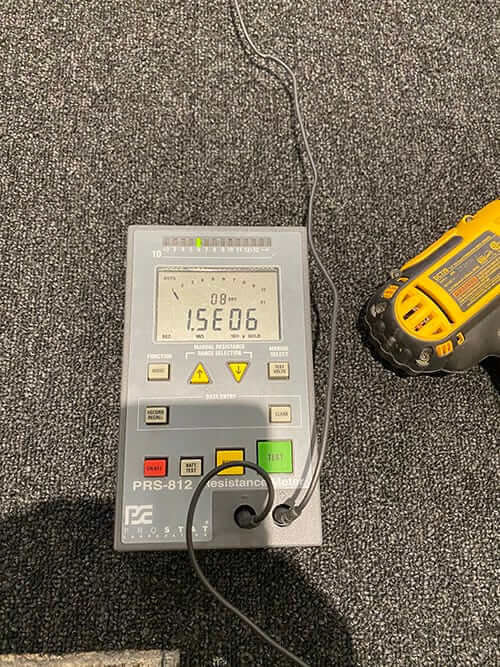
There are 3 ANSI and ASTM ranges of conductivity: They are called Conductive, Static Dissipative, and Insulative. The term conductive refers to carpet that measures under 1.0 x 10E6 ohms, using a resistance meter and following the procedure outlined in industry standard test method ANSI/ESD STM S7.1. Static dissipative tile measures 1.0 x 10E6 to 1.0 x 10E9 ohms. And insulative measures above 1.0 x 10E9. There is very little to no conductivity in an insulative floor and an insulative floor will likely generate some amount of harmful static electricity.
ASTM, CRI, AATCC and ANSI/ESD have never used the term “levels” to categorize flooring options or describe the efficacy of an antistatic carpet. The efficacy of all ESD flooring can be clearly described and specified by citing results of recognized industry-standard test methods. These tests measure the electrical resistance (in ohms) and charge generation properties (volts or kV) of the floor. The results of both resistance and body voltage testing should be included in all specifications.
To specify ShadowFX or any ESD carpet tile, always refer to the electrical resistance standard test method for that industry and application. Standards vary significantly by industry, so be sure you refer to the correct standards and not product branded terms. Electrical standards measure resistance in ohms, using an ohm meter. Most standards also require you to measure body voltage, aka charge generation, in volts using a charge plate monitor.
What non proprietary performance requirements should I include in my project specification to ensure that I am describing a compliant product without showing brand bias?
The following language describes ESD carpet tile that would be suitable for any ESD carpet application ranging from 9-1-1 call centers, flight towers or control rooms to electronics manufacturing and R&D.
- Carpet tile to measure less than 1,000,000,000 (< 1.0 and 10E9) ohms per the test method ASTM F150 and ANSI/ESD STM 7.1
- Carpet tile must generate less than 1.0 kV per the test method AATCC-134
- Carpet tile must generate less than 100 volts per ANSI/ESD S97.2 when tested with static control footwear.
Find electrical standards here.
As a simple rule when writing a specification, ANSI and ASTM require any ESD floor to measure below 1 billion ohms. Less than one billion ohms is often written numerically as either < 1,000,000,000 ohms or < 1.0 x 10E9 ohms. That’s all there is to it.
Where does ShadowFX carpet tile ship from?
ShadowFX carpet tiles ship from one of our warehouses in Georgia and Mississippi.

Ready to Eliminate Static Risk?
When your facility’s protection depends on getting it right the first time, choose
the company with an unmatched track record. We’re standing by to assist you.