Reduce the Risk of ESD Damage
in Electronics Environments
To protect static-sensitive electronics in environments that manufacture or rely on critical electronic components, including cleanrooms and labs, it is crucial to mitigate electrostatic discharge (ESD). Because walking across a floor generates static, called walking body voltage, an ESD floor—also known as an antistatic floor or static-control floor—is considered the first line of defense against unwanted static charges.
But an ESD floor can’t draw charges from people sitting in an ordinary chair. ESD chairs are designed to keep people at the same electrical potential as their surroundings. They work by dissipating static charges from people to the ESD floor and ultimately to ground. Working in conjunction with the ESD floor, ESD footwear, ESD chairs and the ESD floor function as an ESD flooring system.
Understanding ESD Chairs
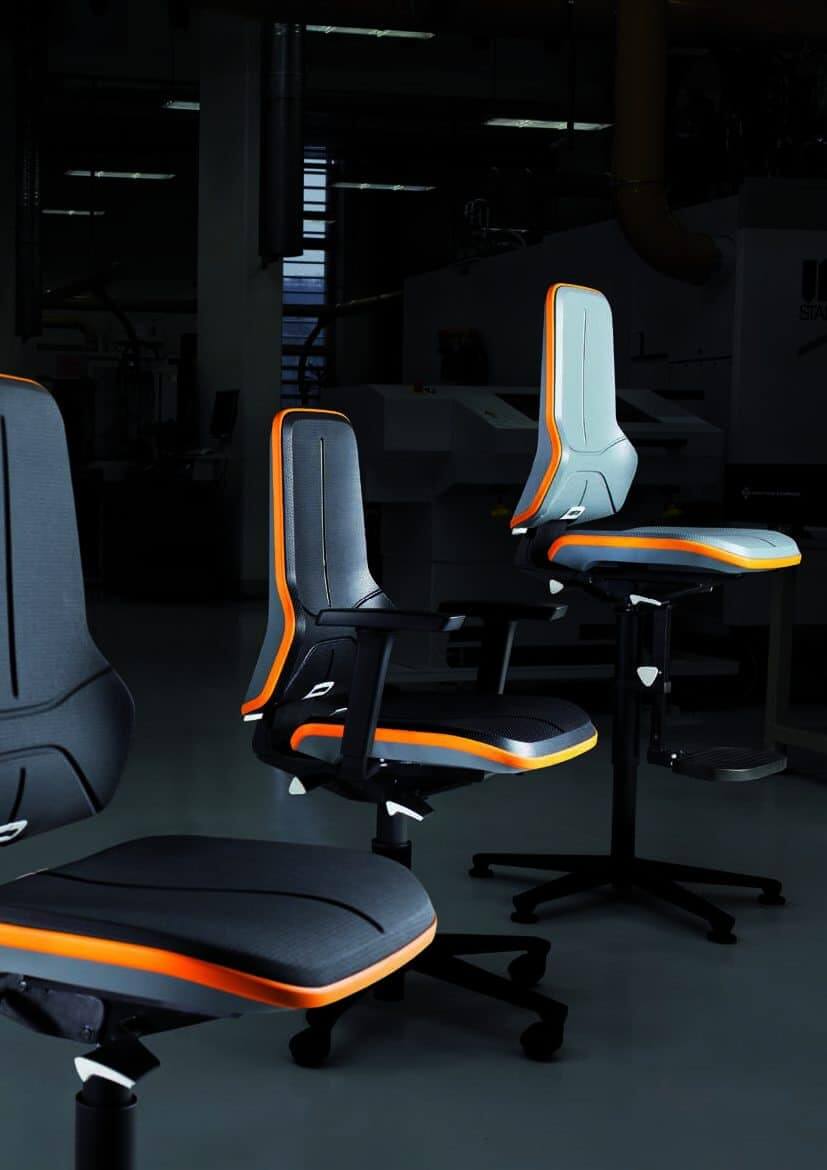
ESD chairs—also known as antistatic chairs—are specialized seats engineered to minimize the accumulation and discharge of static electricity. StaticWorx Bolt ESD chairs, for example, are built with conductive materials, such as carbon fibers in the upholstery and metal frames. These conductive materials facilitate the dissipation of electrostatic charges. A ground cord running through the spine of the ESD chairs allows for a connection from the upholstery through the frame and wheels to the designated ground point.
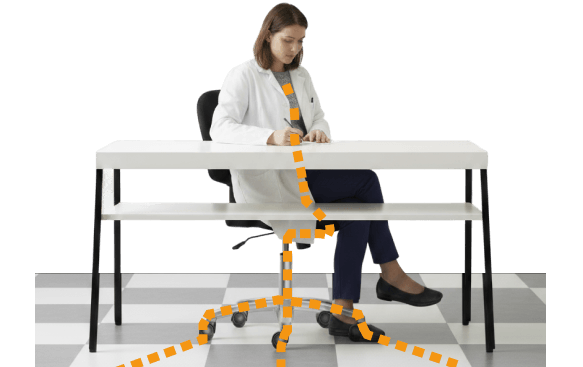
Without an ESD floor
Regular chairs can generate 4000+ volts from simple movements like standing up or shifting in your seat
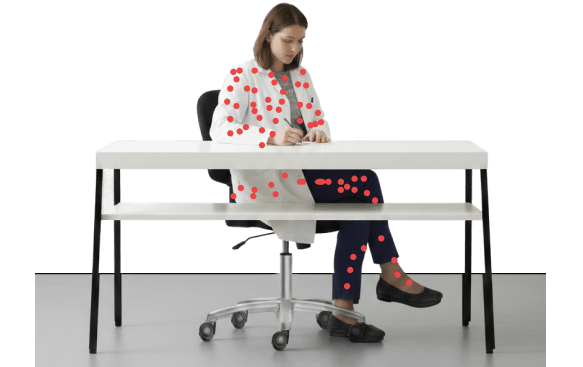
With Bolt ESD Seating
Grounded ESD chairs reduce static to below 0.1kV, protecting sensitive components from damage
Benefits of ESD Chairs
In most electronics-dependent environments, the biggest source of unwanted static electricity is not from people walking; it’s from seating. When people walk, the ESD floor draws static away from their body and dissipates charges to ground, inhibiting static buildup. When they sit, particularly with feet lifted, they are no longer grounded by the floor. If they are not seated in an ESD chair when they generate charges – moving in the chair, for example – there is no place for charges to go, and static builds on their body.
A 2015 ASHRAE-sponsored study documented static charge generation in excess of 4000 volts produced when people sat in and stood from a chair. In a 2019 study conducted by Intel, by simply combining Bolt ESD seating with grounded ESD flooring static charges were maintained below 100 volts (.1kV)
As part of an ESD flooring system, ESD chairs offer several advantages. First, they draw charges away from people and provide a controlled path for static dissipation, reducing the risk of harmful ESD events. Second, ESD chairs aid in keeping seated people at the same electrical potential as their environment, reducing the risk of static buildup and discharge to components. Bolt ESD chairs also provide ergonomic support, minimizing discomfort and fatigue. In cases where the use of grounded wrist straps is mandated but not policed, ESD chairs provide a highly effective fault-tolerant workaround.
What is an ESD system?
People often think of ESD flooring as a standalone product. Yet every flooring installation is subjected to multiple variables from the initial installation through the post-installation environment and ongoing maintenance. The strength and reliability of any system is only as good as its weakest link. If the installation wasn’t done properly, for instance, or the floor was installed with incorrect materials the installation could fail.
The same applies to the component parts of the system: ESD footwear, ESD chairs, chair grounding and personnel mobility, and redundant ground paths, including ESD flooring.
Establishing An ESD-Control Flooring System
When establishing an ESD-control system, it’s important to consider the following:
1. Footwear Grounding
ESD footwear, such as ESD shoes, heel or sole grounders, form an electrical bond with the static-control floor to establish a reliable and consistent path to ground. ESD flooring grounds ESD footwear, dissipating static charges and preventing static from building on people when they walk. ANSI/ESD S20.20, the electrical standard for the electronics manufacturing and handling industries, mandates the use of special ESD-preventive footwear.
2. ESD Chairs
Once the person is seated, with feet lifted or resting on a footrest, even with ESD footwear, they are no longer connected to ground. ESD chairs dissipate any static people may generate while seated and transport it through a grounding cable in the spine of the chair to the ESD flooring, which carries static charges to ground.
3. Chair Grounding Reliability
The effectiveness of ESD chairs relies on consistent contact between the person and the chair’s conductive surfaces. Contact between the chair and the conductive elements in the floor should be checked with an ohm meter. Some ESD floors are made with sparsely-spaced conductive granules that don’t make reliable contact with casters on ESD chairs and carts.
4. Mobility and Area Coverage
ESD chairs are designed for use in specific areas in which static-sensitive equipment or processes are in use. Ideal for jobs performed while seated, as well as for use in cleanrooms and labs, StaticWorx agile Bolt ESD chairs provide the flexibility necessary for people to move freely in their seats.
5. Redundancy and Multiple Grounding Paths
With a material cost of <$1.00 per square foot, GroundWorx Basics is an ideal ESD flooring option for low-cost projects and budget-minded clients. It’s also perfect for temporary and leased spaces – or any space in need of an ESD floor where a capital investment doesn’t make sense.

Considerations for Implementing ESD Chairs
Thinking in terms of a flooring system, as opposed to singular product, forces specifiers to consider every aspect of an installation, building in redundancies where necessary to create a fail-safe flooring system, ensuring the success and reliability of the installation.
ESD chairs play a critical role within the ESD flooring system. They offer highly effective passive static protection regardless of how well personal grounding with straps and footwear is enforced. The following considerations should be taken into account when implementing ESD chairs in static-sensitive environments:

ESD chairs should be utilized as part of a comprehensive ESD control strategy, in conjunction with other grounding measures and equipment. Integration with ESD footwear and static-control flooring ensures a robust and comprehensive approach to personnel grounding.
Proper training and awareness are crucial to implementing an ESD flooring system. People should be educated on the purpose, usage, and limitations of ESD chairs. They also need to understand the importance of following proper static-control procedures and protocols.
To ensure optimal performance, ESD chairs should be regularly inspected and maintained. Lab managers should establish an auditing and maintenance schedule that includes checking the condition of grounding cords, verifying the conductivity of chair surfaces, and addressing any issues promptly. Regular electrical testing, such as surface resistance measurements, can help identify potential problems and validate the chair’s effectiveness in dissipating static charges.
Before implementing an ESD flooring system, a risk assessment and hazard analysis should be conducted. This assessment should consider the specific requirements and risks associated with the particular lab or cleanroom environment including the probability that the proper use of personal grounding devices will be followed consistently. The sensitivity of electronic components, the use and monitoring of ESD footwear, and the use and maintenance of ESD seating and how the components integrate must all be considered.
Lab managers should ensure that the ESD chairs selected for use comply with relevant industry standards and regulations. These standards, such as ANSI/ESD S20.20 or IEC 61340-5-1, provide guidelines for ESD control programs and equipment. Selecting chairs that meet these standards ensures that they are designed and manufactured to provide reliable static charge dissipation.

What Clients are Saying

…the floor is awesome! It’s very durable and it’s very convenient that we can lift tiles up to remove debris from underneath, and even replace tiles if they are damaged. So from a functional perspective, this is the best floor for our manufacturing operation.
You would never know it was ESD, WHICH IS AMAZING! Your product rocks and I’m so glad we were able to find an attractive solution that didn’t leave us with some run-of-the-mill ugly disaster in the middle of our workspaces!
Your product is impervious to most/all conditions. It’s impressive. Happy to be working with StaticWorx.
ESD ChairsFrequently Asked Questions
What are ESD chairs?
ESD chairs, also called antistatic chairs, are specially designed seating that dissipates static electricity from the person to the ESD floor and ultimately to ground, protecting sensitive electronics in labs, cleanrooms, and manufacturing environments.
Why are ESD chairs important in an ESD flooring system?
While ESD floors control static for walking personnel, seated personnel can still generate static (up to 4,000 volts). ESD chairs maintain a conductive path to ground while seated, preventing static buildup and potential damage.
How do ESD chairs work?
Conductive materials, like carbon fibers in the upholstery and metal frames, conduct charges from the user through a grounding cord in the chair spine to the floor, which safely dissipates the charge to ground.
What benefits do ESD chairs provide?
- Reduce static buildup below 0.1 kV when used with grounded ESD floors
- Maintain personnel at the same electrical potential as the environment
- Provide ergonomic support for comfort and reduced fatigue
- Act as a fault-tolerant backup when wrist straps are not used or enforced
What should be considered when implementing ESD chairs?
- Integration with other ESD measures (flooring, footwear, wrist straps)
- Regular maintenance and testing of chair grounding
- Training staff on proper use
- Ensuring mobility and area coverage for seated tasks
- Compliance with industry standards and safety regulations
Can ESD chairs be used in all ESD-sensitive areas?
Yes. They are ideal for labs, cleanrooms, electronics manufacturing, and any space with seated work where static-sensitive equipment is present. They provide reliable static protection regardless of wrist strap usage.

Ready to Eliminate Static Risk?
When your facility’s protection depends on getting it right the first time, choose
the company with an unmatched track record. We’re standing by to assist you.
Static-Control Education at Your Fingertips
Explore the StaticWorx Knowledge Center for technical articles, videos, and guides to help you specify, install, and maintain ESD flooring with confidence.