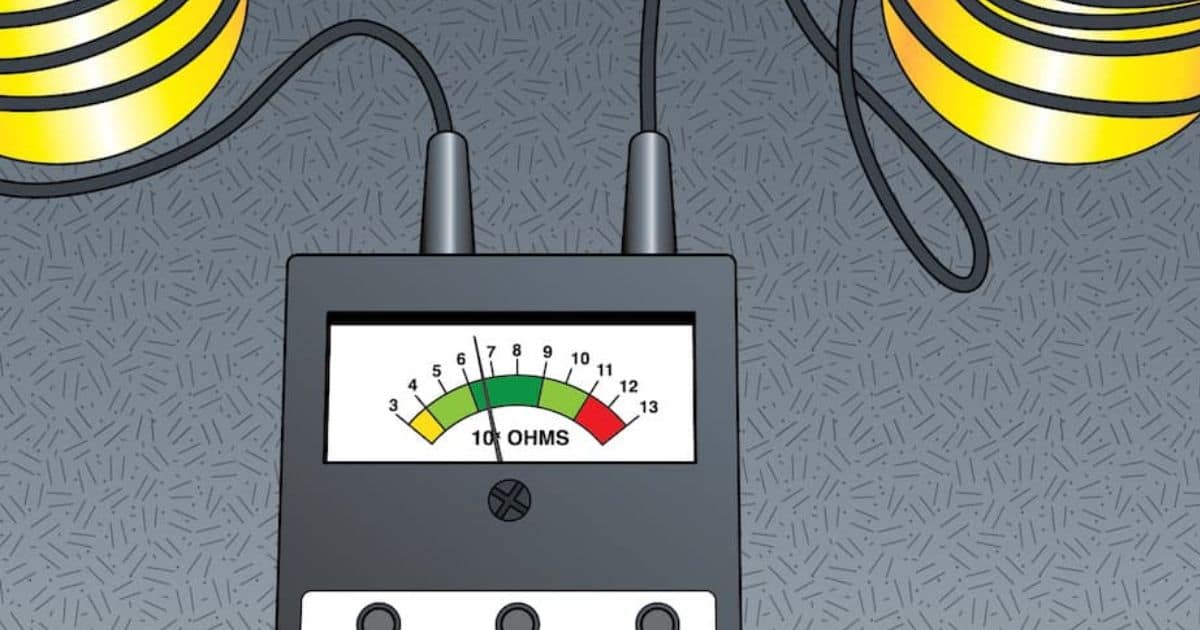
The ANSI/ESD S20.20 static control standards does not offer a minimum resistance reading. Strictly in terms of grounding static charges, any floor with a resistance <1 x 10E9 meets ANSI/ESD S20.20 and is considered acceptable.
While S20.20 does not specify a lowest acceptable resistance, for best practices the flooring industry has historically set the minimum resistance at no less than 2.5 x 10E4, or 25,000 ohms. This number was based on a defunct NFPA test method, requiring a resistance test with 500 volts of DC current applied to the surface of the flooring material. Current standard test methods apply much lower voltage and yield higher readings.
A floor measuring 25,000 ohms using the NFPA test method would yield a far lower resistance reading with less applied voltage.
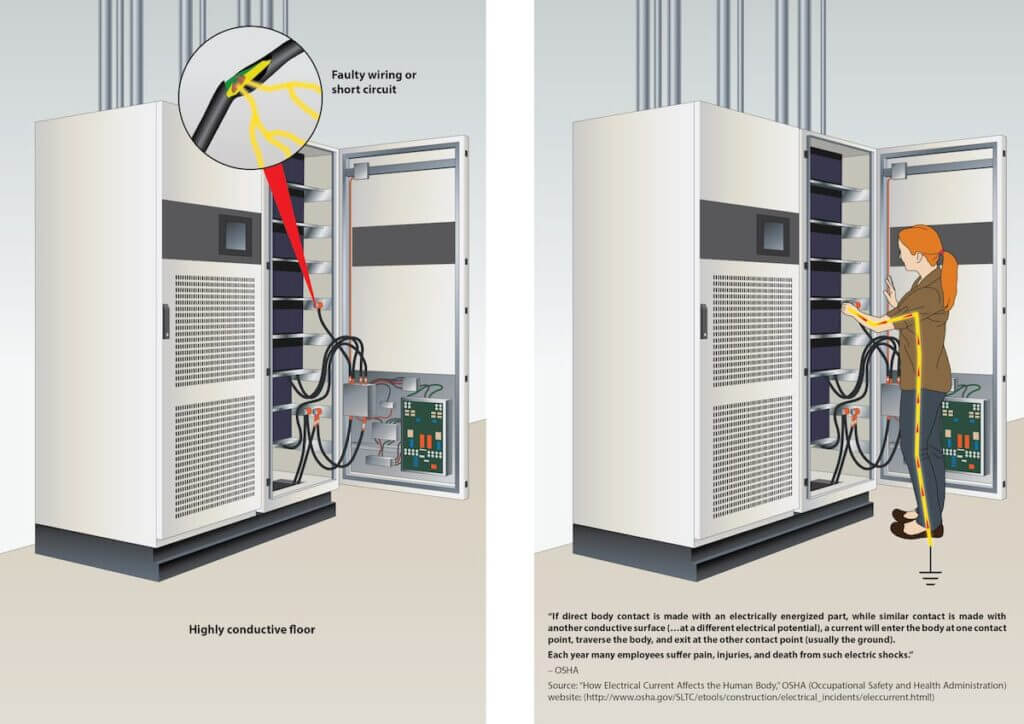
ANSI/ESD standards do not offer a minimum resistance requirement because the built-in resistor in the ESD footwear required in manufacturing and handling spaces protects the wearer from potential electric shocks. In data centers, call centers, FAA flight towers, 9-1-1 dispatch centers, and other spaces where ESD-protective footwear is not required, materials with electrical resistance below 2.5 x 10E4 are considered a potential safety hazard.
For this reason, telecom and Federal Aviation Administration standards prohibit the use of flooring materials with resistance below 1 x 10E6 in spaces where energized equipment is used.