The Most Frequently Heard Complaints
A number of factors can negatively affect the performance of a floor and are concerning to prospective buyers doing their due diligence. The following are the issues most frequently cited.

Difficulty cleaning is typically the biggest concern. No one wants a floor that looks bad. Nor do people want a floor that attracts dirt or is marred by chemicals and other contaminants.
GroundLock interlocking tiles resist dirt, dust, and chemical abrasion and clean easily with soap and water.
Floors that are not durable can crack, break or fall apart under the weight of heavy loads.
A good floor should be capable of handling fork lifts and pallet jacks without damage or tiles lifting. Watch what happens when a pallet jack, carrying over 900 pounds, drives over GroundLock Extreme interlocking tiles.
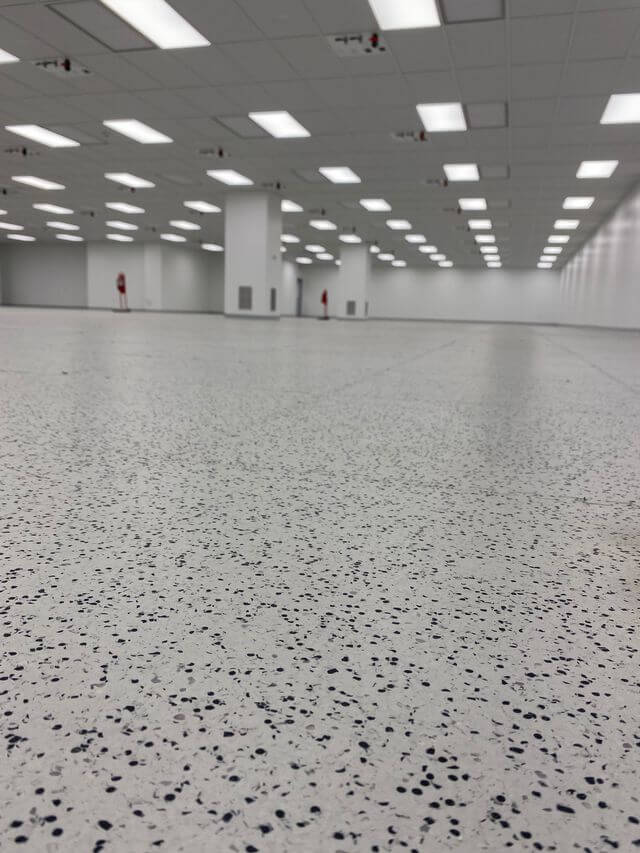
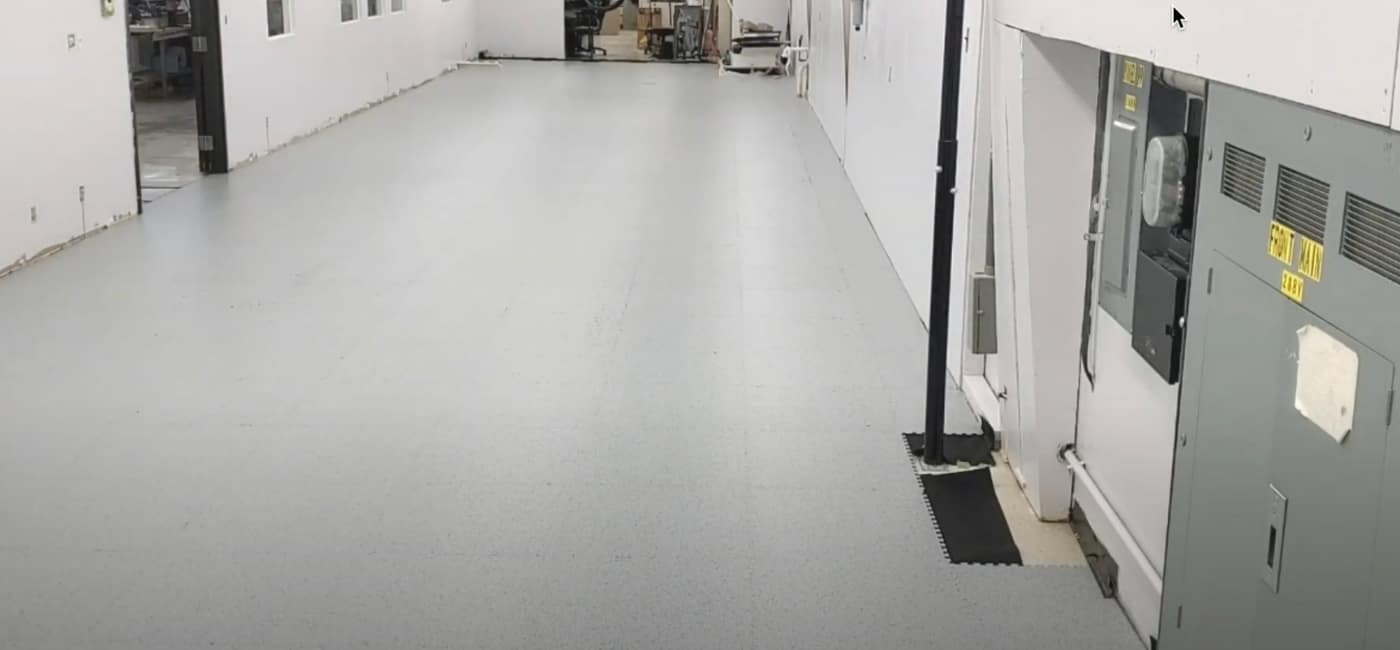
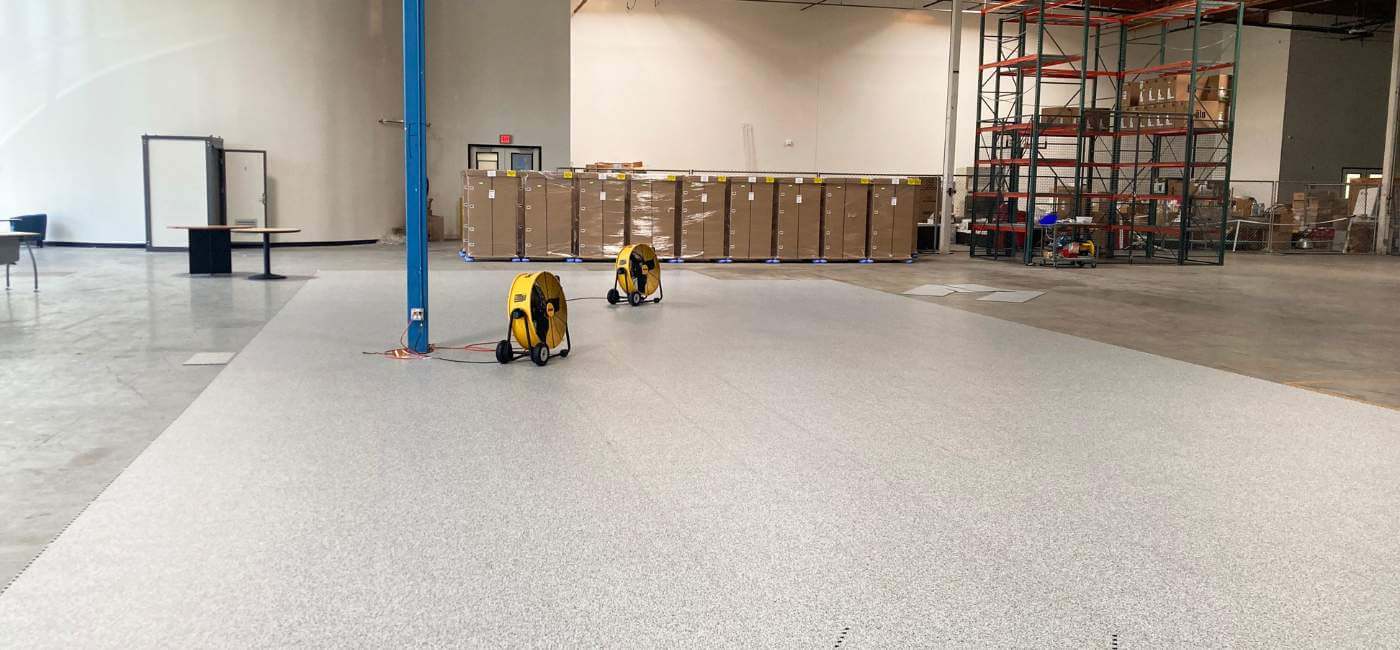
Some interlocking floor tiles don’t lay flat. Installed in a larger space, some interlocking tiles dome. Doming tiles are an eyesore and can be a tripping hazard. An interlocking floor should lay as flat as any glue-down installation. GroundLock ESD interlocking tile lays perfectly flat, with no doming, even across large installations.
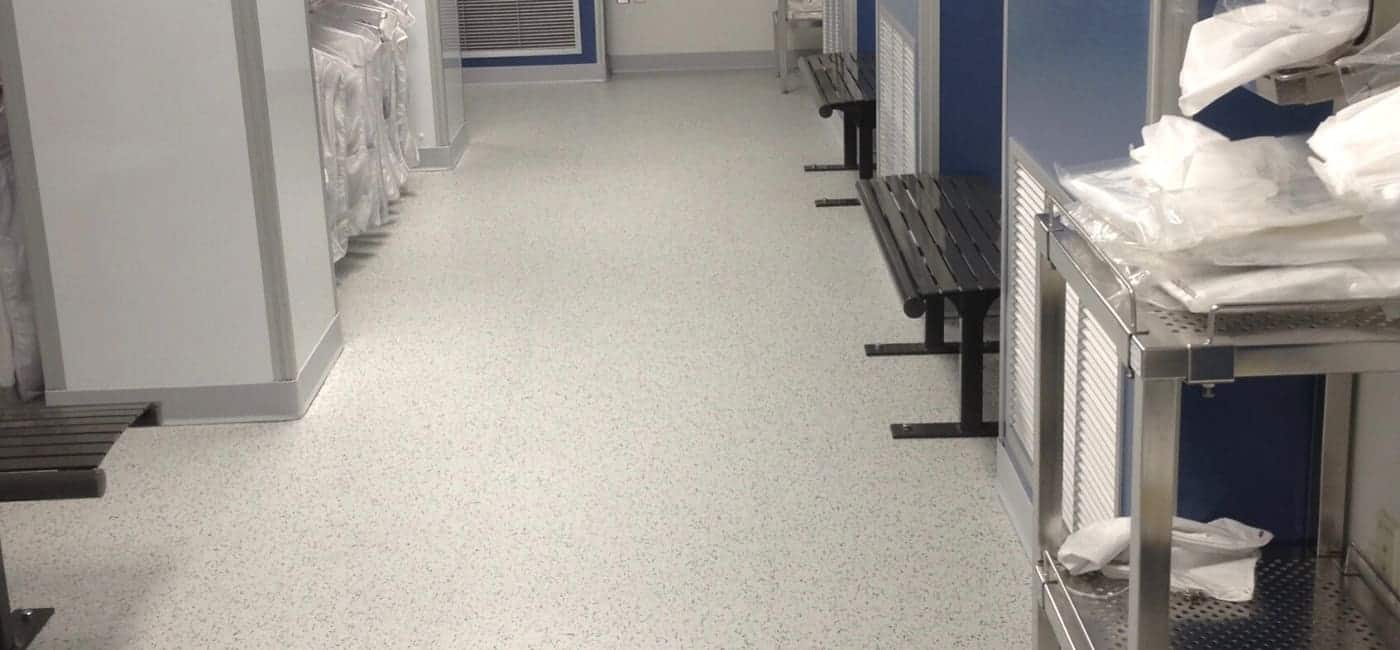
Notice how flat GroundLock interlocking tile lays across this large, 10,400 square foot installation. Cleanroom, MACOM, Nashua, NH.
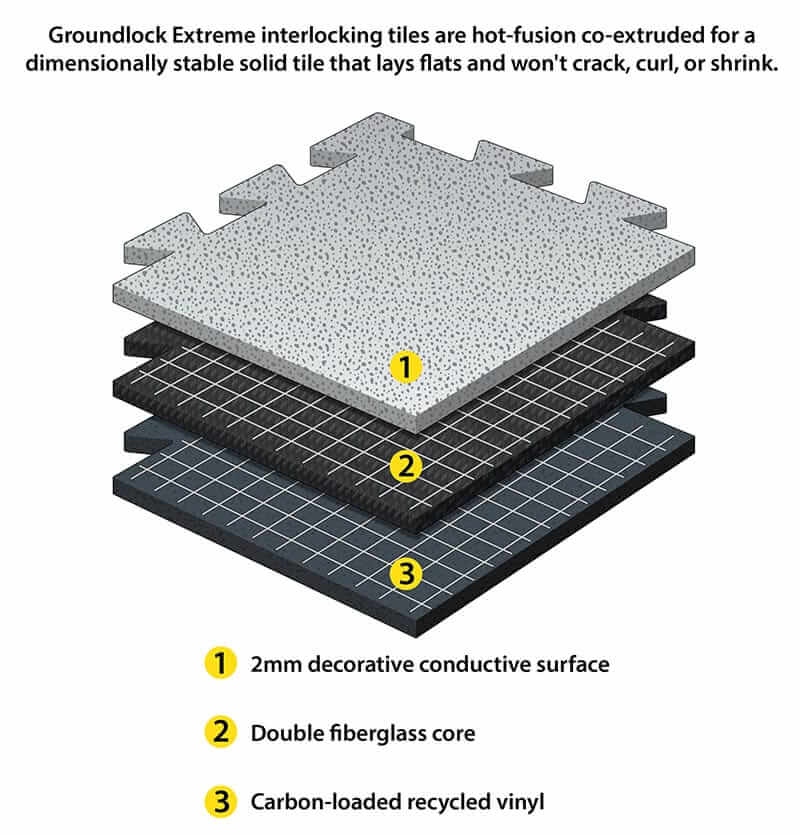
Lack of dimensional stability can result in some interlocking tiles stretching, curling or shrinking. Loose connections, popping tiles, doming are unsightly, produce cleaning and maintenance issues and can compromise the integrity of the installation.
GroundLock Extreme interlocking tiles are manufactured with a sandwiched fiberglass core, providing permanent dimensional stability.
Loose connections or uneven subfloors can cause some interlocking tiles to pop and separate. Like problems caused by dimensional instability, popped or separate tiles present cleanliness and maintenance problems, tripping hazards, and other issues that compromise the installation.
GroundLock Extreme interlocking tiles are connected with a dead-blow hammer. Hundreds of foot-pounds of blunt force from the dead-blow hammer produce ultra-secure connections that won’t lift, pop or separate – even when the tiles are laid over an imperfect subfloor such as old carpet.
This video shows a flooring installer installing GroundLock interlocking ESD tile, using a dead-blow hammer. (You can also use a rubber flooring hammer or mallet.) Notice the perfect lock and nearly invisible seams. With GroundLock interlocking tile you never have to worry about shrinking, stretching, doming or separating. If you’d like to put down a test patch so you can see for yourself, give us a call: 617-923-2000
Telegraphing of imperfections under the floor is a surprisingly common complaint and one that’s easily avoidable. Simply drop 10-15 tiles over the subfloor and you’ll see exactly what your installation will look like.
With 6mm (1/4″) thickness and fiberglass sandwiched between the top and bottom of each tile, GroundLock Extreme interlocking tiles can be laid directly over your old floor with minimal floor prep and no telegraphing.
To see how your GroundLock interlocking floor will appear after it’s installed, we invite you to put down a free test patch.

Try Before You Buy
Problems with a floor are hardest to remedy in an operational facility, so your decision needs to be right. Failure means shutdown. Difficult maintenance mean high cost of ownership. Ugly floors mean clients are not impressed.
At StaticWorx we live by the popular adage, Show, Don’t Tell. In flooring lingo: Try Before You Buy.
What Is A Test Patch and Why Is It Important?
A test patch is a small area of the flooring you’re evaluating. You install the test patch in challenging part of your building and work it as hard as you can. Observe the test patch for some determined amount of time. Ideally the flooring would be installed in a warehouse or some other space that’s easy to get to and where you can put the floor to multiple tests. Even the best salesperson can’t tell you anything you won’t learn by installing 40 or 50 sq. feet of any floor you’re considering.
What Do You Do?
Intentionally abuse all floors under consideration. Try to simulate the worst conditions in your environment. This is your one time to discover how the floor will ultimately perform – and avoid surprises down the road. Consider it an accelerated life test.
Which Tests Should You Perform?
If you’re thinking about investing in ESD flooring, the most important thing you can do is test the floors you’re evaluating before you buy. Observe maintenance issues, chemical resistance, durability, load bearing, telegraphing – anything that concerns you. All of our major clients have done the same at one time. If you’d like to test a StaticWorx floor, give us a call: 617-923-2000. We’ll provide the test patch and everything you need to install it.
Maintenance
Test to see how easy – or hard – it is to restore filthy tile to pristine condition.
Dirt and Chemical Abrasion
Get the floor dirty. Spill chemicals. Watch what happens to the tile.
Durability
Intentionally abuse the floor. Do things you’d never do to a floor in your facility.
Load Bearing
Install tiles on a busy section of your loading dock. Run pallet jacks and forklifts over the test patch.
Telegraphing
Lay the test patch over a problem subfloor and see how it looks.

What Clients are Saying

…the floor is awesome! It’s very durable and it’s very convenient that we can lift tiles up to remove debris from underneath, and even replace tiles if they are damaged. So from a functional perspective, this is the best floor for our manufacturing operation.
We laid the product in Niceville and everyone really likes it. Great product! We like the color and the dovetail interlocking feature. The flooring looks great.

StaticWorx GroundLock ExtremeFrequently Asked Questions
Can I put GroundLock Extreme over my current subfloor?
Yes. While depending upon the condition/flatness of the old floor some corrections may be required, GroundLock can be installed over any subfloor, typically with no floor prep.
Can GroundLock interlocking tiles be moved?
Yes. One of the big advantages of GroundLock Extreme interlocking tile is that it is easily picked up and moved to a new location. Simply loosen or pry up an edge, lift the tile, and carry away.
How do you clean it?
The surface of GroundLock is prepared with a proprietary laser process to prevent the penetration of soil and dirt. It never needs waxing for any reason. GroundLock requires only soap and water to clean.
How does it get installed?
GroundLock Extreme interlocking ESD tile has dovetail edges that lock into place like puzzle pieces. You simply lay the tile and tap into place.
How is the durability? Does it hold up to fork trucks and other heavy equipment? Does it mar and scratch easily? Does it ever need wax?
GroundLock is manufactured with a non-porous sealed surface. Markings from traffic, cart wheels and pallet jacks will not embed into the surface.
GroundLock is an extremely durable material. It easily handles heavy load movement with pallet jacks and fork lifts. If you fast-forward 1 minute and 30 seconds, into the video you below, you can see our durability test. We are also happy to provide the results of independent ANSI/ESD S 20.20 test reports done by a third party in 2022.
Is it easy to replace a GroundLock tile?
Yes. To replace GroundLock Extreme interlocking ESD tiles, simply pry up one end of the damaged tile, lift up and out, then tap a new tile into its place.

Ready to Eliminate Static Risk?
When your facility’s protection depends on getting it right the first time, choose
the company with an unmatched track record. We’re standing by to assist you.